Commentary
Bloomberg's Big Hack Shows Legacy Media's Accountability Problem
Commentary: legacy media has an accountability problem. Eight years on, Bloomberg's Big Hack Supermicro spy chip story has no chip, no retraction, and no one to answer to.
 Quanlai Li
Legacy media has an accountability problem. Not a sourcing problem, not a bias problem: an accountability problem. When a major outlet gets a big story wrong, there is often no mechanism that forces it to say so, and no cost to the institution if it simply never does. One story shows this better than any other.
On October 4, 2018, Bloomberg Businessweek ran a cover story that showed a grain-sized chip on a fingertip and called it The Big Hack. The story said Chinese operatives had slipped spy chips onto Supermicro server motherboards and that the chips reached Apple, Amazon and about 30 other American companies. It is one of the most consequential technology stories of the past decade, and one of the most contested.
Eight years later, the story is still online. It has not been retracted, it has not been corrected on its central claim, and no one has shown the public a single chip.
This week Tianyu M. Fang put the point in one line on X:
"every time there's a debate about whether we should or shouldn't trust journalism solely based on unfalsifiable sources I go back and check whether this 2018 story has been withdrawn (it hasn't)"
The post passed 27,000 views within a day. It deserves more than a like, because the Big Hack is the cleanest test case we have for a question legacy media keeps avoiding: who holds a prestigious outlet to account when it makes an enormous claim on anonymous sources, every named party denies it, and the evidence never arrives? Eight years of record give the answer: nobody.
What Bloomberg claimed, and who said no
Bloomberg's case rested on people the reader cannot identify. When Apple's CEO pushed back, Bloomberg answered that "seventeen individual sources, including government officials and insiders at the companies, confirmed the manipulation of hardware," as MacRumors reported. None of the seventeen was named.
The parties who could be named lined up on the other side, on the record, in writing:
| Date | Who | What they said, on the record |
|---|---|---|
| Oct 4, 2018 | Apple | "Apple has never found malicious chips, 'hardware manipulations' or vulnerabilities purposely planted in any server." (Apple Newsroom) |
| Oct 4, 2018 | Amazon Web Services | Called the article erroneous and denied finding modified hardware. (AWS Security Blog) |
| Oct 6, 2018 | US Department of Homeland Security | Said it had no reason to doubt the companies' denials. (MacRumors) |
| Oct 9, 2018 | Rob Joyce, NSA senior advisor | Questioned the story publicly. (MacRumors) |
| Oct 19, 2018 | Tim Cook, Apple CEO | "There's no truth to this." Called for a retraction, a first for Apple. (MacRumors) |
| Oct 22, 2018 | Charles Liang, Supermicro CEO | Asked Bloomberg to retract its "unsupported allegations." (MacRumors) |
| Feb 2021 | Supermicro | After a third-party investigation of its boards: no malicious chips found. (Supermicro) |
That is seven on-the-record rebuttals from the companies named and the US security establishment, against seventeen people nobody can question.
The one named expert did not back it either
The story did quote one hardware security researcher by name, Joe FitzPatrick. Within days he went on the Risky Business podcast and said the account as published "didn't make sense" to him, and that his quote described a hypothetical attack, not a real one, as AppleInsider reported. A year later, he wrote on his own site that "nothing really happened that we didn't already know about" (Securing Hardware).
When the only person in a story whose name and judgment a reader can check steps away from it, that should register with the editors. It did not change the story.
The sequel doubled down, still without a chip
In February 2021 Bloomberg published a follow-up, "The Long Hack," built on "more than 50 sources, mostly unnamed." The one named source who spoke to a malicious chip, a former Altera security chief, described learning about it in a briefing, not examining one himself. The Register's summary was blunt: "To date, no one has presented any public evidence these spy chips exist" (The Register).
Read that sentence again with the dates in mind. Two stories, three years apart, 17 sources in the first and more than 50 in the second, and no physical object, no photograph of a board, no document.
Who paid for it
Anonymous sourcing is cheap for the outlet and expensive for everyone else. Supermicro's shares closed down 41.1% on October 4, 2018, the day the story ran, and at the low of that session they were down about 60% (Tech Forum calculation from Yahoo Finance daily data: $2.14 split-adjusted close on Oct 3, $1.26 close and $0.85 low on Oct 4). By the end of October they still sat about 39% below where they started.

Source: Yahoo Finance daily closes, split-adjusted, indexed by Tech Forum. Supermicro was already behind on its financial filings that autumn, so not every dollar of the fall belongs to one article. The one-day 41% drop on publication day does.
Shareholders who sold that morning did not get their money back when the evidence failed to appear. Neither did the employees whose company was named in a national-security story on the cover of a magazine. A correction would not have refunded them either, but it would have told the next reader the truth.
What the replies said
The replies under Fang's post went past the single story. Fang himself added in the thread that "the journalistic establishment has gotten away with terrible practices with no accountability whatsoever," and that "a healthy level of public distrust in mainstream media is not a radical position" (thread). He also drew the line most readers would accept: "most institutional journalists don't have the track record for people to trust them or their anonymous sources unconditionally."
One reply, from Yury Molodtsov, named the pattern rather than the story: "Most media outlets just never back down. Never correct themselves even when they were objectively wrong." He pointed to Theranos, which the press celebrated before it collapsed. That is the right comparison. In both cases the error was not the original reporting risk. It was the refusal to revisit.
Who was supposed to check?
Every other powerful institution answers to someone. Companies answer to auditors and regulators, courts to appeals, scientists to peer review and retraction. A newspaper answers mostly to itself, and the internal watchdogs it once had are disappearing.
The Washington Post ended its independent ombudsman position in March 2013, after 43 years, and replaced it with a staff "reader representative" (UW-Madison Center for Journalism Ethics). The New York Times eliminated its public editor in May 2017, a role it had created in 2003 after the Jayson Blair scandal; the publisher said the role had "outgrown that one office" and pointed to social media and reader comments instead (CNN Money). Seventeen months later, the Big Hack ran.
So when Apple, Amazon, Supermicro and the US government all said the story was wrong, there was no independent office inside the industry whose job was to look at the evidence and publish a finding. The only party that could decide whether Bloomberg was right was Bloomberg.
The accountability problem
Here is the verdict, plainly: legacy media has an accountability problem, and the Big Hack is its clearest case. An outlet that keeps an unverified national-security claim online for eight years, against every named denial and without producing evidence, is asking readers for trust it has not earned.
This is not an argument against anonymous sources. Whistleblowers need protection, and some of the most important stories ever published depended on it. It is an argument about who carries the cost when anonymity fails. When a newspaper grants seventeen people anonymity, it vouches for them with its own name. If years pass and none of their claims can be shown, accountability leaves the outlet two honest choices: produce the evidence, or say clearly that it cannot.
Bloomberg has done neither. It has said, in effect, "we stand by our story," which is a statement about Bloomberg, not about the chips. A shareholder lost money, a company carried the label, three of the largest technology firms were publicly contradicted, and the institution that made the claim paid nothing.
We do not know why Bloomberg has never revisited the piece, and we will not guess at motives we cannot see. But readers are entitled to ask the question out loud: what would it take? If no chip, no board, no named witness and no agency confirmation in eight years is not enough to trigger a correction, then the standard is not evidence. It is the institution's reluctance to admit it was wrong, with no one in a position to make it.
Legacy media wants to be the referee of misinformation. Referees are accountable to someone: a league, a review, a replay. A referee that answers only to itself, and never reviews its own calls, should not be surprised when the crowd stops listening. Rebuilding trust starts with the simplest form of accountability there is: going back to the old stories and saying, in public, which ones held up.
If Bloomberg publishes evidence of the chip, we will update this article the same day.
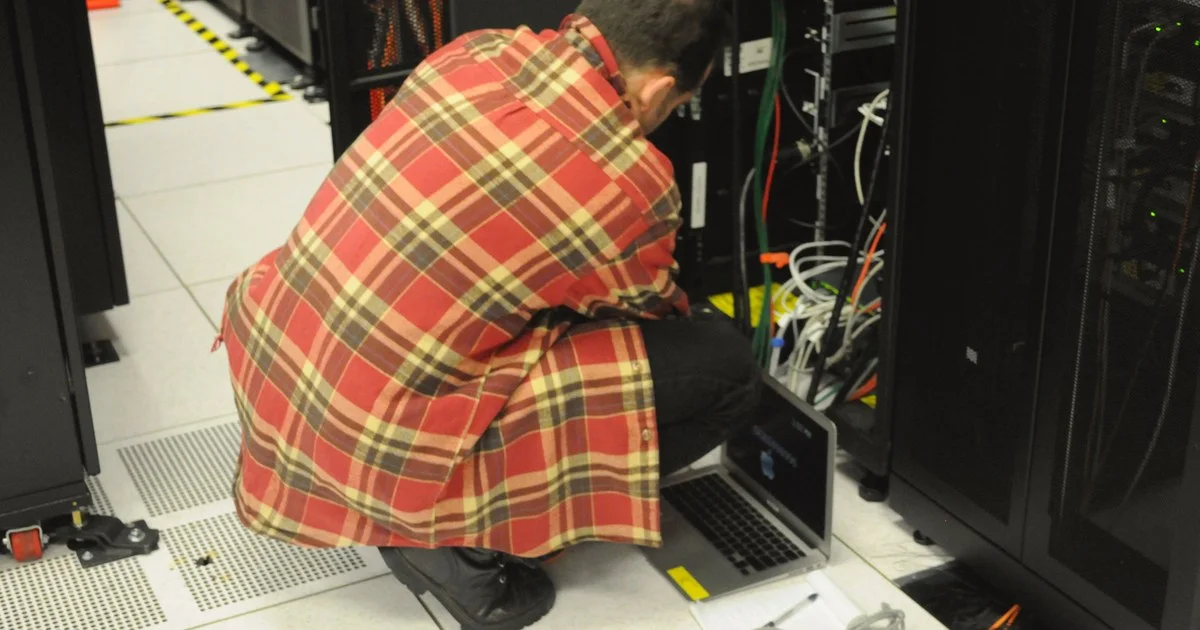
Cover photo: a technician at work on a server rack at NERSC, Lawrence Berkeley National Laboratory. Released into the public domain (CC0) via Wikimedia Commons.
About the author
Quanlai Li
Quanlai Li is a businessman in the USA and the founder of ChatSlide. His priority is always to use journalism to push for transparency and efficiency in decision-making in the AI era.
Keep reading
More from Tech Forum
D-Wave NRC Funding for Quantum Annealing
D-Wave NRC funding for Quantum Annealing is thoroughly analyzed using primary sources and a data-driven context for comprehensive insights.
Steph Moreau / November 23, 2026
Power Bank Rental in the US: How It Works and What It Costs
An eight-hour power bank rental costs $10 on ChargerGoGo's default plans, $32 on Voltage Nexus and $40 on chargeFUZE at Cosm. How US pricing works.
Marcus Yuen / November 20, 2026

Phone Charging Stations for Hospitals Keep Patients Connected
Canadian and US emergency stays now run for hours. What phone charging stations for hospitals have to get right on infection control and battery safety.
Marcus Doyle / November 20, 2026