News
D-Wave NRC Funding for Quantum Annealing
D-Wave NRC funding for Quantum Annealing is thoroughly analyzed using primary sources and a data-driven context for comprehensive insights.
 Steph Moreau
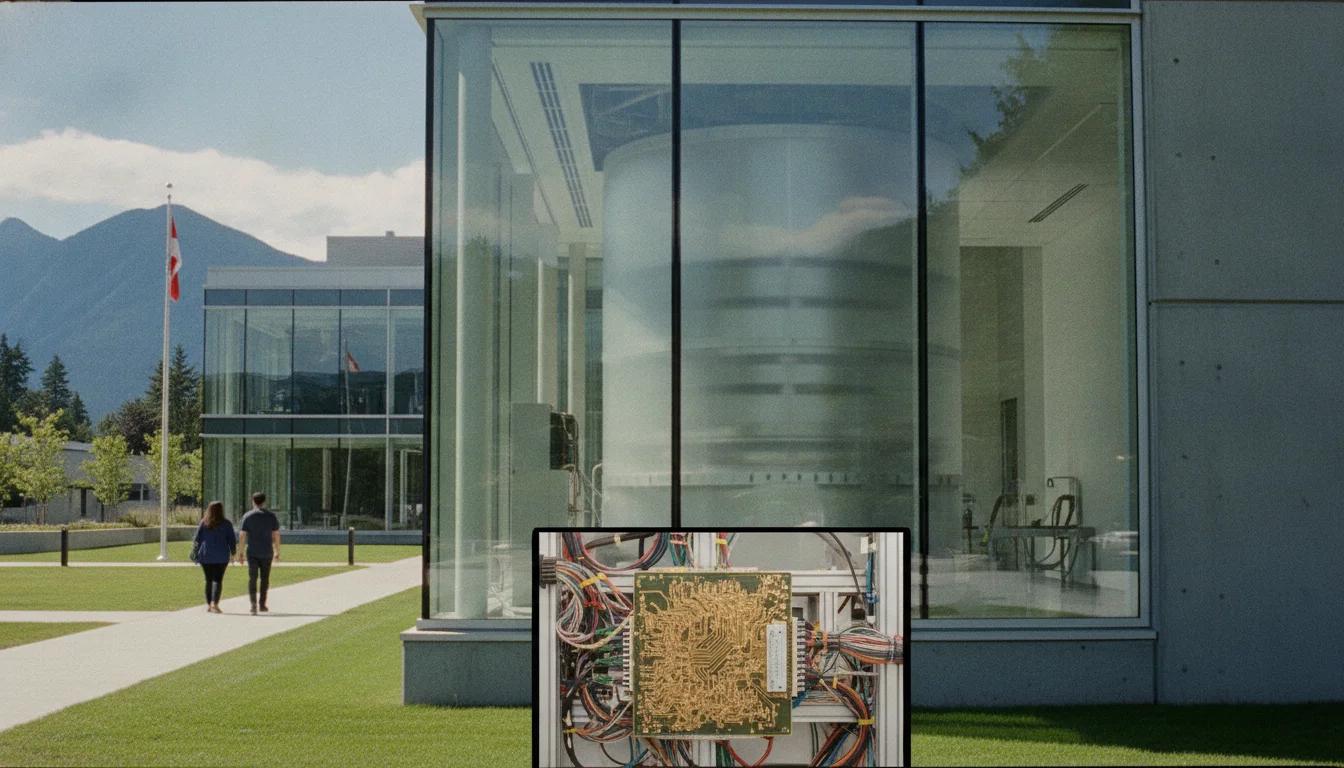
D-Wave Awarded NRC Funding for Quantum Annealing
D-Wave Quantum Inc. announced on August 12, 2026, that it has been awarded up to CAD 300,000 in funding from the National Research Council of Canada's (NRC) Applied Quantum Computing Challenge program to advance annealing quantum computing software for commercial applications. The release, issued from Palo Alto, California, states that the collaboration will focus on next-generation software and algorithms to help organizations tackle larger, more complex optimization problems on D-Wave’s Advantage2 annealing quantum computers. The project will integrate new graph minor-embedding algorithms for D-Wave's Zephyr topology and incorporate them into the Ocean software development kit. This funding underscores a broader national effort in Canada to commercialize quantum technologies and strengthen the country’s quantum ecosystem. D-Wave’s action aligns with NRC’s emphasis on collaboration among government, industry, and academia to accelerate practical quantum applications. The notice also signals ongoing international movement in government-backed quantum initiatives, a trend readers should watch as commercial quantum software tooling expands.
D-Wave NRC funding for Quantum Annealing. This funding, according to D-Wave’s August 12, 2026 press release, marks a concrete step in bridging research and real-world utility for annealing-based quantum computing. The sentence above is a concise synthesis of the core development and is drawn directly from the company’s public filing, which anchors the reporting in a verifiable, primary-source document. For readers seeking the original language and formal statements, the D-Wave press release provides the explicit figures, the program name, and the project scope, including the collaboration terms and expected software impacts. The NRC page that governs the Applied Quantum Computing Challenge program supplies the policy and funding context that makes this award more than a one-off announcement. Readers can verify the program’s duration and its broad aims in the NRC’s program description, which situates this award within a multi-year national effort to advance commercial quantum software. The NRC program page also emphasizes that Canada seeks to lead in applied quantum computing by fostering collaboration across sectors and focusing on algorithms, software, and enabling technologies. The combination of these primary sources—D-Wave’s press release and NRC’s program description—provides a solid, citable basis for the immediate event and its longer-term context. For further context on comparable government funding in related jurisdictions, readers may consult the U.S. CHIPS and Science Act funding announcements, which illustrate parallel government support for quantum computing initiatives and show how such funding is often structured to accelerate development and scale. For example, D-Wave’s CHIPS-related announcements in U.S. filings describe intentions to accelerate both annealing and gate-model programs, underscoring a broader, global trend toward government-backed quantum computing programs. See primary sources linked below for full language and details.
Section 1: What Happened
Announcement specifics and timing
The pivotal event was the August 12, 2026 public release from D-Wave Quantum Inc. stating it had been awarded up to CAD 300,000 in funding from the NRC’s Applied Quantum Computing Challenge program. The release is explicitly dated August 12, 2026, and it is issued from Palo Alto, California, underscoring the cross-border nature of D-Wave’s operations and partnerships. This is a clear, dated event, anchored by a primary-source press release from D-Wave that details the grant’s purpose, fund amount, program name, and the collaboration framework with NRC. The source also notes the Burnaby, British Columbia site as the D-Wave location for the project work, and it describes the project scope as software-focused work designed to extend D-Wave’s Advantage2 annealing quantum computers through new graph embedding algorithms integrated into Ocean. For readers seeking the exact language, the primary source is here: D-Wave Awarded National Research Council of Canada Funding to Advance Commercial Annealing Quantum Computing. The NRC program page that administers the Applied Quantum Computing Challenge provides additional context about why this funding exists and how it fits into Canada’s quantum strategy. See the linked primary sources for the precise wording and programmatic context:
- D-Wave press release: D-Wave Awarded National Research Council of Canada Funding to Advance Commercial Annealing Quantum Computing. August 12, 2026. Palo Alto, CA. Describes CAD 300,000 funding and project details. Anchor: D-Wave press release.
- NRC program page: Applied Quantum Computing Challenge program. Date modified July 15, 2026. Describes program duration (2022–2028) and focus areas. Anchor: NRC program page.
Project scope, technology focus, and deliverables
The press release identifies several concrete deliverables: the development of next-generation software and algorithms to enable larger and more complex optimization problems on D-Wave’s Advantage2 annealing quantum computers; the creation of new graph minor-embedding algorithms for the Zephyr topology; and the integration of these advances into the Ocean software development kit. The work is to be conducted at D-Wave’s Quantum Centre of Engineering Excellence in Burnaby, British Columbia. This set of deliverables indicates a strong emphasis on software enablement and algorithmic optimization to push the practical reach of annealing systems. The emphasis on Zephyr topology and Ocean software aligns with D-Wave’s ongoing strategy to extend the usability of its hardware through software innovations and to improve the problem-mapping process from user problems to QPU topologies. The D-Wave press release explicitly states that software innovation is essential to expanding the performance and commercial impact of quantum computing, a quote attributed to Dr. Trevor Lanting, D-Wave’s chief development officer, which reinforces the narrative that the grant’s value lies in accelerating software maturation rather than hardware alone. The primary sources below provide the exact language and framing:
- D-Wave press release: includes the quotes and project scope, including Zephyr topology and Ocean SDK integration. Anchor: D-Wave press release.
- NRC program page: context about Applied Quantum Computing Challenge’s focus on algorithms, simulations, and software that apply to quantum computing. Anchor: NRC program page.
Collaboration structure and geographic footprint
The NRC’s Applied Quantum Computing Challenge program is designed to foster collaboration across industry, academia, and government, with the aim of accelerating commercialization of quantum technologies while strengthening Canada’s leadership in applied quantum computing. The D-Wave project brings together the company’s Burnaby-based engineering team and NRC’s program framework, illustrating a practical cross-border collaboration model that several governments view as an effective path to scale. The program is described as part of Canada’s broader quantum strategy, which seeks to grow quantum-ready technologies, companies, and talent, building on the Government of Canada’s National Quantum Strategy. The primary sources provide the program’s framing and the collaborative intent:
- NRC program page: Applied Quantum Computing Challenge program. Focus areas include algorithms and simulations, enabling technologies, and models and architecture. Date modified 2026-07-15. Anchor: NRC program page.
- NRC program page: Funded collaborative R&D projects (context on how collaborations are tracked and reported). The page emphasizes collaboration with NRC researchers and industry partners. Anchor: NRC grants and contributions program page.
The broader policy and funding context
In parallel to Canada’s program, U.S. policy momentum around quantum computing has included significant CHIPS and Science Act activity, which has featured funding opportunities for organizations like D-Wave to advance both annealing and gate-model quantum computing. The public-facing documentation around D-Wave’s CHIPS-related initiatives includes a May 21, 2026 exhibit (Exhibit 99.1) announcing a Letter of Intent for up to $100 million in CHIPS Act funding, potentially paired with equity in D-Wave as part of the program’s terms. While this U.S. program is not the NRC’s program, it forms part of the global context in which D-Wave operates, and it helps readers understand the scale and strategic significance of government support for quantum hardware and software. The primary source for the CHIPS Act LOI is the SEC filing Exhibit 99.1, which provides the language around the LOI, the expected geographies (including Burnaby, BC, Canada, among others), and the strategic aims to accelerate development and deployment of D-Wave’s quantum technologies. For readers seeking these details, the CHIPS Act press materials are linked here:
- CHIPS Act LOI press release (SEC Exhibit 99.1): D-Wave Quantum and the Department of Commerce sign LOI for $100 million in CHIPS and Science Act funding. May 21, 2026. Anchor: SEC filing.
- D-Wave CHIPS Act context (other related filings): While not the NRC program, these sources illustrate the broader government funding landscape D-Wave navigates. Anchor: SEC filings.
Section 2: Why It Matters
Implications for D-Wave’s software ecosystem and commercialization timeline
The NRC funding is explicitly targeted at software development and algorithmic advancement for commercial applications. By embedding new graph embedding techniques for Zephyr within Ocean, D-Wave aims to push the practical problem sizes that its Advantage2 annealing systems can handle. The announcement frames this as a strategic move to accelerate the commercialization of quantum applications by enhancing the software stack—an area where customers interact directly with the technology, often more so than with raw hardware specs. This emphasis on software aligns with industry observations that quantum computing’s near-term value lies in how user problems map onto quantum hardware, and how software toolkits translate abstract optimization problems into executable workloads. The D-Wave statement quotes its own Chief Development Officer emphasizing software innovation as essential to expanding market impact. The primary sources underpinning these points are the D-Wave press release and NRC program description:
- D-Wave press release: emphasizes next-generation software, embedding algorithms into Ocean, and integration with Zephyr topology on Advantage2. Anchor: D-Wave press release.
- NRC program page: highlights the program’s focus on algorithms, simulations, and software to enable practical quantum computing. Anchor: NRC program page.
Canada's national strategy and the role of public-private collaboration
Canada’s national strategy for quantum computing positions applied quantum software, algorithms, and practical demonstrations as core levers for market impact. The NRC page framing the Applied Quantum Computing Challenge program describes a multi-stakeholder approach intended to accelerate the commercialization of quantum technologies and strengthen Canada’s leadership in the field. It emphasizes collaboration with industry and academia, and it links to the Government of Canada’s broader National Quantum Strategy. The funding activity with D-Wave is presented as part of this larger strategy, illustrating how government support can catalyze private-sector software development efforts that are closer to end-user applications. Readers should view this as part of a pattern whereby governments seek to accelerate adoption by funding soft infrastructure (software, algorithms, benchmarking, and tooling) as a complement to hardware development. Primary sources:
- NRC program page: Applied Quantum Computing Challenge program (context and alignment with National Quantum Strategy). Anchor: NRC program page.
- NRC: Funded collaborative R&D projects (illustrates the ecosystem of partnerships and scale of collaborative funding). Anchor: NRC grants page.
Global policy context and competitive dynamics
The D-Wave NRC funding for Quantum Annealing sits within a broader international environment where governments are expanding investments in quantum computing to build domestic capabilities and accelerate practical outcomes. The U.S. CHIPS Act, for instance, has catalyzed government-backed funding streams intended to scale both annealing and gate-model systems, with formal announcements describing multi-year commitments and potential equity structures. While the U.S. program is separate from NRC’s Canadian program, the parallel moves by federal agencies in major economies underscore a common objective: push quantum computing from early-stage research toward real-world, revenue-generating solutions. The CHIPS Act-related primary-source document demonstrates the scale and structure of such commitments, including the potential for large awards and national strategic implications. Readers can consult these primary sources to understand how D-Wave and similar companies navigate cross-border funding landscapes as they pursue commercial deployments of quantum hardware and software. Primary sources:
- CHIPS Act LOI press release (SEC Exhibit 99.1). Anchor: SEC filing.
The role of software in value creation for quantum computing
Experts in the field have long argued that the most immediate value in quantum computing comes not from isolated hardware milestones but from software, algorithms, and tooling that enable users to express and solve real problems efficiently on quantum hardware. D-Wave’s emphasis on graph embedding and Ocean integration, funded by NRC, reinforces this view. By focusing on embedding and software ecosystems, D-Wave aims to broaden use-case coverage beyond purely theoretical demonstrations to production-ready workflows. The press release quotes a senior D-Wave executive on the importance of software for widening the technology’s commercial impact, a sentiment echoed by NRC’s emphasis on enabling technologies and models in its program description. Primary sources:
- D-Wave press release (software emphasis and quotes). Anchor: D-Wave press release.
- NRC program page (areas of focus, including enabling technologies). Anchor: NRC program page.
Who benefits in the near term and what this signals for the market
In the near term, the primary beneficiaries are D-Wave’s enterprise customers and development partners who rely on robust Ocean-based software and efficient problem-mapping to tackle larger optimization problems. The award’s CAD 300,000 size suggests a targeted, early-stage investment aimed at software improvements and algorithmic development rather than large hardware production. For readers tracking market signals, this move confirms that government funding agencies are not only supporting hardware prototyping but also actively funding the software infrastructure that enables practical utilization of quantum hardware. This aligns with what industry observers anticipate: the most meaningful commercial gains in quantum computing will come from end-to-end solutions that bridge problem formulation, solver design, and hardware execution. The primary sources offer the concrete funding and project scope, while policy-oriented NRC materials provide the strategic rationale behind such investments.
Section 3: What’s Next
Timeline and milestones
The August 12, 2026 announcement establishes a multi-year program window for the NRC project (the Applied Quantum Computing Challenge program runs within a 2022–2028 timeframe). The immediate milestone is likely the delivery of new embedding algorithms and Ocean integration within the next 12–24 months, followed by subsequent benchmarking against real-world problem classes like logistics optimization and manufacturing scheduling. The D-Wave Burnaby team is expected to work closely with NRC’s program managers to align milestones with program reporting requirements. While the press release does not disclose every milestone date, it emphasizes that the work will extend the capabilities of Zephyr-based topologies and the Ocean SDK, signaling a stage-wise build-out of software capabilities tied to hardware improvements. Readers should monitor D-Wave’s corporate announcements, NRC updates, and further program disclosures for milestone clarifications. Primary sources for the program context and project scope:
- D-Wave press release (August 12, 2026). Anchor: D-Wave press release.
- NRC program page (Applied Quantum Computing Challenge program – duration 2022-2028). Anchor: NRC program page.
What to watch for next
Key indicators of progress will include updates to Ocean with embedded graphs for Zephyr, performance benchmarks on problem classes relevant to commercial customers, and potential collaboration results from the Burnaby center. As the project progresses, expect NRC to publish periodic updates on funded collaborative R&D projects, including any new partnerships or extensions of the award, a pattern visible in NRC’s broader portfolio of funded collaborative initiatives. The NRC page on funded projects and the NRC program page provide the governance framework readers can use to interpret future announcements and to locate official project entries when they appear. Primary sources:
- NRC grants and contributions page (funded collaborative R&D projects). Anchor: NRC grants page.
- NRC Applied Quantum Computing Challenge program page. Anchor: NRC program page.
Potential implications for industry players beyond D-Wave
This NRC-focused initiative may encourage other companies and research institutions to pursue joint developments in quantum software, particularly in the areas of graph embeddings, problem formulation, and optimization workflows built around Zephyr-like topologies and Ocean tooling. The broader implication is a push toward standardized software interfaces and benchmarks that allow diverse industrial customers to translate their real-world optimization problems into quantum-ready workloads. If Canada demonstrates success with the NRC Applied Quantum Computing Challenge program, it could catalyze similar public-private partnerships in other regions and reinforce the value of government-backed software ecosystems as a complement to hardware development. Readers should watch for follow-on collaborations and new program calls from NRC and other national science agencies, as these often accompany or precede larger, multi-year investments.
What’s next for readers who follow the market
Industry watchers should monitor for:
- Subsequent D-Wave press updates about algorithmic breakthroughs or Ocean SDK enhancements.
- NRC program announcements about additional funded collaborative projects, especially those connecting quantum software with end-user sectors such as logistics, manufacturing, and healthcare.
- Related regulatory or policy developments in Canada and allied markets that could shape funding priorities or export controls in quantum technology. While the CAD 300,000 figure represents a focused, early-stage software effort, the broader policy and funding environment indicates an ongoing commitment to translating quantum research into commercially viable solutions.
Closing
The August 12, 2026 NRC funding announcement marks a concrete step in Canada’s ongoing effort to accelerate the commercialization of quantum technologies, while D-Wave positions itself to convert software innovations into broader real-world impact on its Advantage2 platform. This collaboration illustrates the critical role of software tooling in transforming quantum hardware from a laboratory curiosity into a practical engine for optimization, logistics, and beyond. As readers digest this development, the key takeaway is that public investment in quantum software ecosystems can be as consequential as hardware funding for advancing the overall market—particularly in the near term, where practical use cases and robust tooling determine adoption velocity. For ongoing coverage, follow D-Wave’s newsroom updates and NRC’s Applied Quantum Computing Challenge program communications.
The industry is watching closely as Canada’s program officially runs through 2028, and as the global funding landscape continues to evolve, with parallel efforts in the United States and other tech hubs shaping how quickly practical quantum computing becomes a staple of enterprise problem solving. Stakeholders should stay tuned for project milestones, technical readouts, and policy updates that will illuminate how public-private partnerships translate into tangible value for businesses and researchers alike. The next few quarters are likely to reveal how this funding translates into software innovations that push the envelope on problem scales and application domains for quantum annealing.
As always, readers can verify the primary documents behind these developments. The D-Wave press release provides the CAD 300,000 amount, program name, and project scope, including the integration of new graph embedding algorithms into Ocean for Zephyr topology. The NRC Applied Quantum Computing Challenge program page supplies the policy framework and program duration, while the NRC’s broader “Funded collaborative R&D programs” portal contextualizes how such efforts fit into Canada’s national innovation strategy. Together, these sources offer a reliable, citable basis for understanding the event and its implications.
To stay updated, readers should revisit the primary sources for official language and details:
- D-Wave press release: D-Wave Awarded National Research Council of Canada Funding to Advance Commercial Annealing Quantum Computing. August 12, 2026. Anchor: D-Wave press release.
- NRC program page: Applied Quantum Computing Challenge program (Program duration 2022–2028). Anchor: NRC program page.
About the author
Steph Moreau
Steph Moreau is a senior correspondent at Tech Forum, specializing in fintech, enterprise software, and venture capital. Her sharp analysis of funding rounds and market trends helps readers navigate Canada's evolving tech economy.
Keep reading
More from Tech Forum

Cohere Government Equity Investment Canada
The Government of Canada advances Cohere Government Equity Investment Canada with up to CAD 1.6 billion in equity from the federal government.
Marcus Doyle / November 16, 2026

Nomad AI Fleet Management Seed Funding Toronto
Toronto-based Nomad successfully closes a $2M seed funding round to enhance the Nomad AI Fleet Management platform's capabilities.
Claire Bergeron / November 9, 2026

North Vector Dynamics Closes Series a Funding Calgary
North Vector Dynamics Series A funding Calgary: Calgary-based defence tech secures $20M+ funding, signaling sovereign capability growth.
Marcus Yuen / October 31, 2026