AI Patent Landscape Toronto Montreal Vancouver Waterloo 2026


Photo by Igor Omilaev on Unsplash
The AI patent landscape across Toronto, Montreal, Vancouver, and Waterloo 2026 is taking shape as Canada’s four-city AI corridors converge on a national strategy for research, deployment, and governance. Tech Forum’s ongoing coverage of Canada’s AI ecosystems—published in 2026—highlights how Toronto’s Vector Institute, Montreal’s Mila, Vancouver’s BC + AI network, and Waterloo’s startup engine are aligning with PAICE, CAISI, and other federal programs to accelerate real-world AI outcomes. This multi-city momentum matters for startups, investors, and policy makers who want to understand where new AI patent activity and deployment are most likely to concentrate in the year ahead. The data-driven updates released in 2026 show a shift toward closer collaboration between academia, industry, and government, with compute capacity, governance, and deployment becoming as critical as laboratory breakthroughs. As readers examine opportunities and risks, the four-city network is emerging as a practical blueprint for translating research into scalable AI products and services. This broader context is essential for evaluating the patent landscape across Toronto, Montreal, Vancouver, and Waterloo in 2026, as public policy and private sector investments increasingly shape who wins IP battles and who brings new AI solutions to market. (techforum.ca)
In 2026, Canada’s AI ecosystems are being described not as isolated city clusters but as a coordinated national network. Tech Forum’s data-driven updates emphasize that Toronto, Montreal, Vancouver, and Waterloo each contribute distinctive strengths—ranging from research leadership and large-scale compute to industry adoption and startup velocity—while sharing a national policy framework that aims to amplify both innovation and governance. This alignment is reinforced by ongoing federal initiatives such as CAISI and PAICE, which are intended to improve access to compute, support responsible AI governance, and foster cross-city collaboration. For readers tracking AI patent activity, that means a more synchronized environment in which breakthroughs in universal AI technologies can move from the lab into patent filings, pilot projects, and commercial deployments across multiple cities at once. (techforum.ca)
Section 1: What Happened
Announcement timeline and key milestones
March 13, 2026 — national ecosystem update
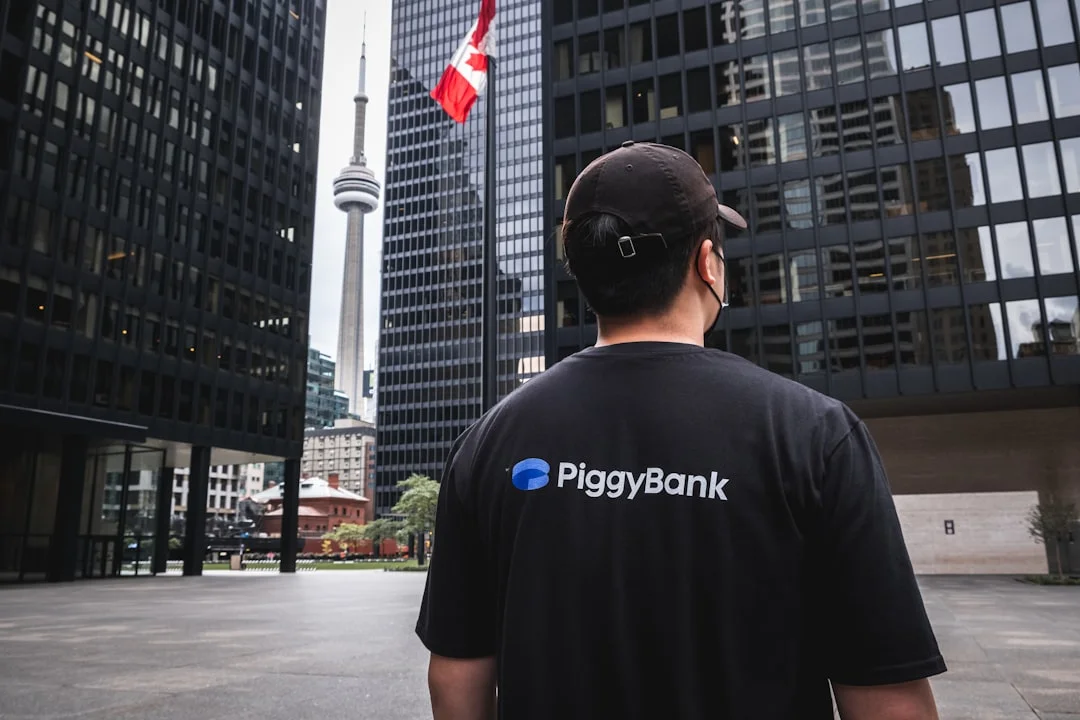
Photo by PiggyBank on Unsplash
Tech Forum released a data-driven update on Canada’s AI regions, highlighting Toronto, Montreal, Vancouver, and Waterloo as a coordinated national network. The report underscored that the four-city ecosystem is becoming more integrated through shared compute infrastructure, governance frameworks, and industry partnerships, with anchor institutions reinforcing collaboration across provinces. The piece noted the central roles of Vector Institute in Toronto and Mila in Montreal, alongside regional deployment efforts in Vancouver and the Waterloo area, as pivotal to Canada’s AI strategy. This framing is important for readers assessing where AI patent activity is likely to intensify as the year progresses. (techforum.ca)
April 29, 2026 — ecosystem update published
Tech Forum published its comprehensive 2026 update on Canada’s AIResearch ecosystems across four major hubs: Toronto, Montreal, Vancouver, and Waterloo. The article confirmed that compute scale, governance, and industry deployment are now shaping the patentable landscape as much as academic breakthroughs. It also highlighted the role of CAISI and PAICE in connecting research to deployment and governance, offering a lens on how IP activity could evolve as more researchers and startups access national-scale compute resources and collaborate across city lines. (techforum.ca)
May 13, 2026 — infrastructure and policy momentum
A separate Tech Forum piece focused on AI-enabled critical infrastructure security across the same four corridors, illustrating how federal programs and private–public partnerships are tying AI innovation to resilience and governance. The article underscored government programs such as the Critical Infrastructure Resilience and Escalated Threat Navigation (CIREN) and sovereign AI compute initiatives, which help define the boundary conditions for AI deployment and, by extension, the kinds of AI patents likely to emerge from applied projects in 2026. (techforum.ca)
April–May 2026 — governance and compute capacity expand
In parallel, the government and industry announced a major sovereign compute program through Enabling Large-Scale Sovereign AI Data Centres, with Vancouver as a key deployment site in May 2026. These policy initiatives contribute to a patent landscape shaped by domestic data localization, improved governance, and cross-border collaboration, which are central to how Canadian AI IP will be developed, protected, and commercialized in 2026. (techforum.ca)
2025–2026 — compute and research infrastructure rollout
The four-city ecosystem is anchored by major compute initiatives such as Mila’s TamIA cluster as part of PAICE, along with Vector’s Killarney and other national compute resources. The PAICE rollout is designed to connect compute capacity with CIFAR AI Chairs and related research programs, enabling more rapid experimentation and collaboration across institutions in Toronto, Montreal, Vancouver, and Waterloo. In 2025–26, these resources were positioned to support increased AI experimentation closer to home, a development with direct implications for IP generation and patenting activity. (techforum.ca)
Key players and the patent-relevant dynamics
Toronto and Montreal: research powerhouses and IP trajectories
Toronto’s Vector Institute anchors applied AI leadership, bridging University of Toronto research with industry partnerships to translate breakthroughs into market-ready AI solutions. Mila in Montreal remains a global hub for foundational AI research, governance, and collaboration across Quebec’s academic and industry ecosystems. The four-city narrative emphasizes that Toronto and Montreal together drive a substantial share of Canada’s foundational AI work, with collaboration increasingly extending into Vancouver and Waterloo. The six key institutions behind this dynamic—Vector Institute, Mila, UTI/University of Toronto, Université de Montréal, McGill, Polytechnique Montréal—are central to discussions about where patentable AI innovations originate. The ecosystem narrative is reinforced by public materials and policy contexts that connect research leadership with national compute initiatives. (techforum.ca)
Vancouver and Waterloo: deployment-first ecosystems and startup engines
In Vancouver, the BC + AI ecosystem emphasizes deployment, ethics, and regional collaboration, aligning with Canada’s broader strategy to scale AI from lab to market. Waterloo’s Velocity incubator, in close partnership with Waterloo.AI and cross-pollination with the Vector Institute, continues to translate research into scalable startups. These regional strengths feed a pipeline of applied AI IP that can reach patent offices through cross-border collaboration and joint ventures with large Canadian tech firms and international players. The Tech Forum analyses highlight Waterloo’s position as a high-velocity startup hub where pilots, partnerships, and venture funding converge with IP strategies that emphasize rapid deployment and scalable business models. (techforum.ca)
National policy and compute infrastructure as IP accelerants
Canada’s Pan-Canadian AI Strategy, supported by CIFAR and the three national AI institutes, provides a framework that influences IP outcomes by accelerating talent development, research collaboration, and deployment. The PAICE compute environment and TamIA cluster are designed to reduce the time between discovery and practical application, a factor that can shorten patent cycles and expand the set of patentable AI methods and systems emerging from these cities. The CAISI initiative and safety governance programs are also shaping the kinds of AI technologies that are pursued in Canada’s four-city network, with implications for patent strategy and regulatory alignment. (techforum.ca)
Montreal’s collaboration profile and cross-city synergies
A notable data point from the global innovation context is Montreal’s strong collaboration footprint, with Toronto consistently appearing as a top collaborating location in PCT activity, indicating cross-city IP and research linkages that can influence patent strategy and joint filings. Montréal’s status as a major innovation cluster—ranked among Canada’s top clusters in 2025—highlights the potential for cross-city patent collaborations between Montreal and Toronto, as well as with Vancouver and Waterloo. This cross-city collaboration pattern matters for patent strategists considering where to file and how to structure co-inventor arrangements. (wipo.int)
Section 2: Why It Matters
Implications for talent, IP strategy, and market readiness

Photo by Steve A Johnson on Unsplash
Population-scale talent and governance
Canada’s AI ecosystem is underpinned by a large, policy-rich talent pipeline. Mila and Vector anchor the country’s foundational AI leadership, while PAICE and TamIA expand the compute backbone needed for large-scale experiments. The 2023–2024 CIFAR AI Chairs program, with hundreds of trainees graduating annually, feeds both the research engine and the emerging IP frontier. In 2025–2026, the ecosystem’s emphasis on governance and safety—through CAISI and allied initiatives—shapes what kinds of AI technologies are pursued and how they are protected by patents. This alignment increases the likelihood that high-impact AI IP will originate from these four cities and then spread through cross-city collaborations as new applicants file for patents domestically and internationally. (techforum.ca)
Cross-city collaboration and patent trajectories
Montreal’s collaboration profile, including significant cross-institution and cross-border activity, reinforces a pattern where IP and patent activity can be enriched through multi-institution co-authorship and joint filings. The WIPO General Innovation Index data for Montreal, showing collaboration with Toronto and other global hubs, underlines the strategic advantage of embedding IP strategy within a broader research and co-ownership framework. For patent planners, this means prioritizing joint filings, licensing arrangements, and cross-jurisdiction strategies that reflect the city-to-city collaboration fabric. (wipo.int)
Deployment, markets, and the IP value chain
The CBRE analysis of AI-driven office demand in 2026 underscores a broader trend: AI-enabled deployment correlates with commercial and real estate activity, signaling growing demand for IP-protected AI platforms, software-as-a-service models, and hardware-software integration solutions. While the CBRE study focuses on commercial real estate, the implied signal is that AI IP is becoming more business-critical as physical and digital ecosystems converge in Toronto, Montreal, Vancouver, and Waterloo. This environment creates opportunities for patenting new deployment frameworks, data processing architectures, and domain-specific AI inventions tied to high-growth verticals. (cbre.ca)
National policy, sovereignty, and IP governance
Canada’s sovereign AI and data-centre initiatives create a regulatory backdrop that can shape patent filings—what gets patented, where, and under what licensing terms. The government’s emphasis on data localization and governance, alongside cross-city programs like CIREN and Enabling Large-Scale Sovereign AI Data Centres, helps reduce regulatory and operational risk for AI developers and users. From a patent perspective, this environment can influence claims strategy—favoring innovations that demonstrate governance compliance, auditable traceability, and robust security features. (techforum.ca)
Who is affected and what readers should watch
Startups, incumbents, and investors
For startups seeking patents, the four-city network’s emphasis on compute access, governance, and cross-city collaboration presents an opportunity to file strong, defensible patents tied to real-world deployments. For incumbents and multinational AI players, the national framework offers a path to scale IP portfolios across Canada while maintaining governance and security controls. Investors will want to monitor PAICE-related compute allocations, CIFAR AI Chair renewals, and cross-city pilot programs as leading indicators of which AI domains are likely to yield robust patenting activity and licensing opportunities. Tech Forum’s ecosystem narrative suggests that both talent pipelines and deployment-focused IP will shape the patent landscape in 2026. (techforum.ca)
Policymakers and researchers
Policy makers can use the four-city model as a reference for how to structure incentive programs that balance rapid innovation with safety and governance. The synergy between Mila, Vector, and Amii (along with the broader national AI strategy) demonstrates a practical approach to funding, compute access, and governance that could influence patenting behavior and commercialization trajectories. Researchers should monitor PAICE rollouts, TamIA expansions, and CIFAR chair dynamics as proxies for where IP-generating activity is most likely to accelerate. (techforum.ca)
Section 3: What’s Next
Next steps, milestones, and watch points

Photo by Igor Omilaev on Unsplash
Ongoing compute expansions and cross-city pilots
PAICE’s expansion across Mila, Vector, and Amii-hosted clusters is expected to continue through 2026–27, with additional hosts planned for broader national coverage. This compute backbone is designed to accelerate experiments, which in turn can shorten the time from discovery to patent filing and commercialization. Observers should watch for new PAICE-hosted allocations, updates to the TamIA program, and cross-city research collaborations that could yield patentable methods, architectures, and training datasets. (techforum.ca)
CIFAR AI Chair renewals and governance initiatives
The ongoing renewal of Canada CIFAR AI Chairs and related training programs remains a key signal for IP activity. As chairs and trainees transition toward industry partnerships and product development, patent filings tied to new academic-industry collaborations are likely to rise. Additionally, CAISI’s governance work will influence the types of AI technologies pursued and how protective IP strategies are designed to align with safety and regulatory standards. (techforum.ca)
Cross-city collaboration as a durable pattern
Montreal–Toronto collaboration, with cross-linkages to Vancouver and Waterloo, is likely to persist as a central theme of Canada’s AI IP strategy. The WIPO-based Montreal cluster data shows that collaboration with major North American tech hubs is a defining characteristic of Montreal’s innovation footprint, suggesting continued emphasis on joint filings, licensing, and joint ventures between Quebec and Ontario players, and potentially with Western Canadian partners. (wipo.int)
Sovereign compute, data governance, and IP strategy
As the Enabling Large-Scale Sovereign AI Data Centres program and related sovereignty initiatives progress, patentees and researchers will need to align IP strategies with data localization requirements and governance standards. The policy and programmatic backdrop will shape not only where AI innovations are developed but also how their IP protections are structured in licenses and cross-border agreements. Observers should monitor public releases from Innovation, Science and Economic Development Canada and related partners for new milestones and funding alignments. (techforum.ca)
Closing
Canada’s four-city AI corridors—Toronto, Montreal, Vancouver, and Waterloo—are evolving toward a coordinated national framework that supports both cutting-edge AI research and practical deployment. The 2026 updates from Tech Forum underscore a growing alignment among universities, national institutes, and industry partners around compute capacity, governance, and AI safety. This alignment creates a dynamic environment for AI patent activity, where breakthroughs in foundational AI work can translate into defensible IP and market-ready products that travel across the country. For readers seeking to understand where AI patent activity is likely to intensify in 2026, the four-city network offers a clear map: high-caliber research, robust compute infrastructure, active industry engagement, and governance that emphasizes safety and sovereignty. As policy programs mature and cross-city collaborations deepen, patent strategy in Canada is poised to become more integrated with deployment, funding, and market access across Toronto, Montreal, Vancouver, and Waterloo.
In the months ahead, staying attuned to PAICE rollouts, CIFAR AI Chair renewals, and cross-city pilots will be essential for anyone tracking the AI patent landscape in Canada. Readers should follow official updates from Vector Institute, Mila, Waterloo.AI, and BC + AI, as well as government announcements related to CAISI and PAICE, to capture the next wave of patent-worthy AI innovations as they emerge across the four corridors. (techforum.ca)