News
Waabi Series C Funding and Uber Partnership
Explore Waabi's Series C funding round and Uber partnership: an in-depth analysis of the $1B investment and robotaxi service expansion with Uber.
 Marcus Doyle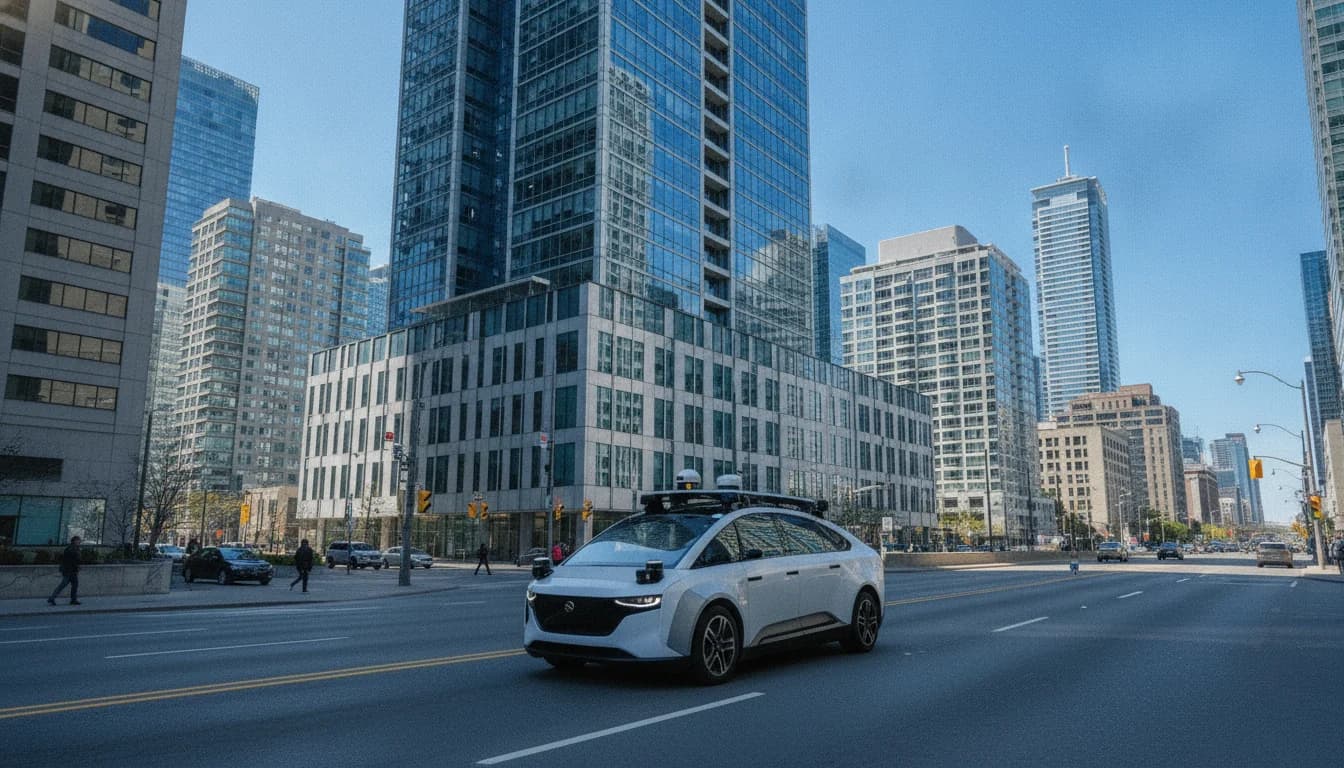
Waabi, the Toronto-based autonomous driving company built on a heady mix of end-to-end AI and scalable simulation, announced a landmark move on January 28, 2026: the Waabi Series C funding and Uber partnership that together propel the company toward a multi-vertical, AI-driven approach to mobility. The raise comprises an oversubscribed Series C of $750 million, led by Khosla Ventures and G2 Venture Partners, plus a milestone-based investment from Uber totaling approximately $250 million to support a robotaxi deployment on the Uber platform. The combined financing is described as the largest fundraise in Canadian history and signals a broader, cross-vertical strategy for Waabi’s Physical AI Platform. The Uber partnership also marks Waabi’s first major expansion beyond autonomous trucking into the robotaxi space, signaling a potential shift in how ride-hailing platforms source and deploy driverless technology. This development matters not only for Waabi’s trajectory but for how the broader autonomous-vehicle ecosystem envisions scaling across trucking and passenger mobility alike. (techcrunch.com)
What Happened
Waabi’s Series C close and the Uber partnership are the focal points of the January 2026 announcement, but the details illuminate a broader strategic ambition. Waabi confirmed an oversubscribed $750 million Series C round, with Khosla Ventures and G2 Venture Partners as lead investors. In addition, the company disclosed a milestone-based $250 million investment from Uber to back Waabi’s robotaxi deployment on Uber’s platform. Taken together, these arrangements position Waabi to scale its “Waabi Driver” across two major mobility verticals—autonomous trucking and robotaxis—under a unified AI stack. This cross-vertical approach is a deliberate departure from more siloed AV strategies and is intended to yield technology, safety, and operational efficiencies that benefit both applications. The funding total, counting both the Series C and Uber’s milestone commitments, places Waabi’s reported new capital at roughly $1 billion, a figure widely reported across industry outlets and Waabi’s own disclosures. (techcrunch.com)
Waabi’s Series C close: structure, investors, and rationale
Waabi’s press materials and subsequent industry coverage describe the financing as a two-piece capital package: a $750 million Series C and a $250 million milestone-based capital injection from Uber. The Series C was led by Khosla Ventures and G2 Venture Partners, with additional participation from investors including Uber itself, Nvidia’s NVentures, Volvo Group Venture Capital, Porsche Automobil Holding SE, BlackRock, Radical Ventures, and others. This group of financiers underscores a broad spectrum of strategic and financial backers aligning with Waabi’s plan to scale across multiple mobility modalities. The GlobeNewswire release explicitly notes the scale of the round and the breadth of investors, framing the round as “the largest fundraise in Canadian history.” The same release highlights Uber’s role not merely as a financial backer but as a strategic partner, tying funding to a concrete plan to deploy Waabi Driver-powered robotaxis on the Uber platform and to accelerate market entry. (globenewswire.com)
The Uber partnership: depth, scope, and initial commitments
Uber’s involvement is both financial and strategic. In Waabi’s reporting, Uber’s investment is described as milestone-based, tied to the development and deployment of Waabi Driver-powered robotaxis on the Uber platform. TechCrunch’s coverage emphasizes that the partnership aims to deploy 25,000 or more Waabi Driver robotaxis on Uber’s network over time, though the timeline for such a large-scale rollout remains undisclosed. Uber’s leadership reinforced the strategic nature of the collaboration, with Uber CEO Dara Khosrowshahi commenting positively on Waabi’s technology and its ability to scale across mobility verticals. The GlobeNewswire release captures Uber’s sentiment and the broader implications: the partnership is framed as a mutual bet on the safety, scalability, and efficiency gains possible when a single, robust AI stack powers both robotaxi and trucking operations. Waabi’s CEO Raquel Urtasun also foregrounds how Waabi’s approach aims to generalize across vehicle types and environments, a core part of the joint vision with Uber. > “We’re very excited to deepen our partnership with Waabi as they significantly scale their Physical AI Platform and enter a new phase of an already remarkable journey,” said Uber CEO Dara Khosrowshahi. (globenewswire.com)
The technology angle: one platform, multiple applications
A central theme in Waabi’s narrative is the ability of its Physical AI Platform to generalize across trucking and robotaxis, enabling a shared brain that can power both autonomous trucks and passenger-vehicle robotaxis. TechCrunch frames this as Waabi’s core advantage: a unified AI stack that can be applied to different vehicle form factors and use cases without building entirely separate perception, planning, and control systems for each vertical. Waabi’s public-facing materials describe the platform as combining an end-to-end AI model with a high-fidelity simulator (Waabi World) to train and validate the Driver across diverse scenarios. The GlobeNewswire release explains that the Waabi Driver’s generalization across geographies and environments is a defining feature, enabling scalable deployment across trucking and passenger mobility on a single technology base. This architecture is positioned as a potential resilience booster for robotaxi deployments, given that safety and reliability hinge on robust, adaptable AI systems. (techcrunch.com)
Early-stage context and CEO commentary
Raquel Urtasun, Waabi’s founder and CEO, has been a consistent voice in articulating the company’s vision of scalable, safety-first autonomous technology. The TechCrunch interview excerpts emphasize her stance that Waabi’s approach—built on a “closed-loop simulator” and a generalizable AI model—helps Waabi avoid the capital-intensive, data-heavy model that has constrained some peers. In the wake of the funding and Uber partnership, Waabi’s leadership has reiterated the strategic intent to leverage waabi Driver for trucking while simultaneously expanding toward robotaxis, leveraging a single, scalable AI core. The combination of Urtasun’s background (a former Uber ATG leader) and Uber’s continued interest in Waabi’s technology creates a narrative of continuity and evolution: a company that began with trucking now moving into passenger mobility with substantial backing from an established ride-hailing platform. (techcrunch.com)
Why It Matters
The Waabi Series C funding and Uber partnership land at a moment when the autonomous vehicle (AV) sector is contending with both the promise of cross-vertical AI-driven scaling and the practical barriers to real-world, mass-market deployment. The implications extend beyond Waabi’s balance sheet; they touch on platform strategies for robotaxi operators, venture capital dynamics around AV funding rounds, and the broader competitive landscape in both trucking automation and passenger AVs. Several threads are worth unpacking to understand why this development matters for readers focused on technology and market trends.
Cross-vertical AI architecture: a potential efficiency multiplier
Waabi’s claim that a single AI model can power multiple vehicle types—autonomous trucks and robotaxis—addresses a longstanding industry challenge: the capital and complexity of maintaining separate stacks for disparate mobility applications. If Waabi’s approach proves scalable and safe in real-world contexts, it could offer a blueprint for other AV developers seeking to maximize the return on their AI investments by reusing perception, decision-making, and control logic across domains. This alignment with a “shared brain” concept is underscored in Waabi’s materials and in coverage of the deal. Analysts note that the cross-vertical strategy, if executed well, may help accelerate deployments and reduce capital intensity, a key constraint for many AV pilots and fleets. (globenewswire.com)
Market implications for robotaxis and autonomous trucking
Waabi’s expansion into robotaxis, supported by Uber’s investment and exclusive partnership, signals a potential acceleration of robotaxi pilots and scale on a platform with a major ride-hailing footprint. The robotaxi deployment target—“25,000 or more Waabi Driver-powered robotaxis over time”—represents a substantial scale ambition. While the timeline remains undisclosed, the magnitude of the stated goal indicates a strategic push into passenger mobility that could become a meaningful data source, testing ground, and revenue stream for Waabi and Uber alike. This is particularly notable given Uber’s broader push to build out its own AV capabilities and data networks through initiatives like Uber AV Labs. The combination of Waabi’s technology and Uber’s platform reach could influence how quickly other AV developers pursue cross-vertical strategies, potentially shaping investment appetites and partnership models in the sector. (techcrunch.com)
Ecosystem and investor dynamics
The funding round’s roster—Khosla Ventures and G2 Venture Partners leading, with Uber, Nvidia’s NVentures, Volvo Group Venture Capital, Porsche, BlackRock, Radical Ventures, ADIA, Linse Capital, and Incharge Capital among participants—highlights the broad appetite for AV technologies that can scale across use cases. This mix suggests that both strategic corporate investors and traditional VC funds see Waabi as a vehicle to gain exposure to a more scalable, capital-efficient AV paradigm. The deal also places Waabi at the center of a network that includes Volvo Autonomous Solutions, Nvidia, and legacy automotive brands, which could influence alliances, vehicle integrations, and standards development in the coming years. For readers tracking funding trends, this round reinforces a pattern where cross-vertical AI platforms attract both strategic capital and financial risk-takers seeking exposure to the AI-enabled autonomy trend. (globenewswire.com)
Safety, timeline realism, and regulatory context
One area of ongoing debate in AV investment and deployment is the pace and safety of real-world driverless operation. While Waabi’s management stresses its simulation-first approach and redoubled focus on scalable safety, the lack of a published rollout timeline for robotaxis and the fact that Waabi has primarily progressed through pilots and controlled deployments to date mean questions persist about how quickly robotaxi service levels can scale. Industry observers will be watching for safety metrics, regulatory approvals, and vehicle integrations with OEMs, as these factors often determine the speed at which pilots move from demonstration to revenue-generating operations. In coverage of the deal, reporters have highlighted the timeline uncertainty even as they note the strategic significance of the partnership and the cross-vertical capability Waabi seeks to demonstrate. (techcrunch.com)
What’s Next
In the wake of the Waabi Series C funding and Uber partnership, several near-term and longer-term steps are anticipated. The public record provides some guidance, but many specifics—such as deployment locations, initial vehicle partners, and regulatory milestones—remain to be announced or kept confidential.
Near-term milestones and immediate actions
- Robotaxi deployment planning on the Uber platform: Waabi and Uber are expected to outline initial pilots and deployment paths, including target geographies and vehicle configurations. While the exact rollout timeline for the robotaxi program has not been published, the partnership is anchored by Uber’s commitment to fund and accelerate the program through milestone-based capital, signaling a high-priority execution track for Waabi. The TechCrunch reporting emphasizes the absence of a firm rollout timeline, but also the emphasis on rapid progress given the scale of the investment and the scope of deployment. (techcrunch.com)
- Continued trucking deployments with Waabi Driver: Waabi’s core trucking business and its commercial pilots remain central to the company’s immediate focus. The funding is described as accelerating Waabi’s progress in autonomous trucking, with the additional capital enabling broader commercialization. Expect updates on trucking pilots, fleet partnerships, and safety validations as Waabi’s engineering teams translate funding into real-world operations. (globenewswire.com)
- Uber AV Labs and data strategies: The coexistence of Waabi’s technology with Uber’s broader AV data initiatives suggests a continuing emphasis on data collection, safety, and platform integration. Uber’s broader AV strategy includes data initiatives intended to improve algorithmic safety and vehicle integration, which will influence how Waabi Driver-backed robotaxis are tested and refined before broader deployment. (techcrunch.com)
Longer-term roadmap and strategic implications
- Scale of robotaxi deployment: The stated target of 25,000 robotaxis "over time" is a bold goal that has the potential to reshape Waabi’s business model and Uber’s ride-hailing capabilities. Achieving such scale would require robust OEM partnerships, regulator-friendly Safety cases, and a reliable safety record across diverse driving environments. The magnitude of the target suggests a multi-year horizon with phased rollouts and performance milestones across multiple geographies. (globenewswire.com)
- Cross-vertical optimization: Waabi’s technology alignment across trucking and robotaxis could unlock operational efficiencies, including shared data pipelines, safety validation frameworks, and AI model improvements that benefit both verticals. If successful, the cross-vertical approach could encourage further investments in AI-driven mobility platforms that seek to amortize R&D costs across multiple vehicle types and geographies. (techcrunch.com)
- Competitive dynamics: Waabi’s foray into robotaxis places the company in direct conversation with other major AV players, including companies pursuing mixed-vertical strategies or robotaxi-plus-trucking models. Coverage indicates that Waabi’s approach—coupled with Uber’s platform reach—may influence investor sentiment and competitive strategies across the industry, including considerations by other ride-hailing platforms and automakers. As these dynamics unfold, stakeholders will pay attention to safety records, regulatory milestones, and the pace of deployment in core markets. (fortune.com)
What’s Next for Readers and Industry Watchers
For readers tracking the intersection of AI, mobility, and market dynamics, the Waabi Series C funding and Uber partnership provide a focal point for several ongoing debates: the viability of cross-vertical AI platforms, the economics of robotaxi deployments, and the role of large corporate backers in accelerating AV commercialization. Analysts will be watching for concrete rollout details, safety performance metrics, and regulatory approvals as Waabi progresses from pilots to scale. The collaboration’s emphasis on a shared AI brain across vehicle types highlights a broader industry motif: the push toward scalable, adaptable AI architectures that can power multiple mobility modalities without duplicating core capabilities. The coming quarters could reveal whether Waabi’s model delivers on its promise of capital-efficient, rapidly scalable autonomous transportation.
In the broader context of the autonomous-vehicle sector, Waabi’s latest round and Uber partnership add to a growing chorus of major funding rounds and strategic alliances intended to push the technology from lab and pilot sites toward commercial realities. The collaboration’s potential to influence how robotaxis integrate with ride-hailing networks—and how autonomous trucking expands its footprint—will be an important topic for policymakers, fleet operators, investors, and technology researchers alike. As Waabi and Uber move from announcements to action, observers will scrutinize not just the headline numbers but the underlying performance, safety, and customer experience metrics that ultimately determine whether these ambitious visions translate into durable, real-world results. (globenewswire.com)
Closing
The January 2026 Waabi Series C funding and Uber partnership mark a pivotal moment in the evolution of autonomous mobility—one that ties together capital, cross-vertical AI architecture, and strategic platform partnerships to accelerate the path from pilot programs to scalable deployment. While questions about timing and rollout persist, the combination of a substantial Series C and a milestone-based Uber investment signals both confidence in Waabi’s technology and a clear bet on robotaxis as a future pillar of mobility ecosystems. As Waabi continues to progress, observers will be watching for real-world deployment updates, safety milestones, and the ways the company’s “Physical AI Platform” translates into tangible improvements in vehicle efficiency, safety, and utilization across both trucking and passenger transport. The industry’s trajectory remains a work in progress, but the current milestone injections—and the partnership with Uber—provide a concrete signal that cross-vertical autonomy is moving from theory to practice at an accelerating pace. (techcrunch.com)
About the author
Marcus Doyle
Marcus Doyle is a Toronto-based technology writer covering cybersecurity, hardware, and supply-chain risk.
Keep reading
More from Tech Forum

Thin Air Labs Funding Catalyst Calgary Milestone
Discover the data-driven update on Thin Air Labs' Funding Catalyst Calgary milestone, achieving a remarkable $100M in non-dilutive funding.
Marcus Yuen / September 26, 2026

OPC OpenAI Privacy Findings: Canada Regulators' Joint Review
OPC OpenAI privacy findings summarize an extensive joint Canadian investigation into the data handling practices of ChatGPT.
Steph Moreau / September 25, 2026
Bell AI Fabric Sovereign AI Infrastructure Canada
Bell AI Fabric sovereign AI infrastructure Canada powers a landmark sovereign AI deal in Canada, linking data residency with national compute.
Gavin Foss / September 24, 2026