News
Bell AI Fabric Sovereign AI Infrastructure Canada
Bell AI Fabric sovereign AI infrastructure Canada powers a landmark sovereign AI deal in Canada, linking data residency with national compute.
 Gavin Foss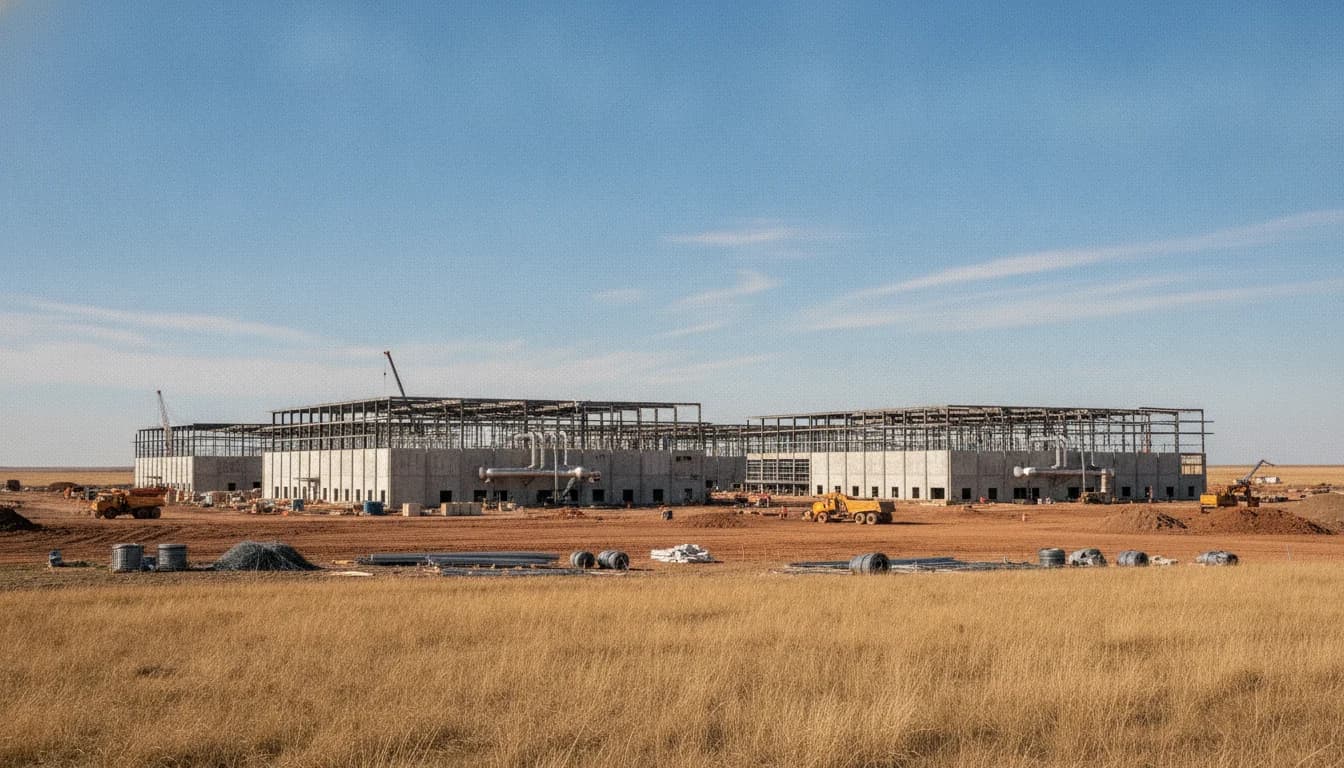
Bell AI Fabric sovereign AI infrastructure Canada is now at the center of a pivotal Canadian tech story. On June 18, 2026, Bell Canada and a consortium of technology partners announced a landmark deal to advance sovereign AI infrastructure across Canada. The arrangement brings together Bell AI Fabric’s data center and connectivity backbone with Cohere’s enterprise AI capabilities, Hypertec’s Canadian-built hardware, and BUZZ High Performance Computing’s cloud-native AI layer. The announcement, issued from Montreal, signals a concerted push to keep critical AI compute and data within Canadian borders, aligning with national data-sovereignty priorities and a broader effort to unlock scale AI workloads for government, research institutions, and private enterprises. The event matters because it reframes where AI workloads run, who controls the infrastructure, and how Canada can cultivate an ecosystem that sustains innovation while maintaining strict data residency and security standards. (bce.ca)
As the industry moves from experimentation to large-scale deployment, Canada’s sovereign AI agenda has gained momentum through a series of linked moves, including a complementary Saskatchewan project that expands Bell AI Fabric’s footprint with a 300 MW data center and a pathway to even larger capacity. The June 18 deal sits atop Bell’s earlier Saskatchewan collaboration and a national narrative about sovereign AI built with Canadian partners. The Bell press release emphasizes the goal of operating AI systems on infrastructure hosted and governed in Canada, with data processed on Canadian soil and under Canadian rules. This is not a vacuum; it reflects a growing portfolio of partnerships and policy alignment designed to de-risk AI deployments for public-sector and enterprise users alike. (bce.ca)
Section 1: What Happened
Announcement Details
The players and date: On June 18, 2026, Bell Canada (BCE), Cohere, Hypertec, and BUZZ High Performance Computing (BUZZ HPC) announced a joint AI infrastructure deal intended to accelerate sovereign AI workloads in Canada. The joint press materials describe a plan to operate AI models and workloads on Canadian-owned, Canadian-hosted infrastructure, tying together Bell AI Fabric’s nationwide data center and connectivity platform with Cohere’s enterprise-grade AI capabilities, Hypertec’s Canadian-built GPU servers, and BUZZ HPC’s AI-native cloud layer. The release further frames this as part of the ongoing evolution of the Canadian Sovereign AI Alliance and a broader shift toward production-scale AI within national borders. This announcement was issued from Montreal and explicitly highlights the goal of “Canadian infrastructure, with Canadian partners” to strengthen data governance, performance, and security for public-sector and enterprise customers. (bce.ca)
The core proposition: The deal is designed to provide a high-assurance, Canadian-hosted stack for sovereign AI workloads, including government and enterprise use cases that require strict data residency and custody standards. Bell will supply data center capacity and connectivity from its Merritt, British Columbia facility, while BUZZ HPC will deliver the AI-native cloud layer using Hypertec’s Canadian-built hardware and NVIDIA acceleration, and Cohere will run its foundation models within the platform to serve government and enterprise customers. The partnership is positioned as a repeat and expansion of Bell AI Fabric’s existing platform, aiming to reduce cross-border data movement and increase trust in AI deployments across Canada. The companies cite the importance of a “Canadian-based AI capabilities” and emphasize governance, security, and resilience as core motivations. (bce.ca)
Immediate framing and messaging: The Bell release quotes executives emphasizing Canada’s AI ecosystem and sovereignty, noting that the combined platform will support production-scale AI with governance aligned to Canadian priorities. The press materials also connect this deal to ongoing national conversations about data sovereignty, critical infrastructure resilience, and the role of domestic supply chains in AI deployment. The press release includes multiple statements from company leaders underscoring the strategic alignment with Canada’s broader AI ambitions and its reliance on Canadian-made hardware and local talent. (bce.ca)
Related facts and context: The expansion comes after Bell’s earlier Saskatchewan agreement, which introduced a 300 MW data center in the Rural Municipality of Sherwood, near Regina, and plans to power sovereign AI compute with a portion of that facility’s capacity, while linking to Bell’s national fiber backbone with SaskTel. This initial project is described as Bell AI Fabric’s largest-ever investment in Saskatchewan and as a stepping stone toward larger national-scale sovereign AI infrastructure. The Saskatchewan facility is slated to come online in stages, with the first data halls expected in the first half of 2027. The project is framed as a catalyst for Saskatchewan’s economy, with significant job creation and long-term growth in AI-driven industries. (bce.ca)
Key numbers embedded in the announcements: The Saskatchewan data center project in March 2026 was announced as a 300 MW facility, with construction beginning in spring and stage-by-stage online deployment beginning in 2027. The government’s related updates in September 2026 discuss a broader expansion to up to 1.2 GW of Canadian AI infrastructure capacity in Saskatchewan, combining the original 300 MW with up to 900 MW of additional capacity under a Bring Your Own Power framework. That expansion is described as a pathway to a 1.2 GW Canadian AI infrastructure hub, reinforcing the sovereignty narrative while signaling substantial scale. These numbers sit alongside other estimates of economic impact and employment associated with the projects. (bce.ca)
Primary sources and direct links: The core event—the June 18, 2026 landmark deal—appears in Bell’s official Newsroom release and in Bell’s press materials; the Saskatchewan data-center agreement details are captured in Bell’s Saskatchewan press release (March 16, 2026) and related government communications (September 14, 2026). For readers seeking the official texts, the Bell June release is here and the Saskatchewan 300 MW release is here, while the Saskatchewan Data Centre Framework and sovereignty principles are described by the Government of Canada and Government of Saskatchewan in related materials. This multi-source approach provides a careful, (primary-source) documentary trail of the events and their stated aims. (bce.ca)
Quote from the event: Michel Richer, President of Bell AI Fabric, called the deal a milestone in Canada’s pursuit of a sovereign AI stack, emphasizing production use within Canada and governance aligned to national priorities. Cohere’s Canada head framed the partnership as expanding ways to deploy AI models in a trusted, Canada-hosted environment. Hypertec and BUZZ HPC leaders stressed the importance of Canadian-made hardware and a reliable, scalable platform for enterprise-grade AI workloads. These quotes appear in the published release as part of the event’s formal messaging. (bce.ca)
Infrastructure and Capabilities in Play
The joint platform is anchored in Bell AI Fabric’s national compute and data-center backbone, with the Merritt, British Columbia facility serving as a key strategic site for Canadians seeking cloud-native AI infrastructure that remains under Canadian governance. The June announcement references a broader intent to deploy a sovereign AI stack across regional data centers and to empower Canadian institutions with secure, compliant compute, storage, and networking services that are designed to meet public-sector requirements and enterprise security standards. (bce.ca)
The technical stack includes BUZZ HPC’s AI-factory and NVIDIA-based acceleration, Hypertec’s Canadian-built hardware, and Cohere’s enterprise-grade AI models and tooling. The arrangement is framed as a production-grade, sovereign AI fabric that can host a range of workloads—from language model inference to enterprise AI deployments—within Canada. The emphasize on hardware provenance and on a closed-loop system aligns with Canada’s emphasis on domestic technology ecosystems and secure supply chains. For readers evaluating the technical dimension, the coalition’s approach highlights end-to-end sovereignty across compute, storage, connectivity, and software layers. (bce.ca)
The Saskatchewan 300 MW project, announced earlier in March 2026, laid groundwork for a national-scale sovereign AI infrastructure: it would bring online multiple data halls in stages, with the first stage expected in the first half of 2027 and a future expansion path toward greater capacity, all while maintaining a strong focus on data residency and sovereign compute. The project’s economic implications include job creation, regional development, and the broader potential to drive AI research and industry in Canada. These facts are detailed in Bell’s official release and corroborated by the Government of Saskatchewan’s communications. (bce.ca)
Data sovereignty as a structural principle: The Bell-Cohere-Hypertec-BUZZ HPC collaboration positions data sovereignty not only as a compliance requirement but as a core architectural design principle for the platform. This emphasis aligns with Canada’s policy environment and with government-led data-center framework efforts. The Saskatchewan Data Centre Framework, which governs major data-center investments, is cited by the provincial government as foundational to approving expansions like Bell AI Fabric’s Saskatchewan project. The framework’s six principles—Canadian ownership, data sovereignty, local jobs, operating experience, Bring Your Own Power, and centralized intake—provide the governance backdrop for the deal and its rollout. (saskatchewan.ca)
Section 2: Why It Matters
Data Sovereignty, National Security, and Trust
Sovereign AI compute within Canada matters for public-sector integrity and national data security. The June 18 deal explicitly frames Canadian sovereignty as a strategic objective, reinforcing the idea that AI models and their operational environments can be hosted and governed domestically. The Bell press materials describe sovereignty as a design principle that keeps data “within Canada,” with governance aligned to Canadian rules and standards. This approach is consistent with broader national directions on critical infrastructure and digital sovereignty, which emphasize trust, resilience, and domestic capacity. (bce.ca)
The Saskatchewan expansion deepens the sovereignty narrative by anchoring the Bell AI Fabric platform in a jurisdiction with its own data-centre framework and regulatory regime. The government’s September 14, 2026 release emphasizes that the expansion keeps Canadian data storaged and processed by a Canadian company operating under Canadian rules. In effect, the project is framed as both a national capability and a regional capability—linking provincial sovereignty with a national AI infrastructure stack. This dual framing helps explain why multiple levels of government and corporate participants have aligned around a common sovereignty objective. (saskatchewan.ca)
Governance, policy, and standards alignment: The federal and provincial policies highlighted in publicly available materials show a trend toward formalizing governance structures around sovereign AI infrastructure. Canada’s broader data-center and AI strategy emphasize responsible development, data residency, and governance frameworks that help reduce cross-border data movement and regulatory risk. The policy environment supports private-sector investment in sovereign AI platforms when paired with clear standards for data custody and secure, Canadian-hosted compute. The Bell/Cohere/Hypertec/BUZZ HPC collaboration is presented as a concrete embodiment of that policy direction, translating high-level sovereignty principles into a functional, scalable platform. (ised-isde.canada.ca)
Economic and Regional Impacts: Jobs, Investment, and Innovation
The Saskatchewan 300 MW facility and the broader expansion are framed as major economic drivers. Bell’s Saskatchewan release projects thousands of jobs across trades, engineering, and support services, with a long-term uplift in tax revenues and related economic activity. The analysis in the Bell release also notes the potential for significant short- and long-term benefits in the province, underscoring how sovereign AI infrastructure can be a regional economic anchor. This aligns with government communications that position the project as a “nation-building” investment with durable benefits for Saskatchewan and Canada. (bce.ca)
The joint deal’s economic logic rests not only on construction and operations but on the ability to attract and retain AI-driven activity within Canada. By combining a Canadian-built hardware stack, native AI models, and a national compute backbone, the coalition aims to create a compelling value proposition for public institutions, researchers, and enterprise customers who require domestic processing, governance, and security assurances. The press materials stress a vision of Canada becoming a hub for sovereign AI compute, supported by high-grade infrastructure, skilled labor, and a robust ecosystem of Canadian technology partners. This combination is designed to increase AI maturity in Canada while building a trusted supply chain that can compete globally. (bce.ca)
Industry-wide implications: The Bell-led sovereign AI stack could influence broader technology-market dynamics in Canada, potentially encouraging other large-scale data-center investments and partnerships with Canadian vendors and partners. The involvement of Cohere, Hypertec, and BUZZ HPC signals an ecosystem approach, where AI models, hardware, cloud services, and governance co-evolve. The market implications extend beyond immediate revenue and job numbers; they include longer-term effects on AI research ecosystems, government procurement strategies, and the attraction of global AI talent to Canadian projects that emphasize sovereignty and local control. Analysts and policymakers will likely monitor how this coalition’s performance translates into measurable outcomes such as data-residency compliance, energy efficiency, and regional economic spillovers. (bce.ca)
Leadership and Public Discourse: A Neutral, Data-Driven Lens
- The editorial context for Tech Forum emphasizes neutral, data-driven analysis of technology and market trends. In this frame, the Bell AI Fabric sovereign AI infrastructure Canada narrative offers a rare, data-rich case study of a national sovereign AI stack in operation. The June 18 announcement provides concrete details about participants, capabilities, and governance aims, while the Saskatchewan expansion offers a tangible, measured scale-up with explicit capacity figures and timeframes. The combination provides a robust, verifiable basis for analysis of sovereign AI strategy, its economic implications, and its policy alignment with Canada’s digital future. Readers can cross-check the primary documents to assess the credibility and pace of progress across multiple jurisdictions. (bce.ca)
Section 3: What’s Next
Timeline, Milestones, and Watch-Items
Short-term milestones: The June 18, 2026 announcement positions the Bell AI Fabric platform to enter a new phase of deployment with Cohere, Hypertec, and BUZZ HPC as strategic partners. The Saskatchewan project’s first stage is already anticipated to come online in the first half of 2027, with broader capacity development proceeding in subsequent phases. Readers should watch for execution updates from Bell AI Fabric, including milestones around data-center readiness, site permitting, and stage-wise online dates for the initial data halls and integrated compute layers. (bce.ca)
Mid-term milestones: The Bring Your Own Power framework and the Data Centre Framework approvals in Saskatchewan provide a governance roadmap for expanding capacity, wildlife and environmental assessments, and regulatory clearances. As these frameworks mature and as Canadian energy and grid integration considerations evolve, the project will likely disclose more precise phasing, power allocations, and site development timelines. The combination of provincial approvals and corporate deliverables will shape when and how quickly the sovereign AI infrastructure reaches its planned 1.2 GW scale. (saskatchewan.ca)
Long-term vision and risk factors: Bell’s finance and investor materials indicate large capital requirements and the potential for significant economic returns if the sovereign AI stack reaches scale. However, investors and policymakers will need to consider energy consumption, grid capacity, and the ability to sustain a secure, resilient platform at scale. The June 18 deal signals intent, but as with any infrastructure build of this magnitude, actual outcomes will hinge on project execution, regulatory alignment, and market demand for sovereign AI services. Analysts will be watching for updates on capital commitments, operating efficiency metrics, and the platform’s ability to attract and retain public-sector workloads in a highly competitive global AI landscape. (bce.ca)
Partner-specific execution notes: The coalition’s success will depend on the coordinated execution of hardware provisioning, software deployment, and service integration across Bell AI Fabric, BUZZ HPC, Hypertec, and Cohere. The press materials emphasize a seamless end-to-end stack—from data center capacity to AI model hosting and enterprise-grade AI solutions—so monitoring integration milestones and customer onboarding will be critical for assessing early momentum. Stakeholders should look for updates about production deployments, security audits, and early government and enterprise customer case studies as the program progresses. (bce.ca)
What to Watch For
Regulatory and policy signals: Expect further clarifications from federal and provincial authorities about data sovereignty standards, data-center development principles, and energy usage guidelines as the initiatives scale. The Data Centre Framework and responsible data-center development principles are likely to inform future expansions and approvals, guiding project governance and community impact considerations. Readers should monitor official updates from the Government of Saskatchewan and federal bodies for new guidance and compliance requirements. (saskatchewan.ca)
Market and ecosystem dynamics: The collaboration’s influence on enterprise AI adoption in Canada will be shaped by the availability of domestic AI models and secure compute in Canadian facilities, as well as by any new agreements with government agencies, universities, and industry consortia. The ecosystem effects will likely manifest in more partnerships, joint research programs, and possibly additional commitments from other technology providers seeking a foothold in Canada’s sovereign AI framework. (bce.ca)
Energy and sustainability considerations: As capacity expands toward the 1.2 GW horizon, energy sourcing, district energy integration, and environmental sustainability will become more prominent. Bell’s Saskatchewan project already includes innovative cooling and energy strategies and partnerships with regional energy providers, signaling a broader trend toward energy-conscious large-scale AI infrastructure. Observers should track how these approaches evolve and how they influence public perception and regulatory scrutiny. (bce.ca)
Closing
The Bell AI Fabric sovereign AI infrastructure Canada initiative and its June 18, 2026 landmark deal mark a pivotal moment in Canada’s AI trajectory. By weaving together Bell’s national compute backbone, Cohere’s enterprise AI, Hypertec’s hardware, and BUZZ HPC’s AI-native cloud, the coalition lays the groundwork for a scalable, sovereign AI platform anchored in Canadian data sovereignty and domestic supply chains. The Saskatchewan expansion adds depth to this narrative, presenting a concrete, multi-year pathway to a 1.2 GW Canadian AI infrastructure hub. As government bodies, industry players, and researchers watch the project unfold, Canada will be measured not just by the headline figures but by the real-world outcomes—the number of jobs created, the speed with which workloads transition from pilot to production, and the platform’s ability to meet the stringent data-residency requirements that give public institutions and business customers confidence in AI at scale. For readers seeking ongoing updates, official Bell Newsroom releases, the Saskatchewan government’s announcements, and ongoing industry analyses will be essential references as Canada builds out its sovereign AI future. (bce.ca)
As the moves unfold, Tech Forum will continue to track the milestones, provide data-driven assessments, and compare Canada’s approach with parallel sovereign AI initiatives around the world. The path toward a fully realized, domestically hosted AI infrastructure in Canada is complex and ambitious, but the June 18, 2026 deal and the Saskatchewan expansion demonstrate concrete steps toward a future where AI capabilities are developed, deployed, and governed inside the country’s borders—an outcome that could redefine Canada’s digital economy for years to come. (bce.ca)
About the author
Gavin Foss
Gavin Foss is the editor-in-chief at Tech Forum, covering the Canadian technology landscape with a focus on AI and emerging technologies. His technical depth and industry connections make him one of Canada's most respected tech journalists.
Keep reading
More from Tech Forum
Microsoft AI Infrastructure Expansion Ontario
Microsoft AI infrastructure expansion Ontario, examining the CAD 19B investment and Ontario's role in cloud and AI growth.
Steph Moreau / September 22, 2026

Flow Capital US$6.0M Investment in Cloud Payments Platform
Flow Capital's US$6.0M investment in a cloud payments platform signals a significant shift in fintech funding trends and innovation strategies.
Marcus Yuen / September 21, 2026

Tulong Toronto Funding: Toronto AI Startup Scales Outreach
Tulong Toronto funding fuels the ambitious growth and outreach expansion of a promising AI startup located in the heart of Toronto.
Derek Fung / September 20, 2026