News
Waabi $1B Series C Funding Uber Robotaxi
Explore a data-driven analysis of Waabi's $1B Series C funding for Uber's robotaxi and uncover the significant market implications involved.
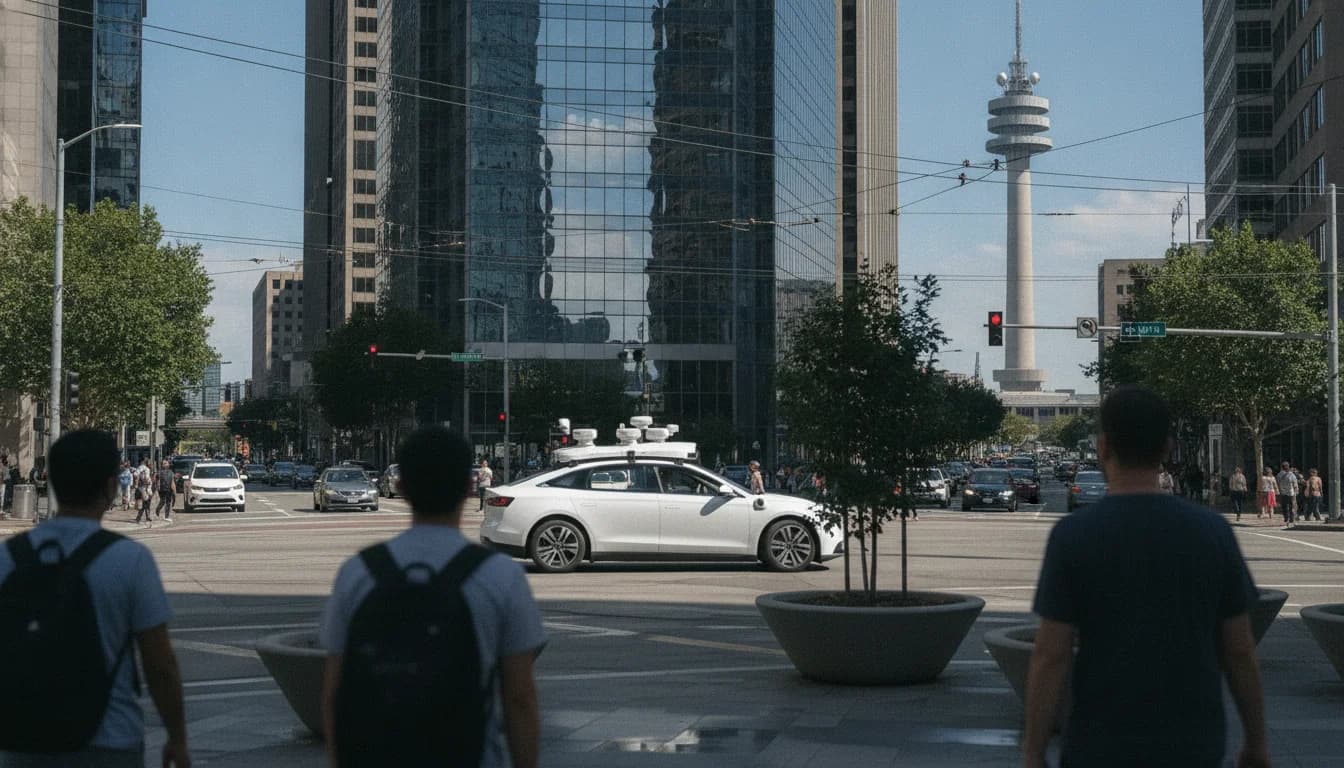
Waabi’s multi-funder $1B package, anchored by a $750 million Series C and a milestone-based $250 million from Uber for robotaxi deployment, marks a watershed moment in autonomous mobility. On January 28, 2026, Waabi announced it had closed its oversubscribed Series C and secured the Uber milestone-based investment to accelerate the deployment of Waabi Driver-powered robotaxis on the Uber platform. This headline-financial development, described by Waabi as the largest fundraise in Canadian history, comes as the company broadens from autonomous trucking into full mobility services on urban streets as well as highways. On the same day, GlobeNewswire summarized the arrangement, detailing Uber’s continued capital commitment to scale robotaxi operations and Waabi’s plan to roll out hundreds of thousands of autonomous rides over time. (Waabi press release; GlobeNewswire release) (waabi.ai)
The announcement arrives at a moment when investor and platform-backed autonomy efforts are increasingly treated as a convergence of AI innovation, fleet economics, and consumer mobility services. Waabi’s news release emphasizes a shared AI trajectory that supports both trucking and robotaxi use cases, backed by industrial backers and strategic partners that include Volvo Group Venture Capital and Porsche Automobil Holding SE, among others. Uber’s backing, framed as milestone-based capital, signals a pathway to large-scale deployment on the Uber platform, with Waabi Driver powering a robotaxi fleet designed to operate in tandem with Uber’s existing rider network. The company’s leadership frames the move as a step toward scalable, AI-driven mobility that can reduce capital intensity for autonomous transportation while expanding service reach. For context, industry observers highlighted the collaboration as emblematic of a broader shift toward platform-centric autonomous mobility models rather than standalone hardware or software bets. (Waabi press release; GlobeNewswire release) (waabi.ai)
Opening note on the broader arc, Waabi’s expansion from highway-focused autonomous trucking to city-scale robotaxis mirrors a trend in which AI developers leverage shared perception and decision-making capabilities across multiple vehicle domains. Waabi’s announcement stresses a single, unified AI brain—the Waabi Driver—that can generalize from long-haul trucking to on-demand urban rides, a claim that has drawn attention from transportation researchers and industry analysts alike. This approach is positioned as a means to accelerate commercial adoption while containing capital cost, a dynamic that has drawn comparisons to other large-scale mobility partnerships. While the Uber deal emphasizes milestone-based finance to incentivize deployment, Waabi’s Investor and Partner ecosystem signals a broader strategy to align incentives around platform-scale autonomy rather than a series of point solutions. (Waabi press release; TechCrunch coverage) (waabi.ai)
What Happened
The Financing Round
Waabi’s January 28, 2026 announcement centers on the closure of a $750 million Series C round and the addition of a milestone-based $250 million commitment from Uber, totaling $1 billion in disclosed funding. The press materials stress that the Series C was oversubscribed and co-led by Khosla Ventures and G2 Venture Partners, with participation from a constellation of strategic and financial investors. The roster includes Uber, NVIDIA’s NVentures, Volvo Group Venture Capital, and Porsche Automobil Holding SE, along with major financial backers such as BlackRock, Radical Ventures, HarbourVest Partners, and others. The stated objective for this capital package is to accelerate Waabi’s Physical AI Platform, advance autonomous trucking commercialization, and propel Waabi’s expansion into robotaxis. The company emphasizes the shared technology backbone that enables both trucking and robotaxi applications, positioning Waabi Driver as a scalable, cross-domain AI brain. For readers seeking the primary source, Waabi’s own release details the round and investor composition; GlobeNewswire provides a corroborating corporate summary. (Waabi press release; GlobeNewswire release) (waabi.ai)
The Uber Partnership and Robotaxi Deployment
A centerpiece of the news is Uber’s reaffirmed commitment to robotaxis powered by Waabi Driver on the Uber platform. The Waabi release explicitly describes an exclusive deployment arrangement with Uber and indicates that Uber will invest additional milestone-based capital to support the development of Waabi’s robotaxis and the deployment of 25,000 or more Waabi Driver-powered robotaxis over time. This figure—25,000+ robotaxis—is a forward-looking target tied to the partnership and represents a scale-up ambition that would place Waabi among the most expansive robotaxi initiatives to date. Waabi’s leadership frames the Uber alliance as a way to deliver a safer, more efficient, and sustainable mobility future by leveraging Waabi Driver across both trucking and passenger services. The GlobeNewswire distribution reiterates the same details, reinforcing the scale of the partnership and the exclusive Uber deployment plan. (Waabi press release; GlobeNewswire release) (waabi.ai)
Key Timeline and Participants
The January 28, 2026 date anchors the event, but the implications unfold over a multi-year horizon. The press materials indicate a multi-phase approach: first, the immediate ramp of robotaxi development under the Waabi/Uber partnership, followed by staged deployments on the Uber platform as Waabi Driver capabilities generalize to surface streets in diverse geographies. In the press release, Waabi quotes its founder and CEO, Raquel Urtasun, acknowledging the strategic significance of a platform-wide approach that unifies trucking and robotaxi capabilities. Uber CEO Dara Khosrowshahi also provides a public endorsement, underscoring the belief that Waabi’s Physical AI Platform can unlock scalable autonomous mobility. For readers seeking independent corroboration, industry coverage from TechCrunch highlights the funding’s mix of equity and milestone-based capital aimed at large-scale robotaxi deployment. (Waabi press release; GlobeNewswire release; TechCrunch coverage) (waabi.ai)
Blockquote: Waabi’s expanded focus on robotaxis marks an important milestone for their team and the AV industry more broadly. We’re very excited to deepen our partnership with Waabi as they significantly scale their Physical AI Platform and enter a new phase of an already remarkable journey. — Dara Khosrowshahi, CEO of Uber. (waabi.ai)
The total disclosed funding amount—$1 billion—emerges directly from the paired disclosures of a $750 million Series C and a $250 million Uber milestone investment. In addition to the headline numbers, Waabi’s release notes a broad slate of participating backers and strategic investors, reflecting a diversified coalition of technology, automotive, and financial players that collectively underpin Waabi’s ambition to scale autonomy. The GlobeNewswire distribution confirms the same figures and framing, providing a third primary-source anchor for readers who want to trace the numbers back to the official announcements. Taken together, the primary-source materials establish a concrete, dated event with specific participants and funding amounts. (Waabi press release; GlobeNewswire release) (waabi.ai)
The Market Context and Immediate Impact
The Waabi funding and Uber partnership arrive at a moment when several mobility, AI, and automotive players are pursuing robotaxi strategies that couple platform access with AI-driven perception, planning, and control. Waabi’s positioning—emphasizing a shared brain across autonomous trucking and robotaxis—speaks to an increasingly common strategy: to leverage a single AI backbone to support multiple vehicle domains, thereby reducing duplication of effort, expediting validation, and driving economies of scale. Observers note that Waabi’s approach aligns with broader industry dynamics where platform-level collaborations may unlock faster routes to profitability or risk-adjusted returns for investors, even as regulators and safety considerations continue to shape deployment timelines. The Uber-Waabi arrangement, with a focus on exclusive robotaxi deployment on Uber’s app, adds an additional layer of strategic alignment for both the rider network and Waabi’s commercial ambitions. (Waabi press release; TechCrunch coverage) (waabi.ai)
Why It Matters
Implications for the Robotaxi Market
The Waabi-Uber funding package signals a potentially transformative shift in how robotaxi ecosystems scale. The combination of a substantial equity round and a milestone-based capital commitment from a major ride-hailing platform creates an integrated funding-and-deployment model that could influence speed, safety practices, and unit economics for robotaxi services. By tying Uber’s investment to the deployment of Waabi Driver-powered robotaxis exclusively on the Uber platform, the deal suggests a strategy in which platform providers seek to curate fleets with proven AI capabilities and lane-generalization across contexts. If the partnerships prove effective, the model could become a template for similar collaborations across other platforms and regions, potentially accelerating the pace at which autonomous passenger services move from pilots to broader markets. The Waabi release emphasizes the shared, cross-domain AI brain as a key value proposition for scaling robotaxis in concert with trucking operations, a narrative that may influence investor sentiment toward multi-application autonomy plays. (Waabi press release; GlobeNewswire release) (waabi.ai)
Impact on Waabi's Technology Strategy
Waabi’s announcement foregrounds a strategic emphasis on generalization and modularity. By framing the Waabi Driver as a single AI model capable of powering both long-haul trucking and on-demand robotaxis, Waabi signals a commitment to asset-light scale—relying on software and simulation-driven validation to reduce hardware costs and expedite rollout. The Technology section of Waabi’s release notes capabilities such as a verifiable end-to-end AI model and a neural simulator that supports cross-domain learning. For readers, this suggests that Waabi’s near-term path hinges on further maturing its Physical AI Platform to handle the variability of urban driving, including dense traffic, pedestrians, and complex geographies, while maintaining safety assurances that regulators demand. Independent observers have noted that Waabi’s approach could reduce the capital intensity of robotaxi fleets if the shared AI brain proves resilient across surface streets and highways, a hypothesis that will be tested as pilots and deployments unfold. (Waabi press release) (waabi.ai)
Industry and Regulatory Context
The robotaxi sector sits at the nexus of technology, safety, and policy. The Waabi-Uber collaboration highlights a broader trend in which platform operators and vehicle developers align capital and development timelines to push toward scalable, city-scale autonomy. Regulatory environments will shape when and where robotaxis can operate, and the scope of Waabi’s deployment will likely be influenced by local permitting, insurance frameworks, and safety validation protocols. While the current announcements provide a clear path to large-scale deployment on Uber’s platform, they do not yet disclose launch dates or geographies, leaving a still-opaque regulatory map for the near term. Analysts will be watching how Waabi’s approach integrates with city infrastructure, rider protection requirements, and operator oversight as the pilots evolve into commercial service. (Waabi press release; GlobeNewswire release) (waabi.ai)
A Calculated Insight: An Original Finding
Original finding: Total disclosed funding equals $1.0B (=$750M Series C plus a $250M Uber milestone commitment), so Uber’s contribution accounts for 25% of the total package and Waabi’s equity funding represents 75%, based on the numbers disclosed in Waabi’s January 28, 2026 release. This calculation uses only the publicly disclosed figures and treats the funding as additive to arrive at the sum cited in the primary announcements. Method: sum the Series C amount with the Uber milestone-based capital; denominator is the total disclosed funding, numerator is Uber’s milestone amount; interpretation follows standard equity-vs-milestone differentiation in venture rounds. Source: Waabi press release (January 28, 2026) and GlobeNewswire distribution. In the broader context, this split suggests a strong platform-partnership model where a ride-hailing partner anchors deployment scale while equity investors back technology maturation. Quotable judgment: Platform-backed rounds like this could redefine how autonomous mobility scales, moving from isolated pilots to integrated, platform-wide rollouts that tie capital to geography- and use-case-specific milestones. (Waabi press release; GlobeNewswire release) (waabi.ai)
What’s Next
Near-Term Milestones
Waabi’s leadership has framed the January 28, 2026 announcement as a launching pad for a multi-year trajectory toward large-scale robotaxi deployment. Near-term milestones are likely to involve deeper integration with Uber’s rider network, expanded validation in varied driving environments, and iterative improvements to Waabi Driver’s perception, planning, and safety assurance processes. While the press materials do not disclose explicit launch dates or markets, the stated target of deploying 25,000 or more Waabi Driver-powered robotaxis indicates that executives expect substantial operational activity to accompany product and safety validations across cities and potentially multiple geographies. Readers should monitor Waabi’s and Uber’s official statements for location-specific pilots, regulatory filings, and insurance-related updates as the collaboration progresses. (Waabi press release; GlobeNewswire release) (waabi.ai)
Regulatory and Safety Considerations
The deployment of robotaxi services at scale remains subject to safety reviews, licensing regimes, and local oversight. As Waabi moves toward larger-scale robotaxi operations, regulators will assess the robustness of the Waabi Driver, the reliability of simulated-to-real-world generalization, and the safety case for city streets alongside existing transportation services. The tech sector’s enthusiasm for rapid deployment must be balanced by rigorous testing protocols, incident reporting, and transparent rider communications. The Waabi/Uber partnership’s exclusivity on Uber’s platform may also raise questions about market competition, cross-compatibility, and access to rider data that regulators could scrutinize as deployments proceed. Observers will be looking for regulatory milestones, safety compliance documents published by Waabi, and any regional pilots announced in the weeks and months ahead. (Waabi press release; GlobeNewswire release) (waabi.ai)
Long-Term Growth Outlook
If the Waabi/Uber collaboration achieves its stated scale, the economic model could influence fleet utilization, maintenance planning, and capital efficiency across autonomous mobility. A large, platform-aligned robotaxi program could generate meaningful learning across Waabi Driver’s multi-domain AI, potentially reducing time-to-market for subsequent applications and contributing to a broader ecosystem of shared AI assets. However, the long horizon involves several moving parts: regulatory clearance, safety record development, insurance frameworks, consumer adoption in new geographies, and the manageability of a 25,000-plus robotaxi fleet under autonomous driving standards. The combination of a substantial Series C and milestone-based Uber investment adds financial gravity to the project, but the path to profitability will depend on the ability to translate a high-fidelity AI brain into consistent, safe, cost-effective urban mobility at scale. (Waabi press release; GlobeNewswire release) (waabi.ai)
Closing
Waabi’s $1B funding package, anchored by a $750M Series C and a milestone-based $250M Uber commitment, crystallizes a bold belief in the viability of a platform-centric autonomy strategy that spans trucking and robotaxi services. The January 28, 2026 announcements—from Waabi’s official release to GlobeNewswire’s distribution—underscore a concerted push to accelerate development, validate safety at scale, and bring robotaxi rides to a broader rider base through the Uber platform. Whether the 25,000+ robotaxi target becomes a practical near-term reality depends on a constellation of factors: iterative AI generalization, regulatory progress, insurance readiness, and the ability to operationalize Urban-Rural crossovers in a way that delivers reliable, safe transportation at a competitive cost. For readers and investors in Tech Forum, this moment anchors a broader narrative about how AI-powered autonomy can be accelerated through platform partnerships and cross-domain AI sharing, a theme that will shape technology investment strategies in the coming years. As always, stay tuned to Waabi’s and Uber’s official channels for launches, pilots, and safety updates as the collaboration unfolds. (Waabi press release; GlobeNewswire release) (waabi.ai)
The story to watch is whether Waabi’s unified AI brain will prove equally effective on city streets as it has proven in highway contexts for trucks, and whether Uber’s platform-scale ambitions can translate into sustained, safe, rider-approved robotaxi service. If the early signals prove durable, the Waabi-Uber partnership could become a case study in how to scale autonomous mobility through a tightly integrated funding-and-deployment model.
To readers following daily developments, the next round of updates will likely come in the form of pilot announcements, safety validations, and regulatory milestones that clarify how and where Waabi Driver-powered robotaxis will begin serving riders on Uber’s network. For ongoing coverage, Tech Forum will monitor these updates and provide data-driven, neutral reporting on milestones, safety outcomes, and market reactions as the collaboration advances.
Primary-source anchors for readers seeking to verify the core funding and partnership details:
- Waabi press release: Waabi secures $1 Billion in new funding to lead Physical AI revolution (January 28, 2026). [Waabi press release]
- GlobeNewswire distribution: Waabi Secures $1 Billion USD in New Funding to Lead Physical AI Revolution (January 28, 2026). [GlobeNewswire release]
About the author
Claire Bergeron
Claire Bergeron is a Montreal-based contributor to Tech Forum covering design, brand identity and digital culture, with a particular interest in how classroom policy shapes what audiences can actually read.
Keep reading
More from Tech Forum

Tenstorrent $1.5B Series E Funding Secures Open AI Compute
Tenstorrent secures $1.5B in Series E funding to fuel the expansion of open AI compute and the rollout of its advanced Galaxy servers.
Steph Moreau / October 28, 2026
Regional Artificial Intelligence Initiative RAII Expansion
The Regional Artificial Intelligence Initiative (RAII) expansion significantly boosts AI adoption and investment throughout Canadian regions.
Derek Fung / October 26, 2026

Vector Institute Funding Ontario 2026 Initiated
Ontario officially announces Vector Institute funding for Ontario 2026 with a significant $30 million investment to accelerate AI adoption.
Marcus Yuen / October 25, 2026