Innovation
July Is When Your Electric Bill Meets Your Pool — Here's the Appliance That Opts Out
Summer electricity rates peak just as pool equipment works hardest. A solar-first robotic skimmer flips that math.
 Gavin Foss
Every July, two household curves climb together: the temperature and the electric bill. Air conditioning gets the blame, but in pool-owning households the backyard is a quiet co-conspirator. The pump, the heater if you run one, and every plug-in accessory on the equipment pad draw their heaviest load during exactly the weeks when utilities charge the most for it. Many regions now price summer afternoons at premium time-of-use rates, which means the cost of running pool equipment isn't just high in July — it's highest at the precise hours the equipment works hardest.
That's the context in which a fully solar-capable pool appliance stops being a green talking point and becomes a line-item argument.
The Appliance That Runs on the Same Sun That's Costing You Money
The irony of summer electricity pricing is that the thing driving it — relentless direct sun — is also an energy source sitting on top of your pool, going unused. A solar-powered surface skimmer inverts that relationship. The hotter and sunnier the week, the more expensive grid electricity gets, and the more free energy the device has to work with.
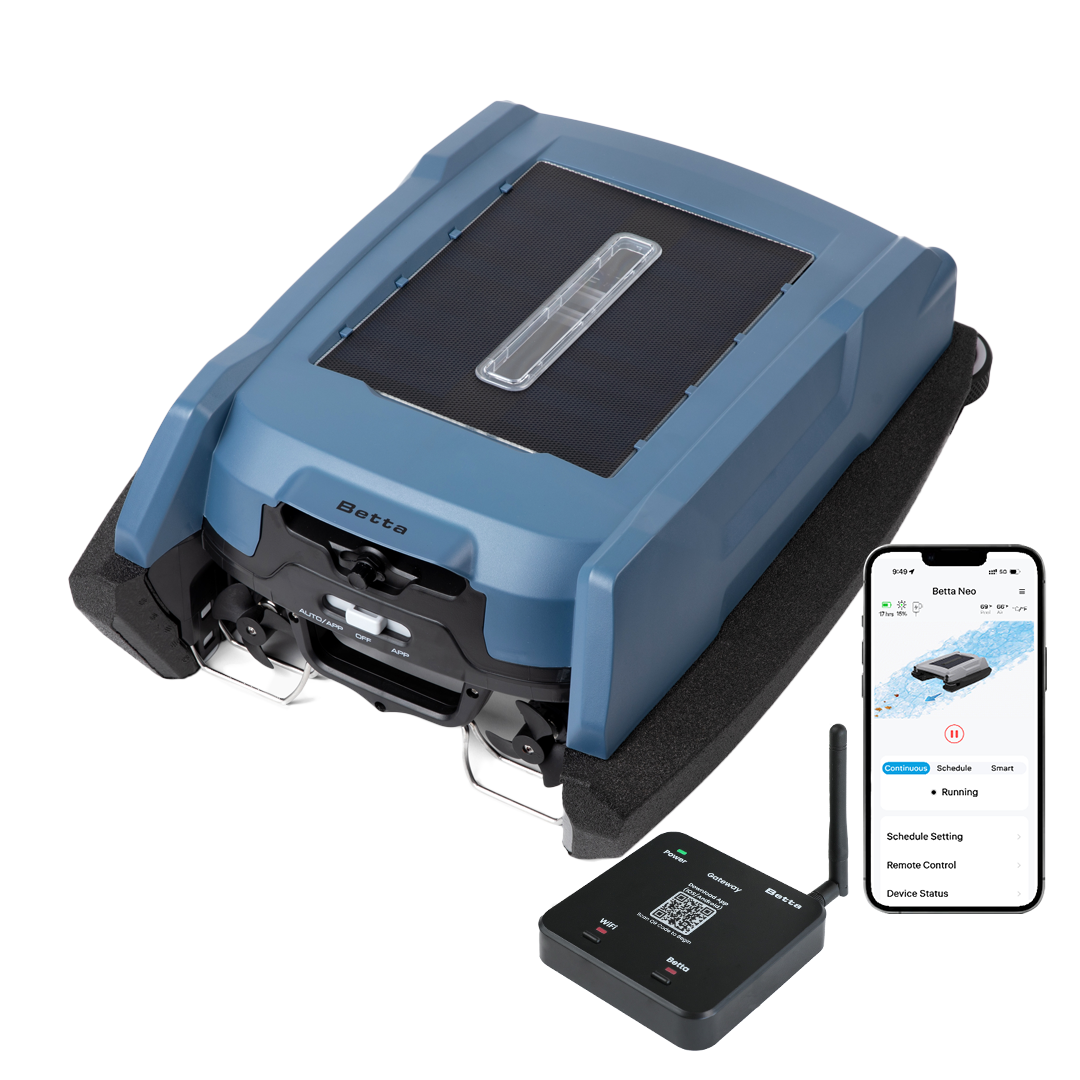
The Betta Neo, the flagship of Betta's robotic skimmer lineup, is built around this inversion. Its onboard solar panel charges the device as it floats, and in a typical sunny July week it can run its cleaning cycles on sunlight alone — contributing zero watts to the household load during peak-rate hours. An adapter charging option exists as a backstop for cloudy stretches, but through the heart of summer, the sun does the work.
For households watching their summer utility statements, the Betta Neo is that rare addition to the backyard: an automated appliance that adds convenience without adding load.
Scheduling Around Sunlight, Automatically
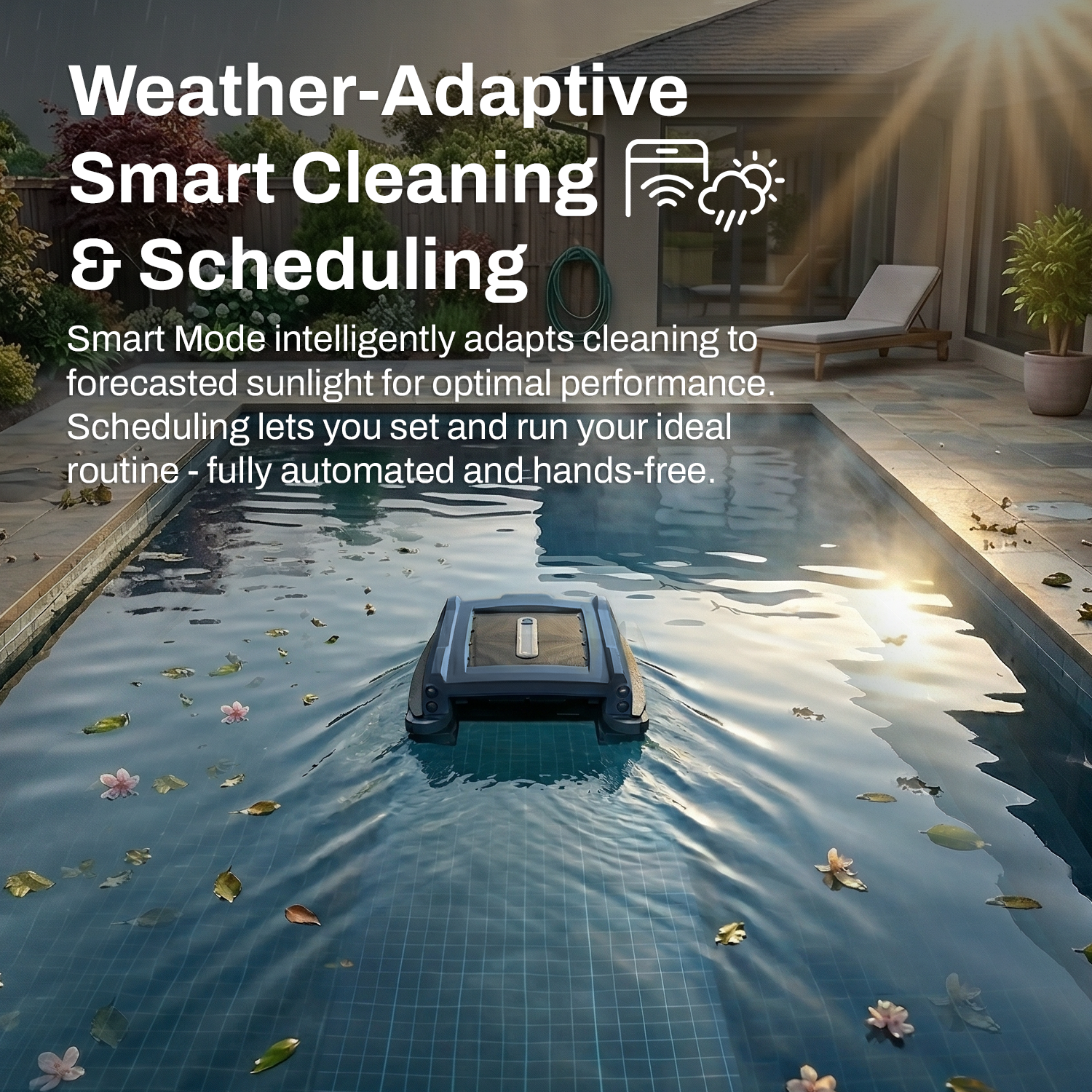
What makes the Neo more than a solar panel with motors is how it manages that energy. Its weather-adaptive function analyzes upcoming weather conditions to estimate how much solar energy will be available over the next few days, then intelligently adjusts its cleaning schedule — when it runs, how often, and the spacing between sessions — to make the most of it. The plain-English version: it adjusts when and how often it runs, not how hard it runs. Ahead of a cloudy stretch, it plans its sessions so it enters the low-sun days topped up; through a run of clear 95-degree afternoons, it can afford to clean generously.
That's the same logic a careful owner would apply manually to any solar device — run it when there's energy, conserve when there won't be — executed automatically, every day, without anyone checking a forecast.
The Rest of the Package
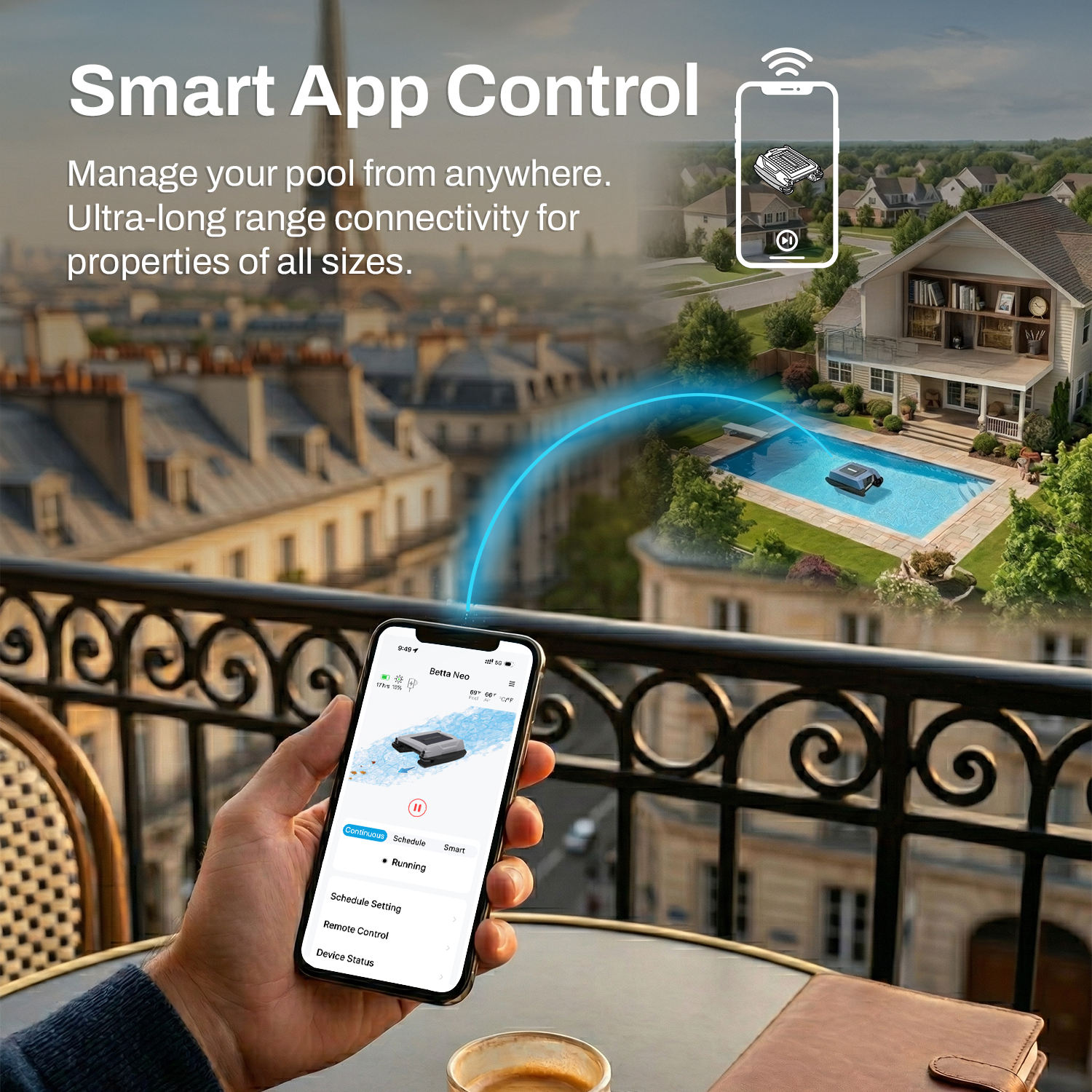
The Neo covers pools up to roughly 40 by 60 feet — about 2,400 square feet — and runs twin Silent Clean Technology motors compatible with both saltwater and chlorine systems. Ultrasonic sensors keep it navigating around ladders, floats, and swimmers, and the Betta app (the device's control surface, connected through the Betta Gateway with up to 600 feet of range) handles scheduling, mode changes, and monitoring from inside the house — no walking out to the deck at noon in triple-digit heat.
Scope stated honestly: this is a surface skimmer. It clears the leaves, pollen, dust, bugs, and film that land on top of the water — the debris that consumes sanitizer as it breaks down — and it does not vacuum the floor or scrub walls. What it removes from your week is the daily skim; what it removes from your bill is one more device competing for peak-rate electricity.
The July Math
Summer pool ownership has always involved a double tax: the time the pool demands and the energy it consumes, both peaking in the same six weeks. Automation usually trades one for the other — less labor, more load. A solar-first skimmer is one of the few upgrades that refuses the trade. It works its longest hours in exactly the weeks the grid is most expensive, powered by the one input July has in oversupply.
For pool owners bracing for the season's biggest utility bills, it's automation that pays its own energy cost — in sunlight.
About the author
Gavin Foss
Gavin Foss is the editor-in-chief at Tech Forum, covering the Canadian technology landscape with a focus on AI and emerging technologies. His technical depth and industry connections make him one of Canada's most respected tech journalists.
Keep reading
More from Tech Forum

Infinity Edges and the Pool Nobody Is Standing Next To
Shoulder-season pools run unattended for weeks, and vanishing-edge designs concentrate their own debris. Where a fully solar, cordless surface skimmer fits.
Claire Bergeron / September 15, 2026

Mecademic CAD 21M Funding Montreal Secures Expansion
Mecademic secures CAD 21M in funding, fueling Montreal-based growth, as investors support Mecademic's innovative robotics expansion plans.
Steph Moreau / October 20, 2026
Axya CAD 17M Series a Funding Montreal
Axya CAD secures $17M in Series A funding in Montreal, enhancing AI-driven procurement solutions for manufacturing industries worldwide.
Steph Moreau / October 19, 2026