Analysis
AOTOS Flux X26 Pro: Reading the Spec Sheet Properly
What the AOTOS Flux X26 Pro spec sheet actually says: 750W rated power, up to 70 miles of range, 112 lb of weight, UL 2849 certification and 4G GPS tracking.
 Marcus Doyle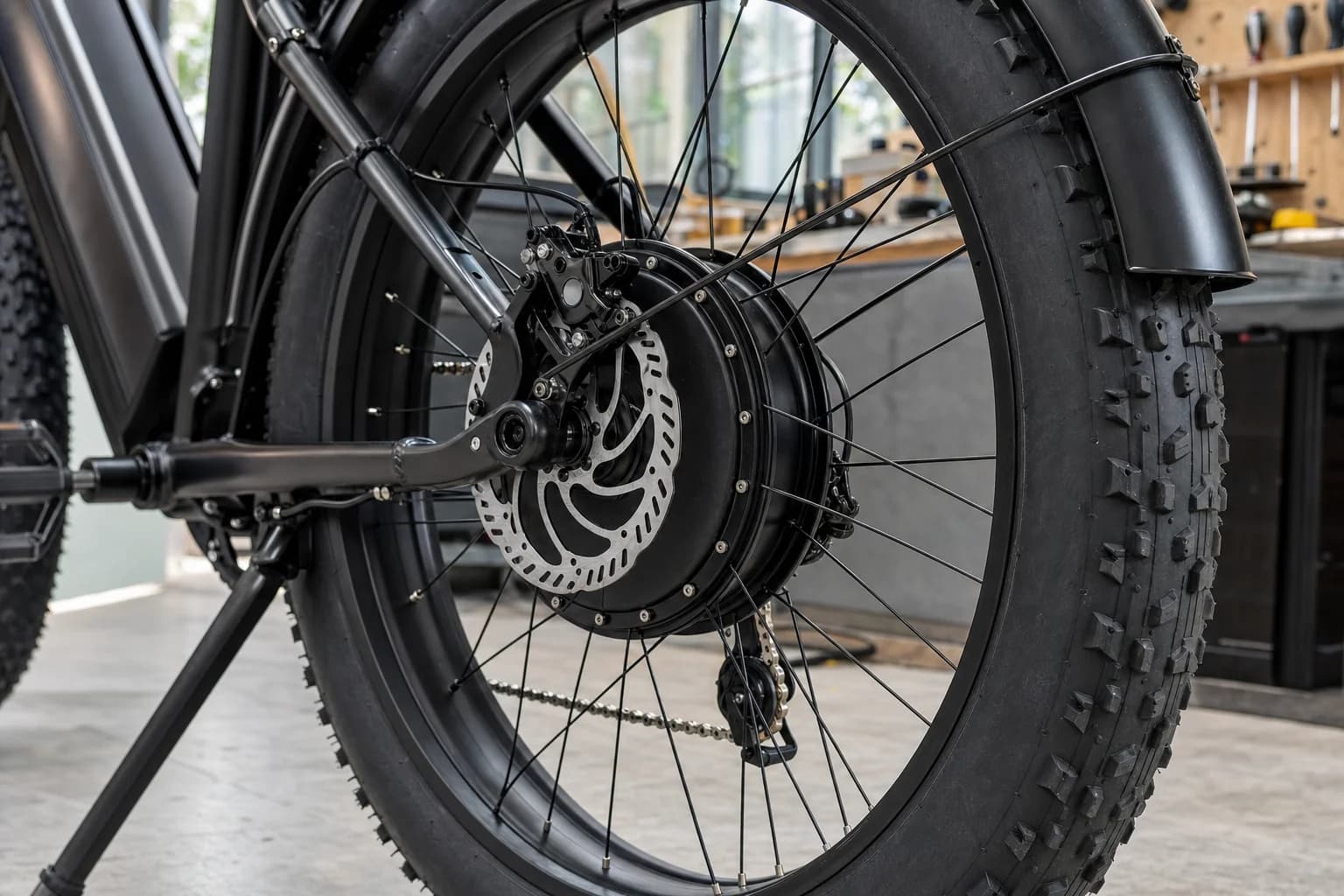
Hardware coverage of e-bikes tends to collapse into two numbers, watts and miles, both of which are close to meaningless without context. The AOTOS Flux X26 Pro is a useful example of why, because its spec sheet contains several figures that mean something quite different from what they look like.
Here is what the numbers actually describe.
The power figure that matters is the rated one
The Pro is a 750W rated motor. That is the number to compare across bikes, because peak or burst figures are measured differently by every manufacturer and are not comparable in any useful way.
Where the two models genuinely differ is torque: 100 Nm on the Pro against 80 Nm on the base X26. Torque is what you feel pulling away from a stop with a heavy bike underneath you, and on a machine this mass it is a more meaningful difference than any wattage line.
What does not differ is speed. Both are Class 2 e-bikes with a 20 mph top assisted speed, which includes throttle assist up to 20 mph without pedalling. Some states and cities set separate rules for throttle-equipped bikes, so confirm how your local regulations treat one.
The battery number is the one that matters
48V at 21Ah works out to roughly 1008 Wh on the Pro, against 48V/18Ah on the base model. Watt-hours are the honest capacity figure, because they survive comparison across different voltages in a way that amp-hours do not.
The Pro is quoted at up to 70 miles, the base at up to 50. Both are best-case figures produced at the lowest assist level, which is true of essentially every range claim in the industry and is worth restating every time. Actual range moves with assist level, rider weight, terrain and temperature, so treat the quoted figure as a ceiling rather than an expectation.
The useful way to read a range claim is as a capacity spec in disguise: 1008 Wh is a large battery, larger than most of the category, and that is the durable fact. The mileage attached to it is a marketing convention.
Chassis: where the weight goes
The frame is 6061-T6 aluminum. Suspension is hydraulic front and rear on both models, which at this price point is less common than the spec line suggests — plenty of competitors run a coil fork and a rigid rear. Braking is hydraulic disc, tires are 20 by 4.0 inches and tubeless-compatible, and the Pro weighs 51 kg (about 112 lb) with a 150 kg (330 lb) maximum load. The base X26 is 47 kg (about 104 lb).
That weight figure is the one that should govern the buying decision. Dual hydraulic suspension, a 1008 Wh battery pack, a 750W motor and fat tires all have mass, and 112 lb is what happens when you specify all four. It is not a design flaw; it is the arithmetic of the category. But it means the bike is effectively immobile without power, awkward on a car rack, and impossible on stairs.
Ingress protection is IPX5 for the vehicle and IPX6 for the battery on the Pro, IPX5 overall on the base model. Both carry certification to UL 2849 and battery UL 2271, which given the safety record of uncertified battery packs is arguably the most important line on the sheet.
The connected layer, and what separates the two models
The Pro carries a 5.5-inch color TFT display with turn-by-turn navigation synced from the phone, tire pressure monitoring, an under-frame storage bag, and a security stack of 4G GPS tracking plus app plus physical lock. The base X26 has the app but no cellular tracking, no TPMS, and no storage bag. The cellular service is included for the first year; AOTOS has said a fee applies after that and has not announced the amount.
Tire pressure monitoring is an underrated inclusion on a fat-tire bike specifically. Fat tires run at low pressure where a few PSI meaningfully changes handling and rolling resistance, and they are large enough that a slow leak is not visually obvious. A sensor that reports actual pressure is more useful here than on a road bike, where a thumb test tells you most of what you need.
Both models take over-the-air updates, which is now table stakes for anything with a connected controller and is how display, app and controller behaviour get improved after purchase.
What the sheet does not tell you
One thing is absent from the published specification and worth asking about before purchase.
It does not specify the sensor type driving the pedal assist — torque sensors and cadence sensors produce very different riding feel, and at this weight the difference is pronounced.
It is not hidden; it is simply not on the comparison table, and it should be on yours.
The summary
The Flux X26 Pro is a heavy, well-specified, high-capacity fat-tire e-bike whose most differentiated features are the ones that are easy to overlook: a genuinely large battery, dual hydraulic suspension at a price where it is not standard, safety certification, and a cellular tracking layer the base model does not share.
Its principal constraint is mass, and mass is not solvable by firmware. Buy accordingly.
All figures above are taken from the manufacturer's published product-page spec sheet, retrieved 11 August 2026.
About the author
Marcus Doyle
Marcus Doyle is a Toronto-based technology writer covering cybersecurity, hardware, and supply-chain risk.
Keep reading
More from Tech Forum

AI Educational Video Generator Tools for Teachers
Talking-head tools and animated-lesson tools both call themselves AI educational video generators. A four-scene test tells you which one you are buying.
Claire Bergeron / August 25, 2026

Nesto CAD 302M Series E Funding Closes
Explore a detailed, data-driven analysis of Nesto's CAD 302M Series E funding and its significant impact on the Canadian mortgage tech landscape.
Steph Moreau / October 7, 2026

Fields Medalists vs OpenAI's 722 AI Math Manuscripts
OpenAI posed ~4,000 problems to get 372 result families and published 722 manuscripts, eight days after an IAS advisory group asked labs to stop testing advanced mathematics on proprietary models.
Steph Moreau / October 7, 2026