AI
Anthropic's Claude Pushes Riemann Hypothesis Bound to 67.2%
Anthropic says a research version of Claude raised the Riemann zeta critical-line bound from 41.6% to 67.2%, weeks after Claude Fable 5 disproved the Jacobian conjecture.
 Gavin Foss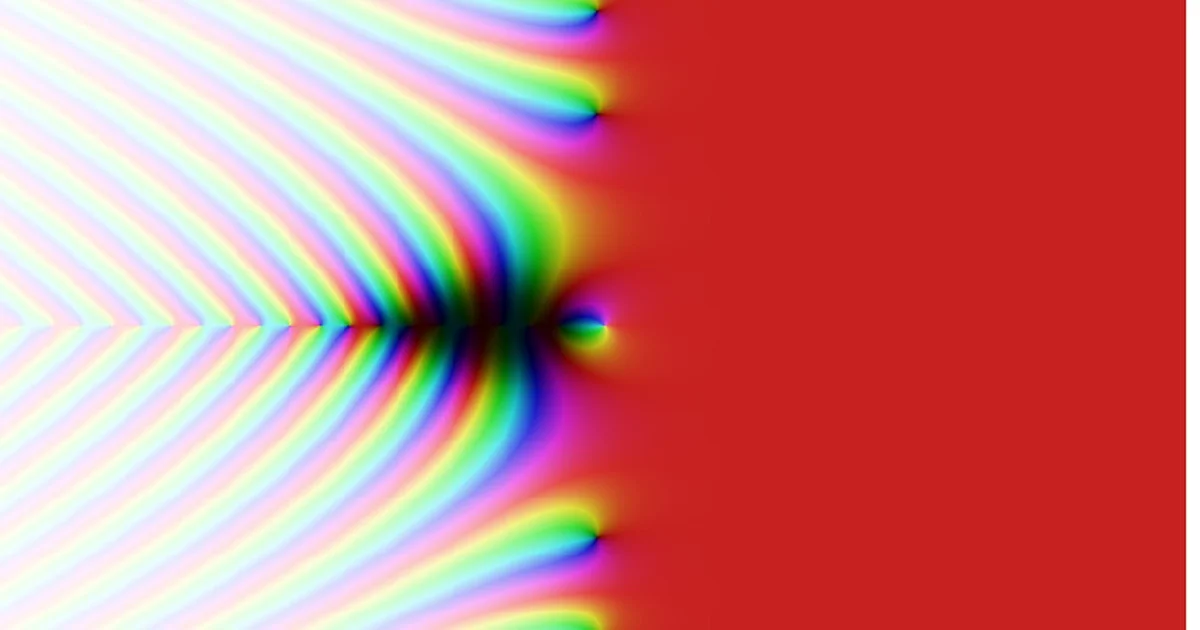
Anthropic said on Sunday that an unreleased research version of its Claude model has made the largest jump in decades on one of the best-known open problems in mathematics. Asked to "take a stab" at the Riemann hypothesis, the model did not solve it, but it raised the proven lower bound for the fraction of nontrivial zeros of the Riemann zeta function that lie on the critical line from 41.6% to 67.2%, a result the company published alongside a full paper, process transcripts, and a machine-checkable formal proof.
The company announced the result on X:
We asked an unreleased research version of Claude to take a stab at the Riemann hypothesis. It didn't solve it, but it did make strides on a related problem: it increased the lower bound for the fraction of zeros of the Riemann zeta function that satisfy the hypothesis from 41.6% to 67.2%.
— Anthropic (@AnthropicAI) August 10, 2026
What Claude actually proved
The Riemann hypothesis, unsolved since Bernhard Riemann posed it in 1859, asserts that every nontrivial zero of the zeta function sits on the "critical line" in the complex plane, the vertical line where the real part equals one half. The conjecture matters far beyond pure aesthetics: the distribution of those zeros controls the distribution of prime numbers, and hundreds of published theorems begin with the words "assume the Riemann hypothesis." It is one of the seven Clay Millennium Prize Problems, with a million dollars waiting for whoever settles it.
Since a full proof has resisted every attack for 167 years, mathematicians have long worked on a weaker question: what fraction of the zeros can be proven to lie on the critical line? Progress on that number is a rough gauge of progress on the hypothesis itself, and it has been glacial. Selberg first showed in 1942 that a positive proportion of the zeros lie on the line. Levinson pushed the fraction to roughly a third in 1974, and Conrey got it past 40% in 1989. Nearly four decades of refinements since then had nudged it to 41.6%. Claude's contribution moved it to 67.2% in one step, a bigger single jump than the field had managed in total since Levinson.
According to Anthropic's research note, Claude found that combining recent work by Baluyot, Goldston, Suriajaya, and Turnage-Butterbaugh with a 2000 result of Bombieri opens a route past the old ceiling. The technical move, in the company's telling, was "the courage to treat the entire space," analyzing a quadratic form on a function space with positive- and negative-definiteness handled together rather than piecewise. None of the ingredients were new; the combination was.
How the run actually unfolded
The process, run over two sessions in Claude Code, looked less like a flash of insight than an industrial research effort. The model generated roughly 650 initial ideas before pivoting, coordinated about 60 subagents over two days, ran 2,400 shell commands, wrote hundreds of Python scripts, and performed thousands of numerical checks against known zeta zeros. That is not how a human mathematician works, but it is recognizably research: propose, test, discard, recombine, verify.
The vetting is the part that should reassure skeptics. Anthropic mathematicians Levent Alpöge and Ralph Furman validated the work internally, and outside experts Brian Conrey and Dan Goldston, two of the field's specialists on exactly this bound (Conrey set the 1989 record the new result finally breaks), reviewed the paper. Claude also produced a Lean formalization of the proof that passes standard verification tooling. A formal proof is checked by software line by line, which means the result does not rest on anyone taking an AI's word for it, or a human's. Anthropic published the informal note, the full paper, and the raw process transcripts together, so the community can audit not just the theorem but the path to it.
The July shock: the Jacobian conjecture falls
Sunday's announcement lands three weeks after an even more startling result from the same model family. The Jacobian conjecture, posed by Ott-Heinrich Keller in 1939, is a deceptively simple statement in algebraic geometry: if a polynomial map has a nonzero constant Jacobian determinant, meaning it passes the standard local test for invertibility everywhere, it should be globally invertible too. For 87 years nobody could prove it or find a counterexample, and it accumulated a graveyard of failed proofs along the way.
On July 20, Alpöge posted a counterexample, produced with the publicly released Claude Fable 5, that settles it. The entire disproof fit in a single post:
hello there the jacobian conjecture is false thanx to my close friend akhil for asking about it and my other close friend fable for working during the world cup final ((1+xy)^3 z + y^2 (1+xy) (4+3xy), y + 3 x (1+xy)^2 z + 3 x y^2 (4+3xy), 2 x - 3 x^2 y - x^3 z): \C^3\to \C^3, has jacobian determinant -2, and sends (0, 0, -1/4), (1, -3/2, 13/2), and (-1, 3/2, 13/2) to (-1/4, 0, 0)
— levent (@__alpoge__) July 20, 2026
The map's Jacobian determinant is the constant −2, so it satisfies every premise of the conjecture, yet it sends three distinct points to the same output, so it cannot be globally invertible. The formula is 216 characters long, and mathematicians verified it by hand and with Wolfram Alpha within a day; Alpöge himself posted a Wolfram Alpha link in the replies so anyone could check the determinant. The counterexample kills the conjecture in dimension 3 and, by padding with identity coordinates, in every higher dimension; the original two-dimensional case remains open. The Secret Blogging Seminar's analysis notes the example has an elegant hidden grading structure, exactly the kind of thing human searchers had not thought to try. The post has since been viewed nearly 40 million times, which is not a sentence anyone expected to write about a polynomial map.
Why this pair of results matters
The two results are different in kind, and together they bracket what frontier models can now do in mathematics. The Jacobian counterexample is a search win: a short certificate that is trivial to check once found, discovered in a space humans had explored for 87 years without success. The zeta bound is a synthesis win: a genuine proof, built by connecting two existing lines of research that no human had combined, then formally verified. Taken together, they mark the moment AI stopped being a calculator for mathematicians and became a colleague whose work still has to be checked, but can no longer be dismissed.
The pattern also says something about where the value sits. In both cases the model needed a human to ask the right question: Alpöge credits a friend for even raising the Jacobian conjecture, and the zeta run began with someone simply pointing Claude at the Riemann hypothesis. The scarce resource is shifting from technical execution to taste, knowing which questions are worth asking and which answers are worth checking. That is a familiar story in software engineering over the past two years; mathematics is now getting the same treatment at the very top of the difficulty scale.
There are honest caveats. The research version that produced the zeta result is unreleased, and Anthropic has not said when or whether its capabilities will ship. Claude did not solve the Riemann hypothesis, and a 67.2% bound, however large the jump, is still a long way from 100%. The two-dimensional Jacobian case survives. And in both cases human mathematicians framed the question, curated the output, and did the vetting; nobody serious is claiming mathematicians are obsolete, any more than programmers became obsolete when models learned to write code.
What to watch next
The near-term question is whether these are isolated summits or the start of a ridge line. Formal verification is the piece that makes the difference: a Lean proof removes the trust problem that has dogged every previous "AI does math" headline, and both the labs and university groups, including strong formalization teams in Canada and elsewhere, have been building the tooling to make machine-checked mathematics routine. If models can reliably emit proofs that a computer can certify, the bottleneck becomes generating good conjectures, not checking claimed answers.
For the AI labs racing on "reasoning," the scoreboard is now concrete: peer-reviewed bounds and hand-checkable counterexamples, not benchmark percentages. For working mathematicians, the more unsettling development may be the smaller one, that a famous 87-year-old conjecture died in a lowercase social media post that ended with "thanx."
Cover: domain coloring of the Riemann zeta function, public domain, via Wikimedia Commons.
About the author
Gavin Foss
Gavin Foss is the editor-in-chief at Tech Forum, covering the Canadian technology landscape with a focus on AI and emerging technologies. His technical depth and industry connections make him one of Canada's most respected tech journalists.
Keep reading
More from Tech Forum

GPT-6 Astra, iPhone Duo, $6B AI Funding: Tech's Wildest Week
GPT-6 Astra, the iPhone Duo, a complete fruit fly connectome, and $6.13B in AI funding in 48 hours: every major story from tech's most eventful week, with the numbers that matter.
Gavin Foss / September 12, 2026

Canada's Data Centre Boom Is Missing Its Electricians
US utility system construction added 76,300 jobs since 2022. Canada's lost 9,284. A matched-NAICS comparison of the trade that builds every data centre's grid connection.
Derek Fung / September 9, 2026

AI World Models for Game Studios: What Marble Changes
Where text-to-3D world generation fits a game pipeline in 2026: previz now, shippable assets later, and five questions before a pilot.
Steph Moreau / September 3, 2026