Waterloo Velocity Momentum Grants Spark Student Startups

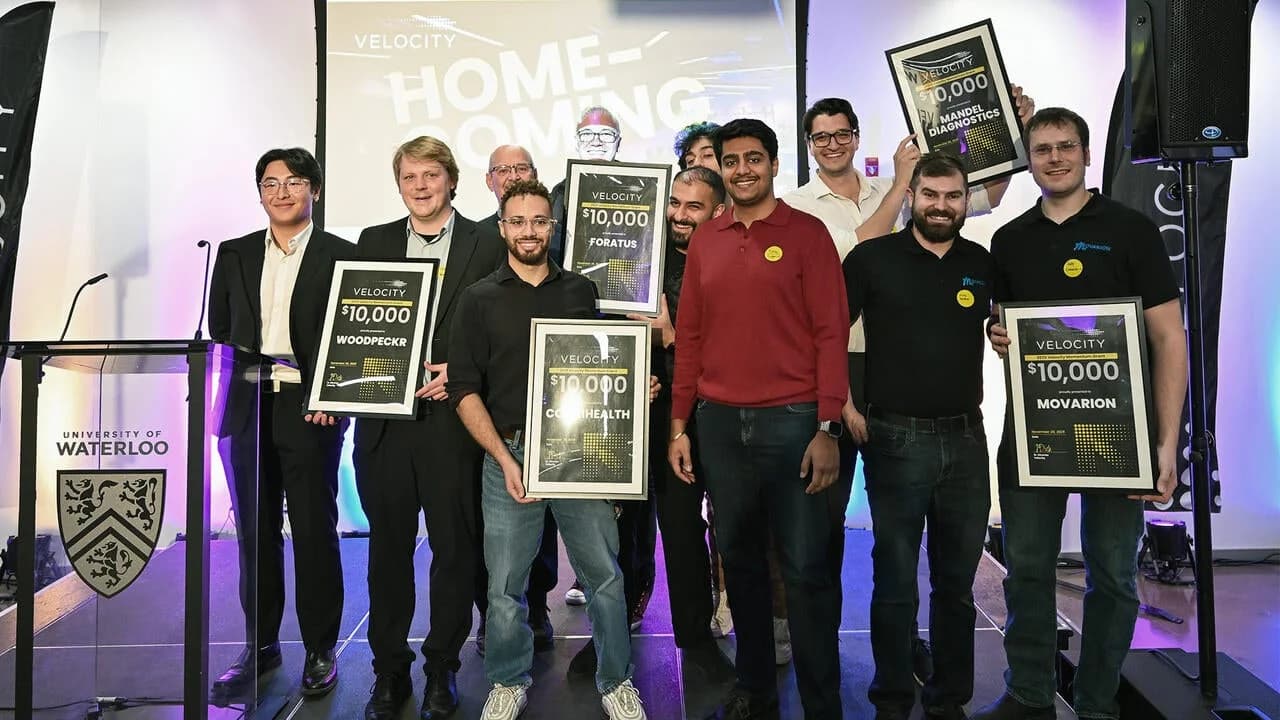
Waterloo Velocity Momentum Grants are more than a noveltie funding line for student founders at the University of Waterloo. They sit at a critical intersection of cash, mentorship, and milestone-driven progress that aims to reduce the risk of moving from idea to market. In a Canadian startup ecosystem where early traction can determine whether a concept dies or scales, these grants are designed to give student teams a runway to test real customer demand and gather the data necessary to attract further investment. Velocity, a cornerstone of Waterloo’s entrepreneurship engine, frames Momentum Grants as non-dilutive, time-bound capital aimed at accelerating the most promising student-led ventures toward measurable milestones. The result, as observed through recent cohorts and corroborating Velocity data, is not just a few anecdotes but a growing, data-backed trend: small, targeted investments can unlock outsized progress when paired with the Velocity network of mentors, investors, and clinical or industry partners. (uwaterloo.ca)
This investigation examines the trajectory of Waterloo Velocity Momentum Grants, focusing on real-world outcomes for five disclosed recipients in 2025 and the broader implications for the university’s startup ecosystem. The reporting synthesizes Velocity’s public statements, the University of Waterloo’s coverage, and independent industry context to present a narrative grounded in numbers, timelines, and those tangible commercial milestones that matter to founders, funders, and policy makers. The core question is simple: do these $10,000 Momentum Grants move the needle for student-founded startups, or are they a symbolic gesture wrapped in startup gloss? The data we found points to a nuanced but meaningful yes—when the grant program is integrated with Velocity’s coaching, connections, and a culture of rapid experimentation. Five named recipients in 2025—Movarion, Foratus, Woodpeckr, Mandel Diagnostics, and CogniHealth Inc.—represent concrete cases in a broader cohort of eight startups funded that year, with a total of $95,000 awarded in Momentum Grants to accelerate early traction. (uwaterloo.ca)
The opening backdrop matters here: Waterloo’s Velocity has emerged as a global reference point for university-backed startup ecosystems. Since 2008, Velocity has helped launch more than 500 startups with enterprise value reported in the tens of billions, underscoring the scale that Momentum Grants are now attempting to unlock at the earliest commercial stage. In addition to the grants, Velocity emphasizes mentorship, industry connections, and pathways to pilots and early customer engagements that can convert an MVP into a product with repeatable demand. The data shows a broader trend: Velocity’s community is growing, and Momentum Grants are positioned as a catalyst for that growth rather than a standalone funding line. 1,200+ founders and counting, 500+ companies, and a combined enterprise value of more than $40 billion frame the context in which Momentum Grants operate. (velocityincubator.com)
Opening a window into 2025, the Momentum Grants program represents a significant shift in how Velocity channels philanthropic and donor-supported capital into concrete startup milestones. The five named 2025 Momentum Grant recipients—Movarion, Foratus, Woodpeckr, Mandel Diagnostics, and CogniHealth Inc.—were chosen to receive $10,000 each, a straightforward amount intended to buy time for founders to advance customer validation, pilot programs, or lab-to-market work. Velocity leadership framed these grants as non-dilutive funding designed to reduce the financial burden that can derail early momentum after graduation. The announcement, positioned at Velocity Homecoming, highlighted the grant as the first of its kind, with a total of eight startups receiving Momentum Grants in that inaugural cycle and a combined award value of $95,000. The significance is not merely the money; it is the signal that Velocity is willing to put support behind late-stage student founders who need to push through the final mile of pre-seed work. (uwaterloo.ca)
Section 1: The Challenge
The Funding Gap Facing Graduating Student Founders
Student founders often face a near-term funding cliff as they transition from campus projects to independent ventures. The Momentum Grants are positioned as bridge funding, specifically designed to ease this transition by providing non-dilutive capital that founders can use to pursue critical milestones without giving up equity. The original aim, as described by Velocity leadership, is to remove a portion of the financial deterrents that prevent graduates from turning a cool prototype into a commercial venture. This problem is not hypothetical: Velocity emphasizes that the burden of moving from student-constructed MVPs to market-ready products can delay pilots, customer discovery, and early deployments. The press and Velocity messaging consistently frame Momentum Grants as a means to keep graduates focused on milestones rather than fundraising overhead. (uwaterloo.ca)
Time-to-Market Pressure in a Rapidly Evolving Tech Landscape
The 2025 Momentum Grants reflect a broader cadence in which tech founders face compressed timelines to demonstrate customer value, secure early pilots, and build investor confidence. Velocity’s data, as presented in Momentum 02 and accompanying Waterloo News coverage, shows that the Velocity ecosystem is designed to accelerate the path from idea to market by combining capital with hands-on mentorship, customer validation, and access to a broad network of collaborators. The emphasis on fast validation is visible in a real-world example from Velocity: a founder explained that bringing an MVP to market quickly through the Momentum Grants allowed them to prove customer demand rather than spending months on investor outreach first. This is a quantifiable shift in approach from traditional seed-stage dynamics to a more milestone-driven, grant-enabled sprint. (velocityincubator.com)

Hardware Risk and the Complexity of Real-World Deployment
A recurring theme in the Momentum Grants narrative is the heightened complexity of hardware-enabled startups compared with software-centric ventures. The Momentum Grants recipients include projects in health tech, AI, and safety monitoring, with founders explicitly noting hardware-related deployment challenges. Mandel Diagnostics, for example, emphasizes that hardware-centric validation requires clinician access and regulatory-friendly pilots to validate value propositions in real-world settings. The funding and coaching arrive at a time when hardware teams need not only capital but also access to pilot sites, clinical partners, and domain expertise to translate an MVP into a working, deployable device. This represents a structural risk the program is designed to mitigate by pairing grants with Velocity’s network. The founder quote highlights the impact of the grant on their ability to engage clinicians and potential customers without delays introduced by capital uncertainty. (uwaterloo.ca)
Section 2: The Solution
Momentum Grants: A No-Strings-Attached Catalyst
The core mechanism of Waterloo Velocity Momentum Grants is straightforward: non-dilutive $10,000 awards given to student-led startups to support early traction. The value proposition is explicit: fund a critical milestone (customer proof, MVP iteration, pilot engagement) without taking equity or imposing heavy strings. The momentum behind the program is reinforced by Velocity’s broader mission to cultivate a sustainable founder ecosystem. Two key numbers anchor the program’s scale: a total of eight startups funded in the inaugural momentum grant cycle, and a collective grant pool of $95,000. The no-strings-attached design is highlighted by Velocity leadership as a practical way to reduce risk and increase the probability of achieving milestone-driven outcomes. The combination of capital with Velocity’s mentorship and network is presented as a holistic accelerator rather than a one-off grant. (velocityincubator.com)
Why This Approach Works: Aligning Money with Milestones
Velocity and its backers purposefully align capital with milestones rather than broad equity-based incentives. The reported early outcomes suggest that the grants enable teams to complete tangible steps—launching MVPs, validating demand, and building early customer pipelines—before seeking larger rounds. The program’s design recognizes that founders have different needs than venture-backed teams and that non-dilutive funds paired with targeted coaching can yield more predictable outcomes at the pre-seed stage. The five 2025 Momentum Grant recipients illustrate this approach in action: each team received a finite amount of capital and immediate access to Velocity’s network to drive pilots, customer discovery, or product iterations. The 2025 metrics also show that eight startups received Momentum Grants in that cycle, signaling a broader commitment to spreading early-stage capital across multiple teams. (uwaterloo.ca)
Implementation Details: How Recipients Are Selected and Supported
Velocity frames Momentum Grants as part of a broader discovery-and-demonstration process for student founders. The selection emphasizes potential impact, readiness to move forward with customer validation, and alignment with Velocity’s ecosystem. The 2025 recipients list—Movarion, Foratus, Woodpeckr, Mandel Diagnostics, and CogniHealth Inc—was selected to represent a cross-section of problem spaces (from AI-driven health monitoring to hardware-enabled mobility solutions). The narrative around the recipients also underscores how Velocity’s support goes beyond the cash award: coaching, connections with investors and clinicians, and hands-on mentorship are cited as integral to translating funding into real-world traction. The case details showcase the importance of a structured program that connects grant money to disciplined, milestone-driven execution. (uwaterloo.ca)
Timeline: From Announcement to Early Traction
In its 2025 Momentum Grants cycle, Velocity announced the program early in the year and disbursed awards to eight startups totaling $95,000, with five named recipients highlighted in Waterloo News as part of the cohort. The explicit connection between the grant cycle and post-award activities is visible in founder statements about MVPs going to market, clinician engagement, and the early customer pipeline. The Velocity Momentum Grants page highlights the ongoing momentum within Velocity’s broader ecosystem, including a narrative about founders launching products, closing deals, and engaging investors—signals that the grants are functioning as intended within a well-sequenced progression from idea to product-market fit. The annual cadence suggests that Momentum Grants are not an isolated one-off but part of a longer programmatic effort to accelerate early-stage founders. (uwaterloo.ca)
Section 3: The Results
Measurable Outcomes That Demonstrate Momentum
- Five startups received $10,000 Momentum Grants in 2025, with eight startups funded in total that cycle, translating to $95,000 of non-dilutive capital. This is the core quantitative result for the year and signals a deliberate scale-up in the program compared with earlier iterations. The grant structure and per-startup award are clear from Velocity’s materials and Waterloo’s coverage. (uwaterloo.ca)
- The momentum story is complemented by Velocity’s broader ecosystem metrics: since inception, the Velocity community has grown to include more than 1,200 founders and more than 500 startup companies, with an aggregate enterprise value of over $40 billion. This context matters because it demonstrates the connective tissue—mentors, investors, corporate partners—that can amplify the impact of a small grant into larger outcomes. The magnitude of the Velocity network helps explain why Momentum Grants can translate into visible progress for individual teams. (velocityincubator.com)
- Velocity’s 2024 data point is especially revealing: 395 student-led entrepreneurship teams were actively building on campus from idea to pre-seed startup. That level of activity helps explain the rationale behind Momentum Grants: a need to provide traction support for a large pool of teams that may otherwise struggle to advance to the next funding round. The statistic underscores how Momentum Grants fit into a broader pattern of campus-to-market acceleration. (velocityincubator.com)
- In parallel, Velocity has already moved into a new phase with the Velocity Fund and broader fundraising activity. Velocity launched a second fund around 2025, aiming to back spinouts with a dedicated venture capital vehicle. The fund’s scale—$10 million in committed capital for the second fund—signals a maturation of Velocity’s ecosystem, enabling it to bridge early-stage momentum with later-stage capital more effectively. This external finance context matters because Momentum Grants sit upstream of a potential seed/Series A pathway that Velocity’s own fund aspires to nurture. (globalventuring.com)
- Real-world progress stories from Velocity’s portfolio reinforce the narrative that grants paired with mentorship can yield tangible deployments and customer engagements. For example, one founder described using momentum funding to place an MVP in clinician hands quickly, a critical early milestone for hardware and health-tech ventures. The narrative from Mandel Diagnostics illustrates how cash accelerates customer-facing milestones, including the ability to attract early customers and prospective investors. The concrete quote highlights the practical benefits of fast, milestone-driven funding and the importance of the Velocity network for clinical and investor connections. > The Momentum Grant allows us to prove the demand we're seeing from customers by bringing our MVP to market now, rather than spending months raising investor dollars first. Hardware startups are particularly challenging and this grant lets us get our device in clinicians' hands today so we can attract more customers and investment tomorrow. (uwaterloo.ca)
- A clear deployment signal comes from the broader Velocity momentum in healthcare. The Momentum Grants timeline aligns with Velocity’s activities around CAN Health commercialization projects, where Velocity-accelerated teams have begun pilot deployments in Ontario hospitals, demonstrating the ability to translate campus ingenuity into clinical workflows and patient-facing solutions. This not only showcases the harm-to-harvest potential of early-stage grants but also emphasizes the practical collaboration channels Velocity maintains with healthcare systems. It’s a key indicator that Momentum Grants are part of a larger strategy to demonstrate feasibility and value in real-world settings. (velocityincubator.com)
The Recipients’ Trajectories: Before and After Momentum Grants
- Movarion, Foratus, Woodpeckr, Mandel Diagnostics, and CogniHealth Inc each received funding to advance a specific milestone. The recipients reflect a mix of health tech and safety monitoring, with a hardware tilt in some teams. The five named recipients reflect a cross-section of Momentum Grants’ intended use cases: from device development and pilot deployment to AI-enabled health monitoring. Each pair of founders has public-facing statements about the momentum they achieved after receiving the grant, including faster MVP iterations, earlier customer conversations, and a broader support network for subsequent fundraising. The narrative around these five teams is consistent with Velocity’s central claim: non-dilutive funding paired with mentorship accelerates milestones when the vehicle is properly tuned to the right problems. (uwaterloo.ca)
Before/After Anchors: What Changed After Momentum Grants
- Before the Momentum Grants, teams faced typical early-stage funding frictions: cash constraints, time-to-market pressure, and the need for pilots or customer validation to attract more capital. After the Momentum Grants, several teams reported that the money directly supported crucial milestones—ranging from MVP market testing to clinician engagement and pilot readiness. A key example is Mandel Diagnostics, where the founder explains that the grant allowed the team to move quickly—from plan to market validation—by enabling direct customer engagement and the ability to demonstrate a working product to clinicians and potential customers. This narrative dovetails with Velocity’s broader claims about the program’s impact on reducing risk and enabling faster milestone achievement. The specific quote from Mandel Diagnostics captures this sentiment and illustrates the program’s practical outcomes. (uwaterloo.ca)
Cross-Cutting Outcomes: System-Level Impacts
- The Momentum Grants are not isolated gifts; they operate within a network that Velocity has cultivated over more than a decade. The program’s design—small, targeted grants combined with mentorship, clinical and investor access, and a campus-to-market pipeline—contributes to a more predictable path for student founders. Velocity’s public metrics emphasize a growth trajectory that supports more founders and more companies, with greater enterprise value outcomes over time. The implication for readers is clear: Momentum Grants are a building block within a larger ecosystem that has demonstrated, through multiple data points, the ability to move student-led ventures from campus experiments to early-stage customer engagements and beyond. (velocityincubator.com)
Section 4: Key Learnings
What Worked Well
- Small, targeted grants anchored in a robust network can accelerate milestone achievement. The five 2025 Momentum Grant recipients and the broader eight-startup cohort show that a modest pool of funds, when paired with coaching, investor introductions, and access to clinical partners, can yield faster market validation and early customer traction. The narrative from Velocity leadership and from founders underscores the value of combining cash with mentorship and network effects. This aligns with Velocity’s overall strategy to move founders from research labs to market readiness with greater velocity than traditional incubation models. (uwaterloo.ca)
- The non-dilutive structure matters in the early stages, especially for hardware and health-tech teams that require focus on pilots and regulatory considerations. Mandel Diagnostics’ experience illustrates how funding can reduce the friction created by fundraising while enabling teams to engage clinicians and customers directly. The grant’s design is consistent with the ecosystem’s emphasis on reducing early-stage risk while maintaining a clear path to subsequent, equity-based rounds later in the venture life cycle. > The Momentum Grant allows us to prove the demand we're seeing from customers by bringing our MVP to market now, rather than spending months raising investor dollars first. Hardware startups are particularly challenging and this grant lets us get our device in clinicians' hands today so we can attract more customers and investment tomorrow. (uwaterloo.ca)
What Didn’t Go as Smoothly (and What It Taught Us)
- While the program shows promise, hardware-heavy ventures highlighted ongoing deployment challenges that require more than $10,000 and a few months of coaching to overcome. The interviews and statements from Mandel Diagnostics emphasize that hardware validation—and clinician adoption—still demands more than a sprint; it can require sustained pilot programs, regulatory navigation, and longer-term partnerships. The Momentum Grants function as accelerants, not silver bullets, and the data from 2025 reinforces the importance of continuing to expand access to pilot sites, clinical networks, and customer channels to complement initial funding. This is not a failure; it is a reminder that some workflows require more scale and time, even with grants. (uwaterloo.ca)
Advisory Insights for Other Programs
- The Waterloo Velocity Momentum Grants model offers practical takeaways for other university ecosystems seeking to boost student-founded startups. First, pair small, non-dilutive capital with a measured milestone plan that aligns with real-world validation requirements (pilots, pilots with clinicians, customer conversations). Second, integrate mentorship and a network of investors and potential customers to maximize leverage of the cash. Third, publish and track clear metrics (number of grants, total funding, number of teams, pilot outcomes) to demonstrate impact and attract further support. The Velocity experience suggests that a scalable model combines cash infusions with a robust mentorship network and visible, data-backed milestones. (velocityincubator.com)
Closing
The Waterloo Velocity Momentum Grants program sits at a meaningful crossroads for student entrepreneurship. The combination of $10,000 non-dilutive awards and a deep, practical network has produced a visible trajectory for several teams, as reflected in the five named 2025 recipients and the broader eight-startup momentum grant cohort. The program’s success—measured through faster MVP deployment, early customer validation, and pilot engagements in healthcare and safety tech—appears to be reinforced by Velocity’s ecosystem-scale metrics: thousands of student founders, hundreds of startups, and billions in enterprise value. The momentum extends beyond momentum grants alone; Velocity’s evolving funding structure and its alignment with clinical pilots and industry partnerships suggest a longer runway for student-founded startups to mature into venture-backed ventures. For Waterloo, this is not merely a campus success story but a signal about how university-based entrepreneurship can be scaled through targeted capital, structured milestones, and a robust community network that bridges ideas to markets. Looking ahead, Momentum Grants may continue to adapt—potentially expanding the pool of recipients, deepening clinical partnerships, and aligning with Velocity Fund’s broader fund-raising trajectory—to sustain a virtuous cycle of founder development, venture creation, and market impact. (uwaterloo.ca)