Waabi Series C funding Toronto 2026: Robotaxi Push

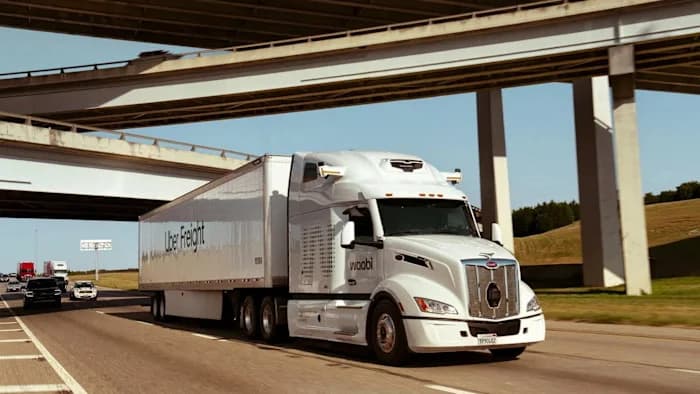
The news from Toronto on Waabi Series C funding Toronto 2026 signals a watershed moment for the autonomous mobility sector. Waabi, the AI-driven software company behind the Waabi Driver, announced on January 28, 2026 that it had closed an oversubscribed $750 million USD Series C round, co-led by Khosla Ventures and G2 Venture Partners, with an additional milestone-based future investment from Uber to support a robotaxi deployment on Uber’s platform. The funding is described by Waabi as the largest fundraise in Canadian history, underscoring the rapid maturation of AI-powered autonomy across trucking and passenger mobility. The company also disclosed that Uber would participate in a milestone-based capital program totaling up to $250 million, contingent on deployments and performance milestones tied to Waabi’s robotaxi strategy. This development marks Waabi’s expansion beyond autonomous trucking into the robotaxi arena, a strategic pivot that aligns with broader industry bets on end-to-end AI platforms capable of scaling across multiple vehicle types. (globenewswire.com)
The immediate impact of Waabi Series C funding Toronto 2026 is a recalibration of the competitive landscape for autonomous driving in North America. Waabi’s press materials describe the round as a catalyst for accelerating the company’s Physical AI Platform—an approach Waabi positions as capable of generalizing across form factors and geographies, enabling faster deployment of both trucking and robotaxi services. Industry observers note that the inclusion of strategic investors such as Uber, NVIDIA’s NVentures, Volvo Group Venture Capital, Porsche, and BlackRock adds both capital and real-world validation for Waabi’s end-to-end AI stack. Analysts caution, however, that achieving scalable robotaxi deployments involves navigable regulatory pathways, safety validations, and fleet-management considerations that extend beyond software alone. Still, the capital infusion is unambiguous in signaling investor confidence in Waabi’s AI-centric approach to mobility. (globenewswire.com)
Opening: What this funding means for Waabi and Toronto’s tech ecosystem
Waabi’s announcement positions Toronto as a focal point for AI-powered mobility investment in 2026. The combination of a $750 million Series C and Uber’s milestone-based investment, which could reach up to $250 million, brings the total potential funding to $1 billion. Waabi reported that the round values the company as a significant player in the broader autonomous driving space, with the Uber commitment tied specifically to robotaxi deployments on the Uber platform. Several outlets reported that Waabi did not publicly disclose a post-money valuation in connection with the Series C, though some coverage suggested estimates around a $3 billion valuation according to Canadian media reporting in December prior to the announcement. Regardless of the precise figure, the fundraising establishes a new floor for Canadian tech financing in fresh AI-enabled mobility ventures. (techcrunch.com)
Waabi’s leadership frames the funding as a validation of a unified AI architecture designed to drive both freight and passenger mobility from a single “Physical AI” brain. Waabi’s CEO and founder Raquel Urtasun has described the platform as a way to accelerate development through simulation-driven learning and generalizable perception and decision-making capabilities. The investor lineup—ranging from venture funds to corporate venture arms and sovereign-wealth-adjacent funds—reflects a broad belief that the underlying technology could translate into real-world deployments beyond trucking, with robotaxis representing a logical next step. For Toronto, the deal complements a broader national agenda to attract AI-centric hardware, software, and safety testing facilities, potentially attracting talent and ancillary startups focused on autonomy, simulation, and data infrastructure. (waabi.ai)
Section 1: What Happened
Overview of the Funding Round
The core numbers and participants
Waabi announced an oversubscribed $750 million USD Series C, co-led by Khosla Ventures and G2 Venture Partners. In addition, Uber agreed to a milestone-based future investment up to $250 million to support a robotaxi deployment on the Uber platform, bringing the total potential capital tied to the round to $1 billion. The round includes participation from a constellation of strategic and financial investors, including NVentures (NVIDIA’s VC arm), Volvo Group Venture Capital, Porsche Automobil Holding SE, BlackRock, Radical Ventures, HarbourVest Partners, the Abu Dhabi Investment Authority, and several Canadian investors such as BDC Capital’s Thrive Venture Fund and Export Development Canada. Waabi characterized the funding as the largest fundraise in Canadian history. (globenewswire.com)
Timeline and key dates
- January 28, 2026: Waabi publicly confirms closing of the $750 million Series C and the Uber milestone-based commitment. The company further notes the deal’s status as the largest fundraising event in Canada to date. The Uber agreement is described as a milestone-based investment intended to support Waabi’s robotaxi deployment on Uber’s platform. Numerous outlets report this same date as the public disclosure milestone. (globenewswire.com)
- Late January 2026 onward: Media coverage expands to detail the broader implications, including the potential for tens of thousands of Waabi-powered robotaxis and strategic integration with Uber’s ridesharing network. Coverage from TechCrunch, Fortune, FT, The Verge, Axios, and others elaborate on the deal structure and the strategic rationale behind Waabi’s expansion into robotaxis. (techcrunch.com)
Investors and terms
The Series C is led by Khosla Ventures and G2 Venture Partners; Uber participates in a milestone-based arrangement. Other notable investors include NVIDIA’s NVentures, Volvo Group Venture Capital, Porsche Automobil Holding SE, and BlackRock, among others. Waabi’s press materials and multiple business outlets emphasize a blended investor base spanning traditional VC, strategic corporate backers, and Canadian public/private sector funds. The exact post-money valuation was not disclosed by Waabi, but multiple outlets reported figures in the several-billion-dollar range as part of market speculation surrounding the round. (globenewswire.com)
Timeline of Events and Milestones
Announcement and immediate aftermath

Waabi’s January 28, 2026 disclosure kicks off a period of intense media attention. The company frames the round as a platform-wide acceleration of its AI-driven autonomy strategy, enabling rapid expansion from trucking into robotaxis. Uber’s involvement is described as a strategic partnership, with a focus on deploying a large fleet of Waabi Driver-powered robotaxis on Uber’s platform in due course, though specific deployment timelines and geography were not disclosed in detail by Waabi at the time of the announcement. Analysts noted that the robotaxi deployment would require alignment with regional regulations, safety validations, and partnerships with automakers or OEMs for hardware integration. (techcrunch.com)
Validation and context from diverse outlets
Independent coverage from Fortune and TechCrunch highlights the magnitude of the raise and its potential to reshape not just Waabi’s trajectory but the broader autonomous vehicle funding environment in North America. FT’s reporting adds a valuation context and underscores Uber’s strategic shift to back external AV developers as part of its broader mobility strategy. Axios also situates Waabi within a competitive landscape that includes the possibility of expanding beyond trucking into robotaxis with a single AI backbone. Taken together, the coverage paints a coherent picture of a pivotal moment for Waabi and for Canadian tech finance in 2026. (fortune.com)
What the company says
Waabi describes its funding as a means to accelerate commercialization of its Physical AI Platform and to support aggressive expansion in autonomous trucking, while simultaneously enabling Waabi’s move into robotaxis. The company emphasizes the generalizability of its AI across vehicle types and geographies, a cornerstone of its investor communications. While Waabi has not publicly disclosed certain operational milestones in conjunction with Uber’s investment, the strategic intent is clear: leverage the funding to advance a dual-use autonomy stack that can scale across domains. (waabi.ai)
Section 2: Why It Matters
Strategic Implications for Waabi
Accelerating delivery of a unified autonomy stack
Waabi’s pitch centers on a single AI brain that can drive multiple mobility modalities. The Series C funding Toronto 2026, supported by a broad investor slate including Uber and NVIDIA, provides Waabi with both capital and validation to intensify research, simulations, data partnerships, and real-world validation cycles. In practical terms, this could shorten development timelines for robotaxi deployment and broaden Waabi’s commercial footprint beyond freight to passenger mobility, potentially enabling Waabi to monetize data services, simulation tooling, and fleet-management capabilities across verticals. The investor mix and the Uber commitment also imply a deeper integration of Waabi’s AI stack with ridesharing platforms, raising expectations for safety, efficiency, and scale. (globenewswire.com)
Valuation and market signals
With Uber’s milestone-based funding component and other marquee investors, Waabi’s funding round is widely viewed as a high-signal indicator of the viability and growth potential of end-to-end AI-driven autonomy. Market observers have noted that the round, and the broader robotaxi strategy, signals investor confidence in a convergence of trucking and passenger mobility under a single AI framework. However, valuation details remain partially obscured by Waabi’s own disclosures and media reporting, underscoring a broader industry reality: many AI mobility rounds involve strategic valuations that are sensitive to deployment milestones and regulatory progress. The reporting around a multi-billion-dollar implied valuation reflects market optimism about Waabi’s platform. (techcrunch.com)
Implications for the Canadian Tech Ecosystem
A historic fundraising milestone
The announcement positions Waabi as a flagship Canadian tech company with global ambitions. The claim of the largest fundraising in Canadian history underscores Canada’s growing appeal for AI-centric tech ventures, particularly those with a clear path to real-world deployments in mobility, automation, and robotics. The round’s scale may catalyze incubators, research collaborations, and talent pipelines in Toronto and across Canada, potentially attracting new entrants and encouraging local capital to support AI-first mobility startups. The broader ecosystem implications include a potential uptick in government-backed funding programs and public-private partnerships designed to accelerate AI-enabled mobility testing and commercialization. (globenewswire.com)
Competitive dynamics in North American AV
Waabi’s move into robotaxis—backed by Uber and other strategic investors—places pressure on rivals pursuing robotaxi and autonomous trucking strategies. The landscape includes players that have faced hurdles in scaling, such as some competitors who pivoted from trucking to urban autonomy or who explored multiple use cases simultaneously. Waabi’s approach—building a generalizable AI stack with deep simulation—aims to address the “one stack for multiple modes” thesis that has attracted significant investor attention. The public market discussion around Waabi’s Series C reflects a broader sense that end-to-end AI-driven autonomy could outpace piecemeal hardware-plus-software approaches if the business model scales responsibly and safely. (techcrunch.com)
Robotaxi Market Context and Regulation
Opportunities and risks of large-scale robotaxi deployment
Robotaxi initiatives offer potential for elevated utilization of autonomous software in passenger transport, but they also come with regulatory, safety, and public acceptance challenges. Uber’s involvement signals a strategic bet on deployingWaabi-powered robotaxis on its platform, but the exact deployment geography, regulatory approvals, and fleet management logistics remain to be disclosed. Analysts point out that robotaxi scaling requires not only a capable AI system but also robust vehicle partnerships, data-sharing agreements, and city-by-city regulatory navigation. Waabi’s emphasis on vertical integration with OEMs could help address some safety and reliability concerns, but it will require transparent safety validation processes and rigorous testing regimes before large-scale commercial deployment. (techcrunch.com)
Industry-wide indicators
The Waabi funding aligns with broader industry trends toward AI-centric, simulation-driven autonomous systems and partnerships between AV developers and ridesharing platforms. Coverage from multiple outlets highlights how this funding could influence investor expectations and market dynamics for autonomous trucking and robotaxis in 2026 and beyond. While the robotaxi portion represents a new frontier for Waabi, industry observers caution that the path to scale is complex and will hinge on regulatory clarity, data governance, and the ability to demonstrate safe, reliable operation across diverse environments. (fortune.com)
Section 3: What’s Next
Deployment Plans and Milestones
Timeline for robotaxi integration
Waabi has stated its intention to deploy Waabi Driver-powered robotaxis on Uber’s platform, with Uber contributing up to $250 million in milestone-based funding to support these efforts. However, the company has not released a public timetable for robotaxi rollout, geographic targets, or fleet size across early deployments. Industry reporting suggests a multi-year horizon with staged pilots potentially beginning after safety validations and regulatory approvals. Observers note that the success of this strategy depends on the ability to scale from pilot programs to citywide or regional deployments while maintaining safety standards and driver-assistance controls. Waabi’s leadership has emphasized the potential for a scalable, vertically integrated approach that could deliver consistent performance across both trucking and passenger mobility. (techcrunch.com)
Roadmap for autonomy software and ecosystem development
Beyond robotaxis, Waabi’s Roadmap appears to include continued enhancement of its Physical AI Platform, expansion of its simulation capabilities, and potential new vehicle form factors. The investor mix—spanning venture capital, corporate venture arms, and sovereign-wealth-linked entities—suggests a broad set of expectations around data partnerships, safety validation, and regulatory readiness. In practical terms, Waabi is likely to pursue a phased product development schedule combining software improvements, data-gathering collaborations, and limited commercial pilots as prerequisites for larger-scale deployments. The company’s public messaging centers on a scalable AI architecture, the strength of its simulation ecosystem, and the potential to generalize to multiple mobility domains. (waabi.ai)
What to Watch For
Regulatory milestones and safety milestones
Regulatory approvals in various jurisdictions will be a primary determinant of Waabi’s robotaxi timeline. Watch for announcements around testing permits, city-specific pilots, and safety-certification milestones that align with Uber’s deployment ambitions. Industry watchers will also look for safety performance metrics, data-sharing arrangements, and transparency around incidents or near-misses as Waabi’s robotaxi program progresses. The cadence of regulatory clearance and the pace of city-level pilots will shape investor confidence and downstream funding cycles for Waabi and its ecosystem. (techcrunch.com)
Financial and strategic indicators
Investors and market observers should monitor Waabi’s ability to translate the Series C funding into accelerated product milestones, increased production readiness for the Waabi Driver, and measurable progress in robotaxi pilots. The magnitude of Uber’s commitment—alongside the broader investor roster—often serves as a signaling mechanism for potential follow-on rounds, strategic partnerships, and the potential for additional geography-specific pilots. The extent to which Waabi can operationalize robotaxi pilots on a platform as large as Uber will be a key indicator of the round’s long-term success. (globenewswire.com)
Closing: Staying Updated on Waabi and Toronto’s Mobility Landscape
Waabi Series C funding Toronto 2026 represents a landmark moment for autonomous mobility, signaling significant capital inflows and a major strategic pivot from autonomous trucking toward robotaxi deployments on a global ridesharing platform. The combination of a $750 million Series C plus a potential $250 million milestone-based Uber investment marks a milestone in Canadian tech funding and in the evolution of AI-driven autonomy. As Waabi advances its development, pilots, and safety assurances, industry watchers will be attentive to deployment timelines, regulatory progress, and real-world performance across both freight and passenger mobility use cases. For readers seeking the latest updates on Waabi’s robotaxi roadmap and the broader Toronto tech ecosystem, keep an eye on Waabi’s official communications, Uber’s mobility news, and independent technology publishers that monitor autonomous vehicle progress. (waabi.ai)
As this coverage unfolds, Tech Forum will continue to report with data-driven analysis, offering balanced perspectives on the opportunities and risks associated with Waabi’s Series C funding Toronto 2026 and the broader trajectory of AI-powered mobility. The focus remains on transparent, timely information—bringing readers the facts about funding, partnerships, and the path to scalable robotaxi deployment while highlighting the regulatory, safety, and market dynamics that will shape outcomes in 2026 and beyond. (techcrunch.com)