Waabi robotaxis Uber Canada funding 2026

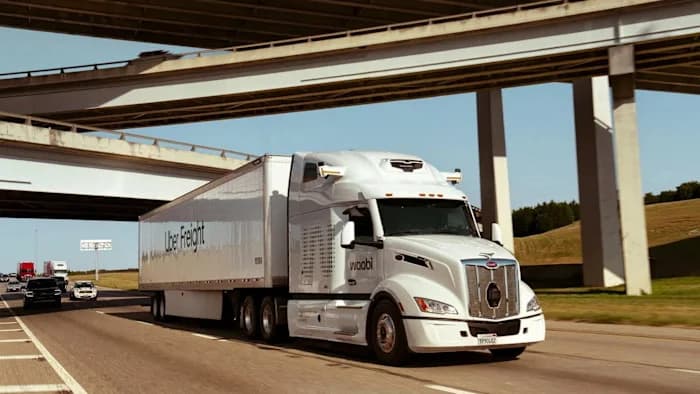
Waabi robotaxis Uber Canada funding 2026 has emerged as a landmark development in Canada’s autonomous-vehicle sector, signaling a major shift in how AI-driven driving platforms are scaled across multiple use cases. The news centers on Waabi, a Toronto-based AI company built around a unified software brain designed to control different vehicle types, and its unprecedented collaboration with Uber to push robotaxi deployment on a mass scale. On January 28, 2026, Waabi announced a milestone funding round alongside a strategic partnership with Uber that together lay the groundwork for a potentially transformative expansion of autonomous driving capabilities within Canada and beyond. The announcement has immediate implications for the Canadian tech ecosystem, for investors seeking exposure to AI-enabled mobility, and for regulators tasked with evaluating the safety, privacy, and urban mobility impacts of large-scale robotaxi operations. The news is timely, data-rich, and indicative of broader market dynamics in the autonomous-vehicles space, where capital formation is accelerating even as the path to full commercialization remains nuanced and contingent on regulatory and operational milestones. This development is closely tracked by analysts across North America and Europe, who see Waabi’s approach as a test case for cross-domain AI modeling that could reshape both trucking and passenger-transport use cases. (techcrunch.com)
As part of the broader context, Waabi’s capital raise comprises a $750 million USD Series C round and an additional milestone-based investment from Uber, with the potential to support a large fleet deployment. Several outlets report the Series C was led by Khosla Ventures and G2 Venture Partners, while additional strategic participation came from Uber, NVentures (NVIDIA’s venture arm), Volvo Group Venture Capital, Porsche Automobil Holding SE, and other financial backers like BlackRock and Radical Ventures. The total funding package underscores the market’s confidence in Waabi’s “Physical AI” platform, a framework the company argues enables scalable, multi-form-factor autonomous driving—from long-haul trucking to urban robotaxis—without needing separate AI stacks for each vehicle type. Waabi’s own communications emphasize that the investment will accelerate commercialization in autonomous trucking and support Waabi’s expansion into robotaxis, with Uber’s investment tied to the deployment of robotaxi capacity on Uber’s platform. (globenewswire.com)
Section 1: What Happened
Funding announcement and terms
-
The core announcement on January 28, 2026, confirmed Waabi’s oversubscribed $750 million USD Series C round, co-led by Khosla Ventures and G2 Venture Partners, combined with an additional milestone-based investment from Uber to enable robotaxi deployment on the Uber platform. The press materials characterize this as one of the largest fundraising efforts in Canadian history, reflecting a bold pivot from Waabi’s initial trucking focus toward ride-hailing applications. The vast majority of coverage places the total funding at $1 billion across the two components, with Uber’s commitment framed as milestone-driven rather than a fixed upfront sum. News outlets that have reported these figures include Fortune, TechCrunch, Axios, and others, all published within days of the official disclosures. (fortune.com)
-
The funding package is described in Waabi’s own communications as an oversubscribed $750 million Series C and a separate future investment from Uber aimed at supporting robotaxi deployment, with the expectation that Waabi’s technology will power tens of thousands of robotaxis on the Uber platform. The Globe and Mail, quoting Waabi’s materials, notes that this marks a new era for the company, moving from a trucking-centric business to a broader “Physical AI” platform capable of supporting multiple autonomous modalities. The press release and investor materials also highlight that the round includes participation from NVIDIA’s NVentures, Volvo Group Venture Capital, Porsche Automobil Holding SE, and BlackRock among others. (globenewswire.com)
-
Several outlets emphasize the scale and ambition of the deal. TechCrunch describes Waabi as expanding beyond autonomous trucking into robotaxis, with Uber facilitating a deployment on its ridesharing network. The Verge notes a concrete deployment target of “at least 25,000 robotaxis” as part of the collaboration, though the timeline for such deployment remains undisclosed. These details illustrate a rare alignment between a software-centric AV platform and a global mobility operator, with potential implications for vehicle utilization, utilization economics, and the regulatory footprint required to operate large robotaxi fleets. (techcrunch.com)
Background and timeline
-
Waabi was founded in 2021 by Raquel Urtasun, a respected figure in AI and autonomous-vehicle research, who previously led Uber’s Advanced Technologies Group. The company positioned itself as a leader in “Physical AI,” aiming to generalize a single AI brain across multiple vehicle forms and use cases. The January 2026 funding round is framed as a critical milestone in Waabi’s journey from a startup focused on autonomous trucking to a diversified AI-driven mobility platform capable of serving robotaxi fleets. The foundational details about Waabi’s formation, leadership, and core technology are widely cited by outlets including The Globe and Mail, Fortune, and the University of Toronto’s coverage of Waabi’s fundraising. (utoronto.ca)
-
Analysts and observers have highlighted the significance of the funding in the context of Canadian tech history. GlobeNewswire’s formal release frames the capital raise as “the largest fundraise in Canadian history,” underscoring the scale of Waabi’s ambitions and the appetite of global investors to back AI-enabled mobility platforms that can cross boundaries between freight and passenger transport. While valuation details remain undisclosed by Waabi, media reports have speculated on a multi-billion-dollar cap, with The Globe and Mail and other outlets noting industry chatter around a potential valuation in the several-billion-range range. The Globe and Mail’s coverage about Globe reporting provides context for how the market views Waabi’s value. (globenewswire.com)
Key players and strategic logic
-
Investors and strategic partners span venture and strategic funds, including Khosla Ventures, G2 Venture Partners, NVIDIA’s NVentures, Volvo Group Venture Capital, Porsche Automobil Holding SE, BlackRock, Radical Ventures, and ADIA’s investment affiliates. Uber also appears as a milestone-based investor, with coverage indicating that Uber’s commitment is tied to robotaxi deployment on its platform. The mix of traditional tech financiers, auto industry investors, and ride-hailing operator involvement signals a blended expectation for both technology maturation and market-ready deployment. (globenewswire.com)
-
The strategic rationale cited by Waabi and its backers centers on a unified AI framework capable of driving multiple vehicle classes, reducing the friction of maintaining separate perception, planning, and control stacks for each use case. Waabi’s own materials emphasize the “Physical AI” approach, which leverages virtual simulation and data to generalize learning across modalities. In public statements, Vinod Khosla—founder of Khosla Ventures—is quoted as praisingWaabi’s platform as a “truly groundbreaking” approach to scalable autonomous driving. These statements underscore the expectation that a shared AI backbone can accelerate the timeline to commercial-scale robotaxi deployments. (waabi.ai)
Section 1 Subsections
Funding Milestones and Partners
- Summary of the funding construct: a $750 million Series C and a future milestone-based investment from Uber, with a potential to fund deployment of Waabi Driver-powered robotaxis on Uber’s platform. The combination is described as a major leap for Waabi and a critical inflection point for Uber’s reinvigorated interest in autonomous-vehicle partnerships. The investor syndicate includes automotive and tech leaders, underscoring broad confidence in Waabi’s ability to scale across form factors. (techcrunch.com)
Deal Terms and Valuation
- Public disclosures have not specified Waabi’s post-money valuation for the Series C. Some media outlets have reported speculation about a multi-billion-dollar valuation, but Waabi and its lead investors have not publicly settled on a final figure as of the latest reporting. The absence of an explicit valuation is typical in rounds of this size when the focus is on strategic alignment and long-tail milestones rather than immediate liquidity events. The press materials emphasize the scale and strategic value of the partnership rather than a disclosed price tag. (fortune.com)
Historical Context and Background
- Waabi’s pivot from trucking to robotaxis is framed within the broader industry trend of AV developers exploring cross-domain applications. The company’s approach centers on a single AI brain architecture and a physics-informed training paradigm designed to generalize across environments, road types, and vehicle platforms. This context explains why Uber would collaborate closely with Waabi to deploy robotaxis in a ride-hailing network, potentially providing a path to rapid scale if regulatory and safety milestones align with deployment plans. The Verge’s coverage and Waabi’s own materials provide the core reference for this strategic shift. (theverge.com)
Section 2: Why It Matters
Market and technology implications
-
The Waabi-Uber collaboration represents a notable convergence of capital markets, automotive and technology expertise, and mobility services. The combination of a large USD funding round and a milestone-based Uber investment signals investor confidence in Waabi’s AI-first approach and its potential to scale across multiple autonomous-mobility modalities. The robotaxi deployment on Uber’s platform could create a new competitive dynamic in the North American AV landscape, where companies have previously pursued separate paths for trucking and passenger mobility. Analysts point to Waabi’s “Physical AI” approach as a differentiator that could enable faster iteration cycles and broader applicability than more siloed AV stacks. (techcrunch.com)
-
The broader market context includes other major players pursuing robotaxi and autonomous trucking initiatives, with Uber’s investment aligning with its continuing interest in backing external AV technology rather than building a fleet entirely in-house. The FT and Axios reports describe Uber’s strategy to partner with multiple AV firms to expand its autonomous-vehicle footprint, highlighting a portfolio approach to achieving scale while managing risk. This alignment with Uber’s broader strategy underscores a shift in how mobility platforms may source autonomy technologies going forward. (ft.com)
Impact on the Canadian ecosystem
-
By situating Waabi’s primary funding round in Toronto and describing the transaction as the largest in Canadian history, media coverage emphasizes both the scale of AI investment in Canada and the country’s potential to become a hub for autonomous-vehicle innovation. Waabi’s leadership, including Raquel Urtasun, is widely recognized in Canadian academic and industry circles, and the funding news has been met with attention from universities and research institutions that have collaborated with Waabi on AI research. The University of Toronto, Waabi’s founder’s affiliation, highlighted the global attention the round attracted, pointing to a broader trend of Canada becoming a magnet for AI-driven mobility ventures. (utoronto.ca)
-
The inclusion of strategic backers such as Volvo and Porsche in Waabi’s Series C signals cross-border interest in Canada’s AI ecosystem, potentially attracting talent, venture capital, and corporate partnerships to the region. The combination of public funding, private investment, and multinational corporate participation could influence policy dialogue around AV testing, urban mobility regulations, and data-sharing frameworks that govern the deployment of robotaxis in Canadian cities. (globenewswire.com)
Investor confidence and competitive context
- Waabi’s funding aligns with a broader wave of AI-enabled mobility investments in the mid-2020s. In the robotaxi space, multiple players have pursued partnerships, pilots, or scale-up strategies, each facing distinct regulatory, safety, and public-acceptance challenges. Analysts will watch how Waabi’s platform handles perception, planning, and control in real-world urban settings, while Uber’s participation illuminates a path toward fleet electrification, ride-pooling integration, and service-level innovations that could influence consumer expectations. The coverage from TechCrunch and Fortune frame these developments as critical tests for AI-driven mobility at scale, with Waabi positioned at the forefront of a multi-operator, multi-vehicle approach. (techcrunch.com)
Section 2 Subsections
Scale and Strategic Alignment
- The collaboration is described as a cross-domain milestone: Waabi’s technology, designed to apply to both trucks and passenger robots, could become a foundation for broader deployment across geographies and vehicle classes. If the robotaxi deployment proceeds as outlined, the scale—potentially tens of thousands of Waabi Driver-powered robotaxis on Uber’s platform—could influence how urban mobility is delivered, including considerations around peak demand management and fleet utilization. Analysts note that a unified AI stack can reduce the marginal cost of deployment across new markets, but real-world testing will be essential to validate this approach at scale. (techcrunch.com)
Impact on the Canadian Mobility Landscape
- The Waabi-Uber funding underscores Canada’s attractiveness as a center for AI-enabled mobility innovation. This development could catalyze additional research funding, public-private partnerships, and pilot programs across major Canadian cities. It also places renewed emphasis on safety testing, data governance, and liability frameworks that accompany robotaxi operations. These considerations are already active in Canadian policy discussions, given Toronto’s status as Waabi’s home base and the city’s ongoing infrastructure and urban planning initiatives that intersect with autonomous-vehicle pilots. (web.cs.toronto.edu)
Investor Confidence and Global Context
- International media coverage situates Waabi’s funding within a global race to commercialize robotaxis and create scalable, AI-driven mobility platforms. The partnership model—anchored by Uber’s platform and Waabi’s Drive software—offers a blueprint that other AV developers might emulate, particularly if Waabi demonstrates reliable safety, performance, and cost-effectiveness at scale. While the exact deployment timeline remains undisclosed, the appetite among investors and corporate partners signals continued high expectations for autonomous-vehicle technology in both freight and passenger markets. (fortune.com)
Section 3: What’s Next
Deployment roadmap and milestones
-
The most urgent question centers on deployment timelines and geographic scope. Uber’s public materials and the reporting around the deal indicate a long horizon for large-scale robotaxi rollout, with an emphasis on milestone-based funding rather than immediate, large-scale deployments. The Verge’s coverage suggests the plan could eventually involve tens of thousands of robotaxis, but there is no publicly disclosed schedule for when pilots or commercial launches will begin, or where they will occur first. Observers will be watching waabi’s validation and safety milestones, integration with Uber’s ride-hailing system, and any regulatory approvals required for city-level deployments in Canada and potentially beyond. (theverge.com)
-
In parallel, Waabi will continue to advance its autonomous-trucking initiatives, leveraging the same AI platform to extend capabilities into robotaxi use cases. Waabi’s communications emphasize continued progress in commercializing trucking while expanding into robotaxis, which suggests a staged approach to deployment—pilot programs, regional rollouts, and eventually broader scale contingent on safety and economics. Industry observers will be keen to see how Waabi balances both domains while maintaining a unified AI framework. (waabi.ai)
Regulatory and market watch
-
The road to robotaxi scale for Waabi on Uber’s platform will depend on regulatory clearance, city-by-city approvals, and market readiness. While Canada has been progressive in encouraging AI research and testing, autonomous passenger-vehicle deployment raises questions about safety standards, driver training (if human oversight is required), privacy, data sharing, and insurance models. The financial and strategic signal from this deal will heighten policy scrutiny and may spur further dialogue among regulators and industry players about establishing standardized testing protocols and safe operating guidelines for robotaxis across provinces. Analysts will monitor not only Waabi’s technical progress but also any regulatory actions or pilot programs announced in the near term. (web.cs.toronto.edu)
-
The broader competitive context—characterized by Uber’s strategic collaborations with multiple AV developers—means Waabi will operate within a landscape in which several platforms could contribute robotaxi capabilities in parallel. This milieu may compel regulators and city planning bodies to establish clearer pathways for essential data-sharing agreements, safety audits, and accountability mechanisms. While specifics will vary by jurisdiction, the Waabi-Uber funding is likely to accelerate public dialogue around how robotaxis could fit into existing transportation networks, how liability is assigned in mixed-traffic environments, and how consumer protection frameworks will adapt to autonomous ride-hailing at scale. (ft.com)
Timeline and Next Steps
-
2026 Q1: Public disclosure of the oversubscribed Series C and Uber’s milestone-based investment, with Waabi positioning robotaxis as a core component of its post-trucking growth strategy. Media coverage confirms the primary financial structure and strategic intent, with a focus on the collaboration’s potential to deploy thousands of Waabi-powered robotaxis on Uber’s platform. (globenewswire.com)
-
2026–2027: Anticipated phases include validation, pilot deployments in selected Canadian markets, and regulatory alignment in targeted cities. The exact sequencing will depend on local approvals, safety validations, and the integration schedule with Uber’s platform. Analysts will track performance metrics such as reliability, latency, and safety incident rates, plus business metrics like unit economics, fleet utilization, and rider uptake. (techcrunch.com)
-
2028 and beyond: If milestones are met and regulatory frameworks permit broader deployment, Waabi’s model could scale to tens of thousands of robotaxis on Uber’s network, potentially expanding to additional markets and verticals beyond passenger transport. The trajectory will depend on continued investment, supplier partnerships (including vehicle integration and sensor tech), and the evolution of AI safety standards. (theverge.com)
What to watch for next
-
Deployment milestones and market rollouts: Any official statements from Waabi or Uber about pilot programs, city approvals, or first city deployments will be significant. Expect press releases or investor disclosures detailing location plans and timelines.
-
Safety and regulatory updates: As robotaxi programs ramp up, safety case studies, audits, and regulatory guidance will be essential for public confidence and scaling. Policy updates from Canadian regulatory bodies and city governments will be crucial to watch.
-
Financial and valuation updates: While initial disclosures emphasize strategic value and milestone-based funding, subsequent rounds, valuations, or regulatory filings could reveal more about Waabi’s market positioning and investor expectations.
Closing
The Waabi robotaxis Uber Canada funding 2026 development marks a watershed moment for Canada’s autonomous-vehicle industry and for the broader AI-enabled mobility space. By combining Waabi’s Unified AI platform with Uber’s mobility network, the deal creates a blueprint for scaling robotaxi operations through cross-industry collaboration and capital efficiency. The immediate news underscores a growing convergence of AI innovation, mobility services, and investment appetite in North America, with Canada poised to emerge as a notable hub for these high-impact technologies. As Waabi and Uber proceed, readers should expect a steady stream of updates—ranging from pilot announcements to regulatory filings and technical demonstrations—that will illuminate whether this ambitious plan translates into durable market outcomes. To stay informed, follow Waabi’s official communications, Uber’s mobility news, and coverage from major tech and business outlets that have tracked the deal since its January 2026 unveiling. (globenewswire.com)
The message from industry observers is clear: the Waabi-Uber collaboration represents more than a funding milestone; it signals a potential recalibration of how robotaxis scale, how cross-domain AI architectures are valued, and how city mobility ecosystems adapt to new autonomous services. For professionals and policymakers alike, the coming months will reveal whether Waabi’s Physical AI platform can deliver on its promise of generalized driving intelligence across multiple vehicle types, and whether Uber’s platform can absorb, integrate, and responsibly scale such technologies in ways that improve safety, efficiency, and accessibility for riders. The Canadian story is just beginning, but the signals from January 2026 indicate a high-stakes, high-ambition chapter in the evolution of autonomous mobility. (waabi.ai)