Toronto AI chip startup Taalas funding Feb 2026

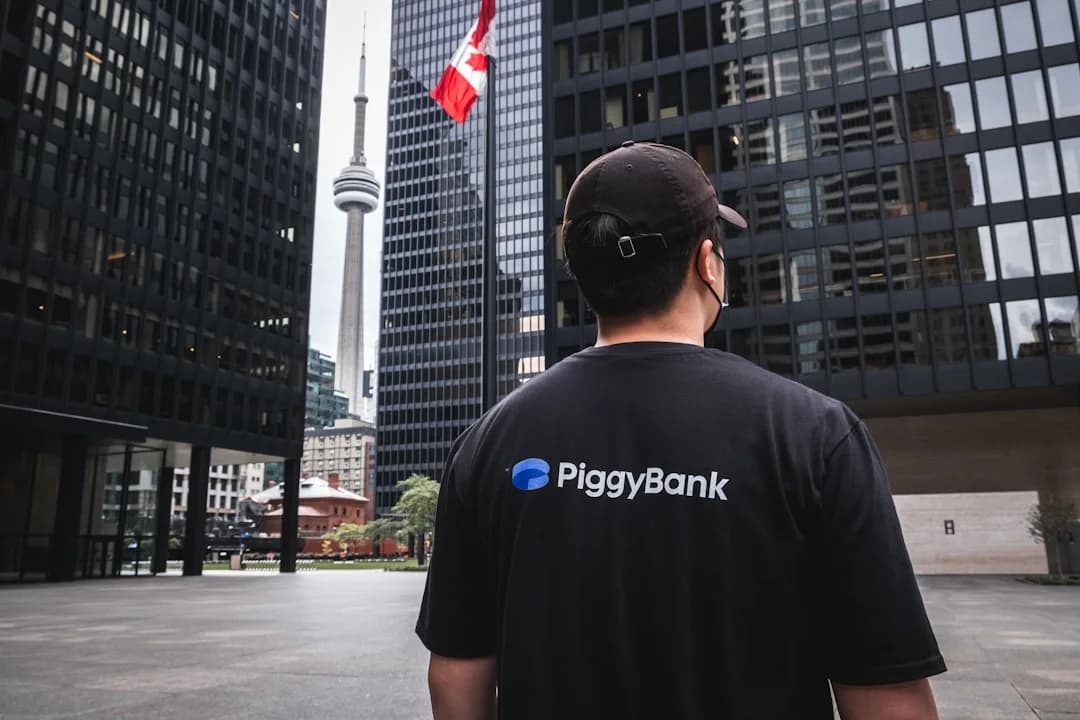
The Toronto AI chip startup Taalas funding Feb 2026 marks a watershed moment for Canadian hardware-driven AI ambition. On February 19–20, 2026, Taalas disclosed a funding round totaling US$169 million, bringing its cumulative financing to roughly US$219 million since emerging from stealth. The company also unveiled its first product, the HC1 technology demonstrator, a hardwired AI chip designed to run a specific model — in this case, Llama 3.1 8B — with the weights embedded directly into silicon. The round’s backers include Quiet Capital, Fidelity, and Pierre Lamond, and the disclosure positions Taalas as a notable entrant in the rapidly evolving AI accelerator landscape. The news underscores a broader industry shift toward model-specific silicon that promises dramatic gains in latency and efficiency for selected AI workloads. (datacenterdynamics.com)
This development arrives amid a growing frontier in AI hardware that prioritizes constant-time access to weights and ultra-low power consumption over universal programmability. Analysts and industry observers alike note that per-model Silicon, as demonstrated by Taalas’s HC1, could redefine how data centers and enterprise deployments approach AI inference, especially for workloads that rely on fixed, well-bounded models. The financial uptake signals investor confidence in a hardware paradigm that eschews conventional memory-for-compute architectures in favor of direct-to-silicon implementations. While Nvidia and other established accelerators remain dominant in general-purpose AI compute, Taalas’s approach highlights a complementary path that could co-exist with, or compete against, traditional GPUs in select segments. (forbes.com)
Opening note: Toronto AI chip startup Taalas funding Feb 2026 is at the center of discussions about how and where AI inference will run in the coming years. The funding round not only supplies capital for chip production and R&D but also serves as a signal about the maturity of a new generation of silicon that bakes models into hardware. As this story develops, readers will want to track production milestones, model coverage, and the pace at which other model families receive dedicated silicon. The following sections provide a detailed look at what happened, why it matters, and what to watch next.
What Happened
Funding announcement and financial details
Taalas publicly disclosed a financing round of US$169 million in February 2026, asserting its plan to fund the development of AI-specific silicon designed to run particular models with unprecedented speed and cost efficiency. This funding brings the startup’s total capital raised to approximately US$219 million since it departed stealth status in 2024. The timing and scale of the round place Taalas among the more high-profile AI hardware financings in early 2026, illustrating growing investor appetite for specialized AI accelerators beyond general-purpose GPUs. Multiple outlets reported the same figure, reinforcing the consistency of the announcement across press coverage. (datacenterdynamics.com)
Investors cited in the coverage include Quiet Capital as a lead backer, with Fidelity International and Pierre Lamond among the other notable participants. The involvement of veteran semiconductor investors, alongside a recognizable early-stage tech fund, underscores the perceived volume and strategic value of Taalas’s approach. The round’s disclosed amount and investors were echoed by Reuters coverage and industry outlets, contributing to a convergent narrative about the company’s fundraising trajectory. (datacenterdynamics.com)
HC1 technology demonstration and model focus
In conjunction with the funding, Taalas introduced the HC1 Technology Demonstrator, the company’s first silicon product. HC1 is designed to run a fixed model — the Llama 3.1 8B — with its weights hardwired into the silicon. The approach eliminates dependency on external memory and traditional software-driven inference, aiming to deliver significantly higher throughput per user and dramatically reduced energy use relative to state-of-the-art GPU-based inference. Fabrication is reported to be via TSMC on a 6nm process node, with the design intent to embed model weights directly into the device and minimize data movement that typically dominates power and latency in AI inference. The company positions HC1 as a demonstrator of its broader design ethos: per-model silicon that can be produced quickly to address model-specific workloads. (datacenterdynamics.com)
Tech coverage also highlighted performance comparisons linked to the HC1 approach, noting claims of superior tokens-per-second metrics for certain configurations when contrasted with mainstream GPUs. This aligns with broader industry commentary about the potential efficiency gains of model-specific silicon, though it’s important to understand that such claims are typically model- and workload-specific and may vary as products scale. (datacenterdynamics.com)
Company background and leadership
Taalas was founded by Ljubisa Bajic, a veteran architect who previously helped launch Tenstorrent, along with other co-founders and seasoned engineers. The company describes itself as building hardware that translates AI models directly into silicon, merging storage and compute on a single die to enable dense, model-focused inference. The timeline noted in coverage indicates that Taalas emerged from stealth status in early 2024, continuing to mature its platform and product slate through 2025 and into 2026. This leadership profile aligns with industry expectations for ambitious hardware plays in AI, where prior startup experience in the space often correlates with accelerative development cycles and strategic partnerships. (datacenterdynamics.com)
Why It Matters
Implications for AI inference economics

Photo by Hamza Ullah on Unsplash
The strategic pivot toward per-model silicon — exemplified by Taalas’s HC1 — promises notable shifts in AI inference economics. By embedding model weights and architecture directly into the chip, the design seeks to reduce memory fetches, memory bandwidth demands, and overall power consumption associated with traditional AI accelerators. Industry observers have estimated substantial performance-per-watt improvements and lower total cost of ownership for certain model families when compared with conventional GPU-based inference. While the precise economics depend on model size, deployment scale, and software tooling, the early demonstrations and funding momentum suggest this model of specialization could complement existing hardware stacks in data centers and edge deployments. Analysts caution that the per-model approach excels in narrow, well-defined workloads; it may not replace flexible accelerators across all AI tasks, but it could dominate specific, high-throughput inference scenarios. The broader market context—driven by Nvidia’s established GPU leadership and emerging rivals—frames Taalas as a potential disruptor for particular segments of AI infrastructure. (forbes.com)
Competitive landscape and market signals
Taalas’s funding and product reveal mirror a broader industry trend toward specialized silicon that accelerates certain AI models at the hardware level. Coverage from electronics industry outlets and market analysis sites has highlighted similar dynamics, including claims of high token-per-second performance for model-specific chips and comparisons to leading GPUs. While such claims require independent benchmarking and broader adoption to be fully validated at scale, the market signal is clear: investors are signaling confidence in a hardware paradigm shift that could complement the GPU-centric approach that has dominated AI computing to date. The participation of established investors and the rapid public debut of HC1 contribute to a narrative of credible market interest in this line of hardware innovation. (electronicsweekly.com)
Impact on Toronto's tech ecosystem
The Toronto tech scene has routinely sought to diversify beyond software into hard tech and semiconductor development, a path that often requires capital, talent, and proximity to manufacturing ecosystems. Taalas’s February 2026 funding round, anchored by high-profile backers and anchored by a local leadership team with ties to established Toronto technology ventures, underscores the city’s potential role in a more diversified AI hardware landscape. The story aligns with broader Canada-wide efforts to attract hardware research, manufacturing collaborations, and venture investment in next-generation AI infrastructure. While Toronto’s hardware ecosystem has historically faced challenges related to fab capacity and scale, the Taalas milestone — coupled with continued interest from global investors — could spur more private capital, talent migration, and partnerships across Canada’s AI hardware corridor. (datacenterdynamics.com)
What's Next
Product roadmap and next-generation chips
Taalas signaled plans to advance beyond HC1 with the development of HC2, designed to support larger parameter counts and broader model families. The HC2 trajectory suggests a staged product strategy, moving from a fixed-model architecture toward extended coverage of open and proprietary models as the company refines its automated design flows and fabrication timelines.Industry outlets tracking the announcement highlighted the intention to scale model coverage over the course of 2026, with ongoing emphasis on speed, density, and cost improvements tied to the HC family. The cadence of two-month windows for turning new models into silicon remains a defining element of the company’s value proposition, and observers will watch whether HC2 and subsequent devices deliver on that promise at production scale. (datacenterdynamics.com)
Market adoption and milestones to watch
Key milestones to monitor include production ramp for HC1 and the eventual commercialization path for HC2, including customer pilots, early-adopter deployments, and any updates to model coverage. Analysts will also track benchmarking data from independent testers to verify token-per-second claims and energy efficiency across representative workloads. In parallel, the broader AI hardware market will likely respond to a series of model-specific silicon announcements from multiple players, potentially accelerating partnerships with cloud providers, hyperscalers, and enterprise customers seeking cost-effective, high-throughput inference options. Coverage from Reuters-linked outlets and industry outlets in February 2026 indicates an active, fast-moving market, with analysts weighing how model-specific silicon fits into existing data-center architectures and future AI deployment strategies. (br.investing.com)
Closing
The Toronto AI chip startup Taalas funding Feb 2026 announcement marks a notable inflection point for AI hardware that blends model specificity with rapid silicon fabrication. The $169 million funding round, bringing total financing to roughly $219 million, accompanies a public debut of HC1, a hardwired Llama 3.1 8B chip fabricated by TSMC on a 6nm node. This combination of capital, leadership, and a tangible product foregrounds a path where model-by-model silicon could coexist with GPU-based accelerators, unlocking a spectrum of opportunities for data centers, enterprise AI, and edge deployments. As with all early-stage hardware revolutions, the true test will come from real-world deployments, independent benchmarking, and sustained product cadence. Readers should stay tuned for updated performance figures, customer case studies, and additional model support as Taalas advances its roadmap through 2026 and beyond. For ongoing developments, credible sources such as Reuters, Datacenter Dynamics, and Electronics Weekly will provide continuing coverage. (br.investing.com)

Photo by Yeo Yonghwan on Unsplash
Staying informed will require watching HC1’s real-world deployments, the HC2 rollout, and any new investment rounds or strategic partnerships that shape the company’s ability to scale. The Toronto ecosystem’s trajectory in AI hardware will be shaped by how quickly Taalas and similar firms can translate ambitious demonstrations into reliable, scalable production. As the industry absorbs these signals, analysts will pay close attention to performance benchmarks, manufacturing lead times, and the economics of per-model silicon versus general-purpose accelerators. The next few quarters should reveal how much of the HC1 promise translates into practical, large-scale AI inference gains for customers and partners.
If you’re following Toronto’s AI hardware scene, you’ll want to track updates from credible outlets and the company’s own disclosures as the HC1 program progresses toward broader model coverage and broader market adoption. In the months ahead, the story will hinge on benchmark data, real-world deployments, and the pace at which Taalas can deliver on its two-month model-to-silicon cadence.