Montreal Mila AI funding 2026: $36M grant

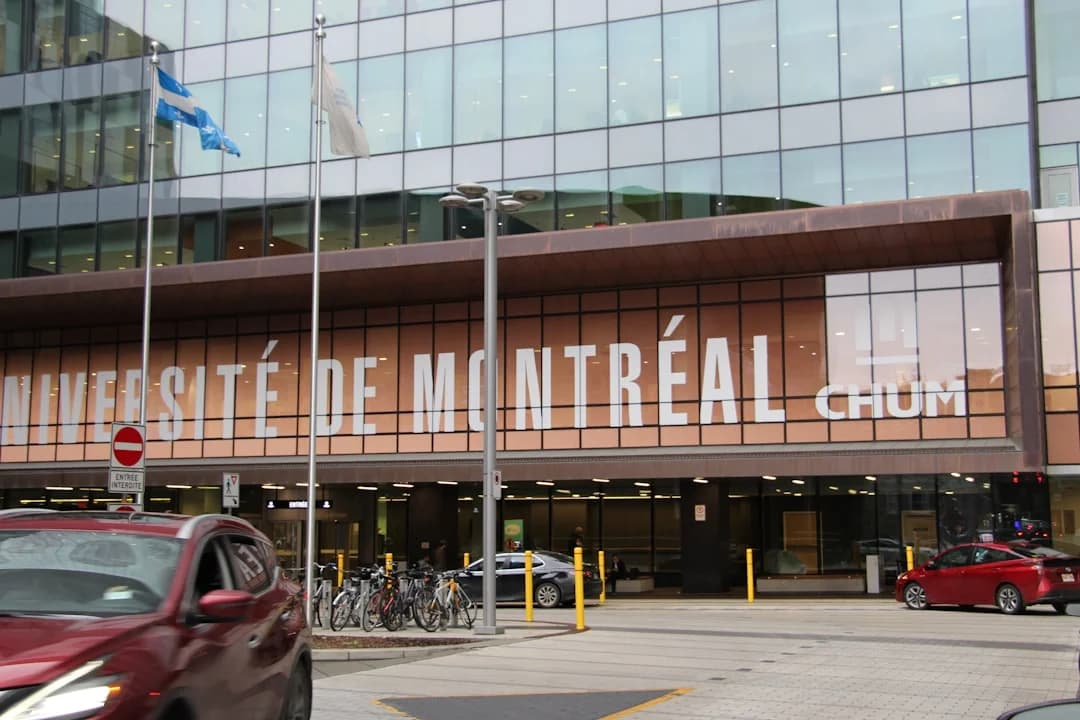
Photo by Alain Guillot on Unsplash
Montreal Mila AI funding 2026 marks a pivotal moment for Quebec’s AI ecosystem as the government awarded Mila a $36 million grant to strengthen AI research and talent in Montreal. The announcement, delivered in late February 2026, underscores the province’s commitment to maintaining Montreal’s status as a global hub for responsible AI development and for translating research into real-world economic value. With this funding, Mila aims to deepen its university network, attract and train top talent, and accelerate collaboration with Quebec-based companies on practical AI applications. The news matters not only for Mila and its partner institutions but for the broader technology sector in Montreal, which increasingly views AI as a central engine for growth, productivity, and ethical innovation. The event took place in Montreal and featured senior provincial officials in attendance, signaling the level of government support behind Mila’s mission. (mila.quebec)
As part of a broader policy arc, the Quebec government’s decision to provide sustained backing for Mila aligns with ongoing provincial and federal moves to foster AI research, ethics, and adoption. The funding is framed as a strategic investment designed to consolidate Mila’s leadership in university-level AI research, accelerate talent development, and expand industry partnerships across Quebec. The provincial government has also signaled a continued willingness to support Mila as a cornerstone of its AI ecosystem, a policy stance that complements related announcements and budget commitments reported by government and university sources in early 2026. Experts and industry observers say the grant reinforces Montreal’s competitive positioning in AI by combining world-class research with a strong talent pipeline and industry engagement. (nouvelles.umontreal.ca)
Mila’s leadership welcomed the funding as a catalyst for scaling existing strengths and for expanding its role beyond pure research into broader economic impact. In a press briefing that accompanied the announcement, Mila highlighted the goal of strengthening its network of university excellence in AI, while also expanding training and talent attraction programs. The people present at the event—Quebec’s Minister of Economy, Innovation and Energy Jean Boulet, along with Minister of Social Solidarity and Community Action Chantal Rouleau and Parliamentary Assistant Céline Haytayan—emphasized the importance of bridging research with industry in order to keep Quebec competitive on the global AI stage. This trio of officials underscored a government-wide emphasis on AI as a strategic sector for innovation, jobs, and ethical development. (mila.quebec)
Opening paragraph data points and context set the stage for a deeper dive into what happened, why it matters, and what’s next for Mila and its Montreal ecosystem. The funding announcement came on February 27, 2026, and was framed as a strategic investment in Mila’s mission to attract and retain AI talent, accelerate the translation of research into commercial applications, and bolster collaborations with universities and industry partners. Mila’s leadership framed the award as a way to consolidate its position as a global leader in AI research and to ensure that Quebec remains at the forefront of responsible AI development. The announcement was accompanied by statements that Mila would accelerate investments in university partnerships, training programs, and industry adoption initiatives—efforts that are expected to yield tangible benefits for Montreal’s tech workforce and for Quebec’s economy overall. (mila.quebec)
What Happened
Announcement Details
- On February 27, 2026, Mila announced a $36 million grant from the Government of Quebec to support AI research and talent development in Montreal. This funding is designed to strengthen Mila’s network of university excellence in AI and to boost the institution’s capacity to train and attract leading AI researchers and engineers. The official Mila press release and accompanying media coverage confirmed the amount, the source, and the core objectives of the funding. The event was hosted at Mila’s Montreal facilities and featured remarks from key government ministers and Mila leadership. In Mila’s own account, the money will help “strengthen its network of university excellence in AI, as well as the training and attraction of talent.” (mila.quebec)
Timeline of Events
-
February 27, 2026: The government of Quebec publicly announced a $36 million grant to Mila for AI research, talent development, and partnerships with universities to sustain Montreal’s leadership in AI. The press conference highlighted Mila’s role in training and retaining top AI talent and in expanding collaborations with Quebec-based companies. Government and Mila officials emphasized the strategic importance of ethical, responsible AI development and the need to accelerate knowledge transfer from labs to local industry. (mila.quebec)
-
Post-announcement activities centered on integrating the funding into Mila’s ongoing programs, including expanded scholarship and training initiatives, partnerships with universities across Montreal and Quebec, and enhanced outreach to industry for AI adoption. The commitment was positioned as part of a broader provincial strategy to reinforce Mila’s leadership and to support the commercialization and practical deployment of AI technologies in key sectors. These programmatic commitments and the broader policy context were emphasized by Mila leadership and government representatives during the event. (mila.quebec)
Key Facts and Figures
-
Amount: $36 million (Canadian dollars). Source: Mila’s February 27, 2026 announcement. The government’s decision to allocate this amount was framed as a significant, multi-year investment in Mila’s mission to train, attract, and retain AI talent while strengthening university partnerships and industry engagement. (mila.quebec)
-
Source: Government- and university-linked reporting aligns on the figure and purpose. Coverage from Mila’s site and university media outlets confirms the grant amount and the intended impacts on talent development, research scale, and industry collaboration. This clarity helps readers understand the scale of support behind Mila’s ongoing AI work in Montreal and Quebec more broadly. (mila.quebec)
-
Attendees and framing: The press conference was led by, or featured, Jean Boulet (Minister of Economy, Innovation and Energy), Chantal Rouleau (Minister Responsible for the Montreal Region), and Céline Haytayan (Parliamentary Assistant to the Minister of AI portfolios). Mila’s leadership—Valérie Pisano (President and CEO) and others—spoke to the institution’s ongoing role in talent development and industry collaboration. This helps readers anchor the announcement in its political and institutional context. (mila.quebec)
-
Official purpose: Mila’s stated goals with the funding include consolidating its network of university excellence in AI, accelerating AI training programs, and expanding partnerships with Quebec firms for AI adoption and development. The emphasis on training, talent retention, and collaboration with the business community appears consistently across official statements and follow-up coverage. (mila.quebec)
-
Related context: Beyond Mila, the funding fits into a broader Quebec policy environment that prioritizes AI leadership, research funding continuity, and ethical AI development. The province’s 2025-2026 budget documents reinforce ongoing support for Mila and related innovation initiatives, signaling a stability of policy support for AI research in the near term. (finances.gouv.qc.ca)
Why It Matters
Economic and Talent Impact
- The $36 million Montreal Mila AI funding 2026 package is designed to directly impact talent pipelines and research capacity. By strengthening Mila’s university network and expanding training programs, the grant aims to produce more AI researchers, developers, and engineers who can fill high-demand roles in academia and industry. The immediate effect is a more robust pipeline of qualified AI professionals in Montreal and across Quebec, with potential spillovers to startups and established tech firms that rely on advanced ML capabilities. This has downstream effects on wages, employment growth in tech corridors, and the overall competitiveness of Montreal’s tech ecosystem. The government’s framing emphasizes both talent attraction and retention, which are critical elements in sustaining a city’s AI leadership. (mila.quebec)
Industry Adoption and Collaboration
- The funding is explicitly tied to Mila’s role as a bridge between research and industry. With more robust collaboration channels, Quebec-based companies can access cutting-edge AI research, pilot programs, and talent-rich partnerships that accelerate product development and deployment. The emphasis on “training and attraction of talent” plus the strengthening of university partnerships suggests a dual focus on building supply (talent) and demand (industry adoption) for AI capabilities. This can translate into faster adoption of AI across sectors such as aerospace, life sciences, and manufacturing, where Montreal-area institutions have deep expertise. The alignment with provincial innovation goals reinforces the idea that Mila will serve as a key engine for economic growth and technological leadership in the region. (mila.quebec)
Strategic and Global Context
- Quebec’s investment in Mila reflects a strategic choice to anchor AI research excellence in Montreal and to project leadership in responsible AI development globally. Mila’s leadership has long argued that the region’s AI ecosystem benefits from strong university partnerships, ethical standards, and a talent-centric approach to research translation. The government’s continued backing signals political and financial alignment with Mila’s mission and with the broader aim of maintaining Quebec’s competitive edge in AI research and development. In a rapidly evolving global AI landscape, such sustained support can help Mila maintain collaborations with international researchers, attract top talent from around the world, and ensure Quebec remains a center of excellence for AI innovation and governance. (nouvelles.umontreal.ca)
Who It Affects
- Direct beneficiaries include Mila itself, its partner universities (notably Université de Montréal and allied institutions), and the cadre of AI researchers, engineers, and students who contribute to Mila’s programs. Indirect beneficiaries include Montreal’s technology workforce, local AI startups, established tech companies seeking AI capabilities, and the broader regional economy that benefits from higher productivity and innovation-driven growth. The policy signals from government officials suggest a focus on sustainable, ethical AI development that can set standards for industry practice. (mila.quebec)
Broader Context: Montreal and Quebec AI Leadership
- Mila’s position as a leading AI research institute in Montreal is well established in the academic and tech communities. The funding announcement reinforces the city’s status as a global AI hub, with a distinctive Montreal ecosystem that blends world-class research with an active industry community and a strong talent pool. While other regions are investing in AI research as well, Quebec’s targeted funding underscores a strategic approach to ensure Mila remains a central platform for collaboration and innovation, while also reinforcing ethical AI practices and responsible deployment. The broader policy environment—emphasizing continuity of support for Mila and related AI initiatives—strengthens confidence among researchers, investors, and industry partners about the region’s long-term commitment to AI. (nouvelles.umontreal.ca)
Global AI Landscape Context
- The Montreal-based AI ecosystem competes on a global stage with other AI hubs around the world. Mila’s leadership, backed by provincial funding, signals a commitment to high-impact, ethics-centered AI research and education, which can attract international talent and partnerships. The combination of research excellence, talent development, and industry engagement is a model that other jurisdictions monitor as they shape their own AI strategies. The funding is thus not only a local milestone; it contributes to a broader narrative about how regional AI ecosystems can sustain competitive advantage through thoughtful investment and governance. (nouvelles.umontreal.ca)
What’s Next
Next Steps for Mila and Montreal’s AI Ecosystem
-
Implementing the fund: Mila will incorporate the $36 million into its ongoing and planned programs, prioritizing university collaborations, training initiatives, and industry partnerships. Expect expanded scholarship offerings, targeted recruitment campaigns, and new joint projects with Montreal-area universities and tech firms. The timing and phasing will likely align with the academic year cycles, pilot project schedules, and industry onboarding timelines already familiar to Mila’s ecosystem. (mila.quebec)
-
Monitoring and accountability: As with any public funding, Mila will probably publish progress reports, impact metrics, and financial statements detailing how the funds are allocated and what outcomes are achieved. Quebec’s budget framework and the government’s public communication around the grant imply a structured approach to accountability, with potential updates to timelines and milestones as programs advance. Readers should watch Mila’s annual impact reports and government briefings for updates on milestones, partnerships, and talent outcomes. (finances.gouv.qc.ca)
-
Long-term strategic priorities: Expect continued emphasis on expanding Mila’s university network, deepening industry collaborations, and translating research into practical AI solutions for Quebec-based companies. The funding is positioned as a catalyst for long-term capability-building, not merely a one-off grant, which suggests a multi-year horizon for tangible results in skills development, technology transfer, and regional economic impact. (mila.quebec)
What to Watch For
-
Talent metrics: Increases in AI graduate output, postdoc placements, and industry placements among Mila-affiliated programs will be key indicators of success. The focus on training and retention implies that Mila will monitor indicators such as graduation rates, time-to-placement, and industry absorption rates for AI graduates. (mila.quebec)
-
Research outputs: More joint publications, conference presentations, and joint research agreements with Montreal-area universities and partner companies will signal effective use of the funding. Mila’s existing emphasis on deep research collaborations makes these outputs likely early indicators of program progress. (mila.quebec)
-
Industry pilots and deployments: Expect a growing number of pilot projects and early deployments of AI technologies in local businesses, along with case studies highlighting efficiency gains and process improvements. Mila’s role as a facilitator for industry adoption suggests that deployment milestones will accompany research milestones. (mila.quebec)
-
International engagement: The funding could attract international researchers and collaborations, enhancing Mila’s global network. The leadership position Mila holds in the AI research community and the province’s ongoing support are likely to attract attention from global partners seeking to engage with Quebec’s AI ecosystem. (nouvelles.umontreal.ca)
Next Steps Timeline (Illustrative)
-
Q2 2026: Program design and initial allocation decisions are implemented; first wave of scholarship expansions and co-op/internship opportunities launched in collaboration with partner universities.
-
Q3–Q4 2026: Initial industry projects and pilot initiatives get underway; Mila releases its first post-grant progress report outlining early outcomes and adjustments.
-
2027 and beyond: Expansion of joint research centers or formalized multi-university collaborations may be announced as part of long-range plans, with ongoing governance to ensure ethical AI practices and societal benefits. Note: While these future specifics are not confirmed in official Mila materials, the grant’s framing supports continued expansion of Mila’s network and programs over multiple years. (mila.quebec)
Closing
Montreal’s AI community now stands at a crossroads where government backing, university network strength, and private-sector engagement converge to accelerate AI research and talent development. The Montreal Mila AI funding 2026 announcement—coupled with the $36 million grant from the Quebec government—sends a clear signal that Mila will continue to play a central role in shaping Quebec’s AI landscape, with ripple effects for Montreal’s economy, higher education, and the global AI community. For readers tracking how this funding translates into concrete results, the next several years will be a crucial period to watch Mila’s impact on talent pipelines, research outcomes, and industry adoption in Montreal and beyond. To stay updated, monitor Mila’s official communications, Quebec government briefings, and credible local and national technology outlets for milestones and ongoing analyses. (mila.quebec)