Montreal AI commercialization fund 2026 Launch

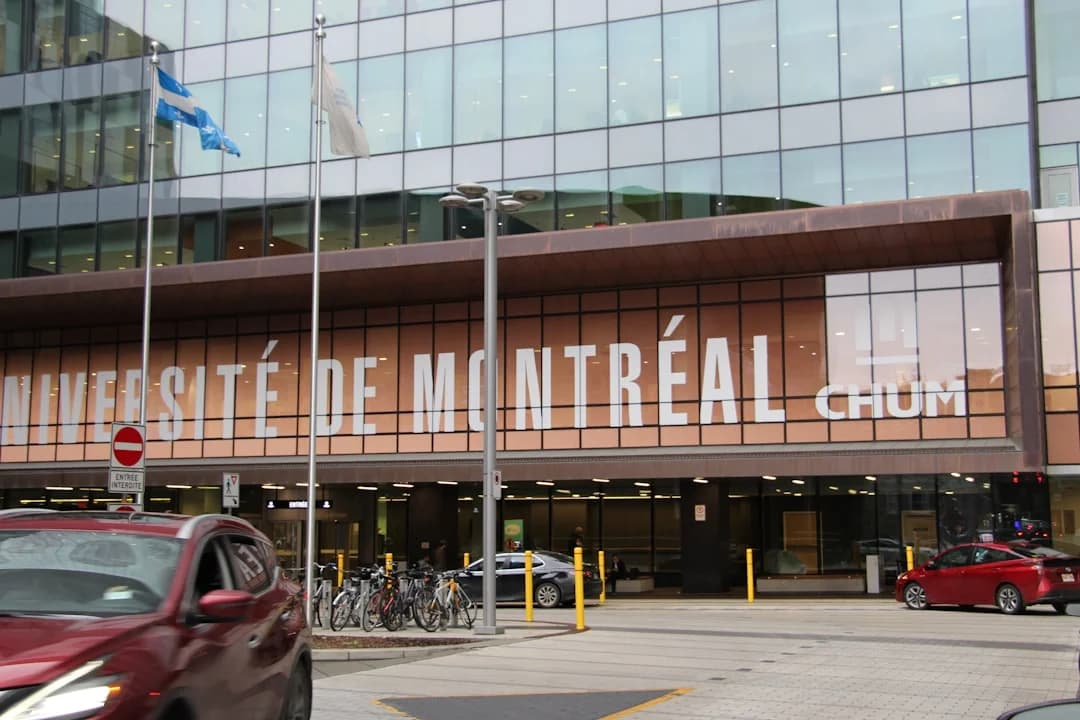
Photo by Alain Guillot on Unsplash
The announcement of a new investment engine aimed at commercializing Canada’s frontier AI research arrives as Montreal solidifies its status as a leading AI hub. On January 21, 2026, Mila, the Montreal-based Quebec Artificial Intelligence Institute, joined forces with Inovia Capital to launch the Venture Scientist Fund, a US$100 million early-stage venture vehicle designed to translate cutting-edge AI science into real-world companies. The fund is positioned to back 55 or more AI-native startups emerging from Canada’s strong research ecosystems, with a deliberate emphasis on foundational AI, deep tech, and the infrastructure that enables scalable deployments. The news comes at a moment when Montreal and Quebec are actively cultivating a robust commercialization pipeline, backed by government, academic, and industry partnerships. (mila.quebec)
Quebec’s Mila frames the fund as a bridge between laboratory breakthroughs and market-ready ventures, a move that aims to close a well-documented gap: Canada remains a global leader in AI research talent but has historically attracted a smaller share of global AI venture capital investment. Mila notes that Canada accounts for roughly 10% of the world’s top AI researchers while capturing less than 2% of global AI VC investment, underscoring the strategic need for mechanisms that accelerate commercialization. The Venture Scientist Fund is designed to address precisely that gap by funding early-stage, AI-native companies and anchoring intellectual property within Canada. (mila.quebec)
The fund’s launch is also a signal of growing momentum around Montreal’s AI ecosystem. Earlier in 2025, Montréal International highlighted multiple AI investments announced at the Montréal World Summit AI, illustrating a pipeline of deals intended to accelerate deployment and job creation in the city. In addition, Montreal’s AI ecosystem has continued to attract government and private-sector attention, with Mila recently receiving government support and ongoing collaborations that connect research to market opportunities. These developments sit within a broader Canadian AI landscape that includes connections to Alberta’s Amii and the Vector Institute in Toronto, forming a national network designed to accelerate commercialization while preserving research excellence. (montrealinternational.com)
Opening
The Venture Scientist Fund was unveiled in a joint communication from Mila and Inovia Capital, underscoring a shared ambition: to turn Canada’s frontier AI research into globally competitive AI-native companies. The fund seeks to invest across a continuum from early-stage research-derived ideas to first commercial products, leveraging Mila’s deep ties to universities and research institutes across the country. Mila and Inovia describe the fund as a deliberate integration with the National AI Institutes, including Mila itself as well as Amii in Alberta and the Vector Institute in Toronto. This integrated approach aims to accelerate the formation of startups at the earliest stages, sometimes even before a formal company exists, by providing the kinds of seed-stage resources and market access that academic projects often lack. (mila.quebec)
The January 21, 2026 announcement is complemented by coverage and commentary from Mila’s and Inovia’s communications teams, which emphasize the need to attract and retain research talent within Canada and to anchor homegrown innovations in the domestic tech ecosystem. The fund’s target size—US$100 million—is coupled with an ambitious plan to back more than 55 AI-native companies across Canada, reflecting a commitment to scale ideas that originate in Canadian labs into globally relevant businesses. The publicly stated objective is not only to fund startups but to nurture a pipeline that strengthens Canada’s role in AI commercialization while keeping critical IP and talent within national borders. (mila.quebec)
In the months surrounding the launch, Montreal and Quebec policymakers signaled continued support for AI as a strategic economic driver. For example, Mila announced that the Quebec government would provide further backing to strengthen Mila’s network, training, and talent attraction, reinforcing the region’s ability to sustain AI commercialization momentum. Independently, Montreal has increasingly showcased initiatives designed to reduce friction for startups seeking to test and scale innovative AI applications, including municipal grants and subsidies for open innovation partnerships. The confluence of university-based research, venture capital capital, and municipal and provincial support frames the Venture Scientist Fund as a central piece of a broader commercialization strategy. (mila.quebec)
Section 1: What Happened
Announcement details and fund scope
-
What: Mila and Inovia Capital announced the launch of the Venture Scientist Fund, a new early-stage VC vehicle designed to convert frontier AI research into commercially viable companies. The fund is conceived as a bridge from laboratory breakthroughs to market-ready enterprises, with a focus on AI-native startups built around foundational AI, deep tech, and the infrastructure that enables deployment at scale. The collaboration positions Mila as a scientific engine and source of talent, while Inovia brings fund-management discipline and growth-stage experience. The announcement confirms a target size of USD $100 million and a plan to invest in 55+ AI-native companies. The fund is described as deeply integrated with Mila’s ecosystem and with Canada’s National AI Institutes (including Amii and Vector), enabling early-stage engagement with researchers and entrepreneurs. (mila.quebec)
-
When and where: The formal announcement took place on January 21, 2026, with subsequent coverage and elaboration from Mila and Inovia in the days that followed. The release notes that the fund targets MC-level deployments and a broad Canadian footprint, aligning with Mila’s ongoing strategy to translate research into commercial impact. A complementary blog post from Inovia on January 29, 2026 provides additional context and confirms key numbers and structure. (mila.quebec)
-
How it’s built: The Venture Scientist Fund is designed to operate as a bridge from lab to market, leveraging Mila’s access to frontier AI researchers and Inovia’s venture-building expertise. The fund’s architecture emphasizes early-stage involvement, allowing researchers and engineers to participate in the formation of startups even before a formal company exists. The plan to work in concert with Amii (Alberta Machine Intelligence Institute) and Vector Institute (Toronto) reflects a national strategy to nurture AI startups across Canada while maintaining strong ties to research ecosystems nationwide. This integrated model is highlighted in the official release and related Inovia communications. (mila.quebec)
-
Related context and immediate implications: The Montreal AI ecosystem has been building momentum through public-private collaborations, acceleration programs, and cross-institution initiatives. In 2025, four Montreal-area AI investments were announced at the Montréal World Summit AI, signaling an appetite among international and Canadian players to commercialize AI breakthroughs in the region. The Venture Scientist Fund adds a formal, large-scale mechanism to this momentum, potentially accelerating the number of Montreal-linked AI startups and attracting further capital to the city’s AI clusters. (montrealinternational.com)
Integration with Mila’s broader ecosystem
-
The fund’s design explicitly ties to Mila’s existing initiatives, including the broader aim of translating scientific discoveries into market-ready technology. Mila has long positioned itself as a conduit between academia and industry, with partnerships and programs that help translate fundamental research into practical applications. The Venture Scientist Fund amplifies that mission by offering a capital channel that can rapidly convert research pipelines into venture opportunities. Mila frames the fund as a mechanism to retain talent, anchor IP domestically, and fuel the emergence of category-defining companies rooted in Canada’s scientific strengths. (mila.quebec)
-
Inovia’s perspective aligns with a national-growth objective: close the gap between Canada’s rich research talent and the allocation of venture capital to AI startups. The fund’s target size and its scale—55+ investments—reflect a deliberate bet on Canada’s ability to generate multiple success stories from its academic ecosystems, with Mila at the center of the commercialization engine and Inovia providing scalable venture management. Inovia’s own communications describe the Venture Scientist Fund as a strategic piece of its Discovery Program and emphasize the joint governance structure intended to accelerate startup formation. (inovia.vc)
Contextual backdrop: Canada’s AI ecosystem and Montreal’s role
-
Mila’s leadership in AI research and its base in Montreal anchors much of the commercialization narrative. As the province’s flagship AI institute, Mila has been a magnet for talent, investment, and international partnerships, contributing to Montreal’s reputation as a world-class AI hub. Publicly available information about Mila highlights its role in developing talent and advancing responsible AI, alongside ongoing collaborations and industry-facing initiatives that connect researchers with real-world applications. (mila.quebec)
-
The broader ecosystem includes government support, industry accelerators, and cross-institution collaborations. For example, the province’s government has signaled support for Mila and related AI initiatives, and municipal programs in Montreal are designed to support the commercialization of innovations that address urban needs and ecological transitions. These elements collectively create a fertile environment for a fund like Venture Scientist to operate and prosper, particularly in a city that already hosts prominent AI startups and research groups. (mila.quebec)
Section 2: Why It Matters
Economic and strategic implications for Montreal and Canada
-
The Venture Scientist Fund arrives at a pivotal moment for Canada’s AI economy. Mila and Inovia emphasize that while Canada has a strong pool of AI researchers, venture capital investment in AI remains disproportionately concentrated outside Canada relative to the country’s research density. The fund is thus part of a broader effort to rebalance the landscape, supporting Canadian scientists in translating breakthroughs into scalable ventures and, ideally, sustaining domestic IP within the country. This alignment with national and regional priorities is a recurring theme in Mila’s announcements and Inovia’s commentary. The fund’s design—targeting 55+ companies and a US$100 million corpus—sounds ambitious, but it is consistent with the scale of strategic efforts Canada has pursued in AI commercialization. (mila.quebec)
-
For Montreal specifically, the fund complements existing programs and partnerships designed to accelerate commercialization of AI in industry. The city’s AI ecosystem is supported by a mix of university research, accelerator programs, and municipal and provincial policy instruments that encourage corporate pilots and early-stage trials. The addition of a large, purpose-built fund focused on early-stage commercialization could shorten the path from lab to product in Montreal-based startups, potentially boosting local employment, attracting foreign investment, and increasing the pace of AI deployments in local industries. Montreal International’s coverage of WSAI investments in 2025 demonstrates the city’s appetite for practical AI applications and job creation; the Venture Scientist Fund adds a formal financing mechanism to support such deployments at scale. (montrealinternational.com)
Talent, IP, and global competitiveness
-
A central aim of the fund is to strengthen Canada’s AI commercialization pipeline by keeping IP and talent anchored domestically. Mila’s leadership highlights that enabling closer collaboration between researchers and entrepreneurs will help retain research talent in Canada and improve the country’s ability to convert academic breakthroughs into enduring, exportable tech companies. The fund’s integrated design with national AI institutes is meant to ensure that researchers can access venture-building resources early in the company-formation process, which is a critical lever for commercialization. The quoted statements from Mila and Inovia emphasize this linkage as a core rationale for the fund. (mila.quebec)
-
Inovia’s framing reinforces a long-term national strategy: to move beyond single-company success stories and build a pipeline of multiple AI-native companies that can compete on a global stage. The fund’s scale and structure aim to create a durable ecosystem that feeds into Canada’s venture capital ecosystem, potentially altering the distribution of AI investments and encouraging more research-to-market activity within the country. This aligns with public-sector and private-sector efforts, including government- and university-led programs, to strengthen Canada’s position as an AI powerhouse. (inovia.vc)
Practical implications for stakeholders
-
For researchers and academics: The Venture Scientist Fund promises a clearer path from research to company formation, offering access to capital and mentorship during the earliest stages of startup development. The integrated approach with Mila and national AI Institutes means researchers can leverage a structured pathway from lab work to venture creation, leveraging Mila’s network, Inovia’s investment experience, and the Institutes’ ecosystem. The fund’s stated target of 55+ companies suggests a broad, pluralistic strategy rather than a handful of marquee bets. This could create a more vibrant commercialization pipeline for Montreal universities and research centers. (mila.quebec)
-
For investors and industry partners: The fund represents a public-facing signal of confidence in Canada’s AI research-to-market potential. It also creates opportunities for corporate partners to co-invest, pilot, or co-develop AI solutions with nascent ventures that emerge from Mila’s ecosystem and Canada’s AI research network. The integrated model reduces some of the traditional barriers between research and productization by providing a common framework for scientists, engineers, and venture managers to collaborate. (inovia.vc)
-
For policy makers and the broader ecosystem: The Venture Scientist Fund can be viewed as a strategic instrument to sustain and accelerate AI-driven economic growth. If successful, the fund could justify expanding similar models in other sectors or regions, reinforcing Montreal’s and Quebec’s reputations as AI commercialization hubs. The Quebec government’s support for Mila—and ongoing funding to strengthen its capabilities—illustrates how public resources can complement private capital to advance national innovation goals. The synergy among government, Mila, Inovia, Amii, and Vector Institute is an example of a multi-pillar ecosystem approach. (mila.quebec)
What’s Next: Next steps and signals to watch
Timelines and deployment
-
The fund’s immediate public signals are clear: a target size of USD $100 million and a plan to back 55+ AI-native startups. The Jan 21, 2026 Mila-Inovia announcement did not publish a formal deployment timetable for initial investments, but follow-up communications from Inovia and Mila emphasize the fund’s design to engage at the earliest stages of company formation. Observers should watch for formal fund documentation, kickoff events, and any first close announcements from Mila or Inovia as they begin to execute the strategy. Inovia’s own post confirms the fund’s early-stage, founder-first orientation and its integration with Mila’s venture-science model. (mila.quebec)
-
Inovia’s corresponding communications provide additional specificity on the fund’s architecture and ambitions. The Inovia article notes the fund is a key component of the firm’s Discovery Program and outlines a target size and intent to back 55+ companies, reinforcing the message that this is a scalable, repeatable mechanism rather than a one-off investment. The emphasis on Canada’s science ecosystem—universities and national AI institutes—suggests that next steps will include formal partnerships, outreach to researchers, and structured programs to identify and incubate opportunities. (inovia.vc)
What to watch for in the Montreal context
-
Leadership and governance milestones: The fund will hinge on the collaboration between Mila and Inovia, with ongoing involvement from other national AI institutes. Given Mila’s leadership role and the inclusion of Amii and Vector in the national framework, updates on governance, decision-making, and investment cadence will be important indicators of how quickly the fund moves from announcement to portfolio construction. (mila.quebec)
-
Early-stage signals: The fund’s portfolio approach—55+ startups—means that early-stage research-to-market opportunities could appear across multiple sectors, from core AI technologies to adjacent domains where computational infrastructure and data assets offer defensible advantages. Stakeholders should track the first cohort of investments, the selection criteria, and the types of partnerships formed between Mila’s researchers and Inovia’s portfolio companies. (inovia.vc)
-
Complementary programs and funding: The Montreal region is already home to a number of programs designed to spur AI commercialization, including municipal subsidies and open-innovation efforts intended to bridge pilots with market deployments. These programs, alongside Mila’s government funding and federal/provincial AI initiatives, will shape how the Venture Scientist Fund interacts with the broader economic development landscape. Monitoring these programs will be essential to understanding the fund’s real-world impact on Montreal’s AI startup scene. (montreal.ca)
-
Market and policy environment: The Canadian AI ecosystem continues to evolve as governments, universities, and private capital align around commercialization goals. Coverage of AI summits, investment rounds in Quebec, and national AI strategy updates will all influence the success and scale of the Venture Scientist Fund. Researchers, startups, and investors should stay attentive to policy shifts that could affect funding conditions, tax incentives, and cross-provincial collaboration opportunities. (montrealinternational.com)
Section 3: What’s Next
Next steps for researchers, entrepreneurs, and investors
-
Engage with Mila and Inovia’s Venture Scientist Fund process: Interested researchers and startup teams should look for formal outreach from Mila and Inovia as the fund begins to identify emerging opportunities. The integrated approach—leveraging Mila’s academic networks and Inovia’s venture-management capabilities—will be a core feature of how opportunities are surfaced and advanced. Prospective participants should prepare clear demonstrations of scientific depth, potential market impact, and a credible pathway to commercialization. The fund’s emphasis on 55+ startups suggests a broad call for proposals across Canada, with a preference for projects that benefit from Canada’s research ecosystems. (mila.quebec)
-
Leverage Mila’s broader ecosystem and programs: In addition to the Venture Scientist Fund, Mila's ongoing programs—such as the AI Passport network developed with CDL Montreal and NEXT AI Montréal—illustrate a broader ecosystem designed to accelerate entrepreneurship and commercialization. These programs can provide a pipeline for talent, mentorship, and industry partnerships that complement venture funding. Stakeholders should watch for cross-program opportunities, joint events, and pilot collaborations that align with the fund’s objectives. (mila.quebec)
-
Monitor government and municipal signals: Quebec’s support for Mila and related AI initiatives continues to shape the commercialization environment. Updates on government funding, tax incentives, and open-innovation subsidies can influence the attractiveness of Canadian AI commercialization projects. Municipal programs in Montreal targeting the commercialization of urban innovations can also interact with venture funding, potentially enabling pilots and deployments that demonstrate market traction. (mila.quebec)
-
Anticipate broader industry and regional impact: If the Venture Scientist Fund achieves its 55+ company target, it could catalyze a more robust Canadian AI startup ecosystem and increase Montreal’s prominence as a commercialization hub. The fund’s scale and integrated approach may invite additional co-investors, strategic partnerships, and international attention, further accelerating AI adoption and job creation across industries in Montreal and beyond. (inovia.vc)
What readers should know now
-
The Montreal AI commercialization fund 2026, as publicly announced, is the Venture Scientist Fund—a US$100 million, early-stage venture vehicle designed to transform frontier AI research into market-ready companies with a national footprint. The fund is a joint Mila-Inovia initiative, with explicit integration into Canada’s National AI Institutes (Mila, Amii, Vector), and a plan to back 55+ startups. This marks a concerted effort to strengthen Canada’s AI commercialization pipeline, with a particular emphasis on talent retention and IP anchoring within the domestic economy. (mila.quebec)
-
In a broader context, the Montreal area has been building toward greater AI commercialization momentum through government support, university partnerships, and industry-fatigue-reducing programs that connect researchers with capital and markets. The combination of Mila’s research engine, Inovia’s investment discipline, and national AI-institute coordination creates a framework that could shift how Canadian AI innovations move from lab bench to real-world deployments. While the details of deployment remain to be publicly published, the public statements and related coverage indicate a sincere push toward a scalable commercialization pathway for AI research in Montreal and across Canada. (montrealinternational.com)
Closing
As the Venture Scientist Fund moves from announcement to action, Montreal’s AI ecosystem will be watching closely how researchers, entrepreneurs, and corporate partners align around this new mechanism. The fund’s success will hinge on the speed and quality of early-stage engagements, the ability to translate lab findings into viable business models, and the ecosystem’s capacity to retain talent and IP within Canada. With Mila’s leadership, Inovia’s capital and governance strengths, and the backing of Canada’s AI institutes, the path from discovery to commercialization appears clearer than ever for many Montreal-area researchers and Canadian AI scientists. Readers seeking ongoing updates should follow Mila’s news releases and Inovia’s communications, along with coverage from Montreal International and local innovation programs that continue to shape the region’s AI commercialization landscape. (mila.quebec)