Mila impact 2024-2025: Montreal AI Leadership Benchmark

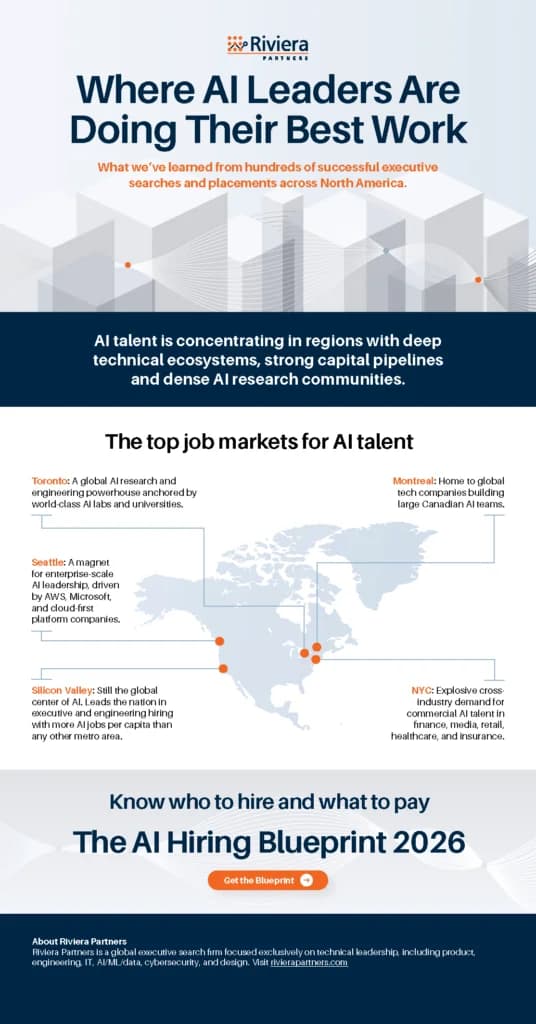
The Mila impact 2024-2025 benchmark reveals a remarkable alignment between Montreal’s AI research strength, policy activity, and industry adoption. The latest impact report highlights how Mila—born from a collaboration between Université de Montréal and McGill University—has not only sustained world-class research but also deepened its translation into economic and societal benefits. The ALL IN 2025 gathering underscored Mila’s role as a global-diplomacy hub for AI dialogue, attracting thousands of participants from dozens of countries and a broad spectrum of stakeholders. In parallel, Mila’s in-house initiatives—ranging from Milabench and TamIA to entrepreneurship and policy programs—demonstrate a holistic model for AI leadership that blends science, governance, and human capital development. This Mila impact 2024-2025 report provides a data-backed view of where Montreal stands in the AI race and what peers can learn from Mila’s multi-faceted approach. (mila.quebec)
At the core of this research is a simple, powerful question: how do Mila’s activities in 2024-2025 translate into measurable outcomes for research, talent, industry collaboration, and public policy? The data set for this report comes primarily from Mila’s Impact Report 2024-2025, with corroborating context from related Mila and ecosystem sources. Key figures include 6,500+ ALL IN 2025 attendees (from more than 40 countries) and more than 200 speakers, a clear signal of Mila’s central role in AI discourse. The period covered spans calendar year 2025 and the broader 2024-2025 impact window, providing a consistent point of comparison against prior years. This research matters because it frames how a regional AI hub can scale into national leadership and international influence, with implications for policymakers, researchers, and industry partners seeking to replicate or learn from Mila’s playbook. (mila.quebec)
Methodology
Data sources and collection
This benchmark synthesizes data from Mila’s Impact Report 2024-2025, which tracks leadership, research output, adoption, governance, and community metrics. Supplementary figures are drawn from Mila’s public updates and related ecosystem reports (e.g., ALL IN 2025 program details). The analysis follows Mila’s own periodization (2025 fiscal year and the ALL IN 2025 event) to ensure alignment with reported milestones. Where figures are presented as ranges or qualitative statements in sources, the interpretation in this report uses the closest explicit numeric value provided by Mila’s materials. (mila.quebec)
Sample size and coverage
- Faculty: 197 Mila-affiliated faculty members, with 42 new hires in the year. This signals a notable expansion of core academic capacity. (mila.quebec)
- Student researchers: 1,222 named student researchers in Mila’s community as of October 2025. (mila.quebec)
- Research projects: 657 ongoing Mila-affiliated research projects. (mila.quebec)
- Publications: 725 peer-reviewed articles, with a strong showing at major AI conferences (NeurIPS 2024, ICLR 2025, ICML 2025). (mila.quebec)
- Scholarships: 474 scholarships awarded to Mila students since last year, totaling substantial funding. (mila.quebec)
- Partnerships and startups: 176 partner organizations; 49 new partners; 12 new Mila startups (53 total startups founded by Mila researchers). (mila.quebec)
Timeframe and limitations
- Timeframe: All-in data for 2025, with ALL IN 2025 (Montréal) held September 24–25, 2025, and related Mila activity from January–November 2025 highlighted in the report. (mila.quebec)
- Limitations: The Mila Impact Report is self-reported by Mila and its partners; while it provides a comprehensive view of activity and outputs, cross-cutting external validation (e.g., independent economic impact assessments) is not always available in the core report. This should be considered when translating findings into policy or investment decisions. (mila.quebec)
Why this research matters
Understanding Mila’s trajectory from 2024 to 2025 illuminates how a regional AI hub can scale: (1) by expanding talent pools and education programs, (2) through robust research output and infrastructure investment, (3) by building a dynamic ecosystem of industry partnerships and startups, and (4) by influencing policy and global AI governance. The Mila impact 2024-2025 benchmark provides a practical blueprint for other AI ecosystems aiming to balance scientific leadership with real-world impact.
Key Findings
Finding 1: Global reach and event scale signal Montreal’s AI diplomacy leadership

ALL IN 2025—Mila’s flagship event—drew over 6,500 attendees from more than 40 countries and featured more than 200 speakers. The event also showcased Mila’s organizational breadth through a Mila delegation of over 50 employees and seven participating speakers. These numbers, paired with the event’s policy and governance discussions, underscore Mila’s role in shaping AI discourse beyond academia. This is a salient indicator of Montreal’s status as a global AI hub. (mila.quebec)
Finding 2: Talent and community expansion accelerates AI literacy and capacity
Mila’s talent pipeline grew meaningfully in 2024-2025:
- 9,677 learners reached through Mila-led programs and conferences, reflecting broad engagement with responsible AI education. (mila.quebec)
- 1,222 student researchers affiliated with Mila, expanding the next generation of AI researchers. (mila.quebec)
- 197 Mila-affiliated faculty members, including 42 new faculty hires in the year, signaling strong growth in research leadership. (mila.quebec)
- 66% of Mila students are international, highlighting Mila’s global draw and the international nature of its talent ecosystem. (mila.quebec)
Visual snapshot (data points shown above):
- Learners reached: 9,677
- International students: 66%
- New faculty: 42
- Total faculty: 197
- Student researchers: 1,222
Finding 3: Research productivity remains robust and diversified
Mila’s research productivity remained high, with:
- 725 peer-reviewed articles published by Mila-affiliated researchers, including a strong presence at NeurIPS, ICML, and ICLR. (mila.quebec)
- 657 research projects underway, indicating a broad portfolio across domains like AI safety, climate action, health, and biodiversity. (mila.quebec)
- 474 scholarships awarded to Mila students, reflecting sustained investment in training the next generation. (mila.quebec)
- CIFAR Chair renewals: 14 Mila faculty members renewed, with one new appointment, illustrating continued scholarly leadership within the national AI strategy. (mila.quebec)
Table: Key research outputs (selected)
- Peer-reviewed articles: 725
- Research projects: 657
- Scholarships: 474
- New faculty: 42
- Total faculty: 197
- Student researchers: 1,222 Source: Mila Impact Report 2024-2025. (mila.quebec)
Finding 4: Leadership, policy, and infrastructure milestones redefine Mila’s strategic horizon
- Leadership transition: In March 2025, Yoshua Bengio announced stepping down as Mila’s Scientific Director, moving to Scientific Advisor; Laurent Charlin served as Interim Scientific Director (April–September 2025); in September 2025, Hugo Larochelle was appointed as Mila’s Scientific Director. This leadership evolution positions Mila to pursue longer-term scientific direction while maintaining continuity. (mila.quebec)
- Policy and governance: Mila helped shape global AI governance through policy-focused initiatives, including involvement with LawZero in Canada (launched in June 2025) and contributions to international AI safety discourse and governance frameworks. This underscores Mila’s dual role as a research hub and a policy-influencing actor. (mila.quebec)
- AI computing infrastructure: Mila expanded its compute capabilities with the TamIA cluster—Canada’s first AI computing cluster dedicated to academic research—featuring 75 interconnected servers, 4,000 processor cores, and 38,000 GB RAM, located at Université Laval and connected to the Pan-Canadian AI Compute Environment (PAICE). This infrastructure strengthens Mila’s ability to run large-scale experiments and reproducibility efforts. (mila.quebec)
- Milabench adoption: Mila’s Milabench tool gained traction beyond Mila, being adopted by the Vector Institute, Digital Research Alliance of Canada, and the MINERVA European compute-centres consortium, illustrating Mila’s leadership in standardizing AI benchmarks and hardware evaluation. (mila.quebec)
- Economic and ecosystem initiatives: The impact report highlights key programs designed to translate research into impact, including the $250 million Sovereign AI Research Hub, the Impulse Program for subsidized access to AI expertise, and expanded entrepreneurship through the eLab, all of which strengthen Canada’s AI value chain. (mila.quebec)
Finding 5: Industry collaboration and entrepreneurship accelerate practical AI adoption
Industry and ecosystem engagement grew notably in 2024-2025:
- Projects and partnerships: 382 AI adoption projects and engagements across 227 organizations demonstrate Mila’s role as a bridge between research and real-world deployment. Additionally, Mila welcomed 49 new partners, bringing the total to 176 partner organizations. (mila.quebec)
- Startup and internship activity: Mila supported 12 new startups (53 total startups founded by Mila researchers) and hosted 100+ industry internships, signaling a healthy pipeline from research to venture creation and industry-ready talent. (mila.quebec)
- SMEs advisory: Mila provided advisory services to more than 40 Canadian SMEs with NRC IRAP support, illustrating Mila’s contribution to SME-scale AI adoption and capability-building. (mila.quebec)
Finding 6: Inclusive excellence and Indigenous and gender-diverse AI initiatives gain momentum
- Indigenous Pathfinders in AI: The program has connected 32 Indigenous leaders in its first two years, with the 2025 cohort’s second edition featuring 21 participants who developed eight AI prototypes addressing community priorities. The Indigenous AI Gathering, held in July 2025, drew over 170 participants across Canada and beyond. (mila.quebec)
- AI4Good Lab and inclusion: The AI4Good Lab engaged 74 participants in 2025, with 91% pursuing AI careers afterward and 14 socially impactful ML projects supported. The program has grown to include 400+ alumni across Canada, underscoring Mila’s long-term commitment to inclusive talent development. (mila.quebec)
- Equity, Diversity and Inclusion scholarships: In 2025, Mila announced 19 EDI scholarship recipients, reinforcing targeted support for underrepresented groups in AI. (mila.quebec)
- Sustainability scholarship: Mila launched a Sustainability Scholarship Program in 2025, awarding seven scholarships to emerging researchers at the intersection of AI and climate science. (mila.quebec)
Visualization: A quick data snapshot
- ALL IN 2025: Attendees 6,500+, Countries >40, Speakers >200, Mila delegation >50, Mila speakers 7
- Learner and talent: 9,677 learners; 1,222 student researchers; 197 faculty; 42 new faculty; 66% international students
- Research and scholarships: 725 publications; 657 research projects; 474 scholarships; 14 CIFAR Chairs renewed
- Industry and impact: 382 adoption projects; 176 partners; 49 new partners; 12 new startups; 53 startups total; 100+ internships; 40+ SMEs advised
- Infrastructure and policy: TamIA compute cluster (75 servers, 4,000 cores, 38,000 GB RAM); $250M Sovereign AI Research Hub; Milabench adopted by Vector Institute, Digital Research Alliance of Canada, MINERVA
- Inclusion and Indigenous initiatives: 32 Indigenous leaders (Pathfinders) in two years; Indigenous AI Gathering 170+ attendees; 21 participants in 2025 Indigenous Pathfinders cohort; 41 participants in Summer School 2025 Source: Mila Impact Report 2024-2025 and related Mila updates. (mila.quebec)
Industry Breakdown
Segment 1: Geography and global reach
- Global engagement is a central pillar, with ALL IN 2025 attracting attendees from more than 40 countries and 6,500+ participants. This demonstrates Mila’s capacity to mobilize global stakeholders around Canadian AI leadership. The event’s scale also reflects the strength of Montreal as a knowledge hub in AI. (mila.quebec)
- The international dimension is reinforced by Mila’s student body, where 66% of international students come from outside Canada, underscoring Mila’s role as a magnet for global AI talent. (mila.quebec)
Segment 2: Industry engagement and economic activity
- Mila’s adoption initiatives yielded 382 projects across 227 organizations, signaling that research translates into a broad set of industry and public-sector activities. The organization also engaged 49 new partners, growing the partner network to 176. (mila.quebec)
- The startup and venture ecosystem around Mila expanded to 12 new startups (53 total founded by Mila researchers), indicating successful entrepreneurship translation from research concepts to venture-backed ventures. (mila.quebec)
- Internships and SME engagement demonstrate practical workforce development and advisory services that support AI adoption at scale. More than 100 internships and 40+ SMEs advised reflect Mila’s role in building capability across the Canadian AI value chain. (mila.quebec)
Segment 3: Research and talent composition
- The research backbone is strong: 197 faculty members, 42 new hires, 1,222 student researchers, and 725 peer-reviewed articles. This mix indicates a healthy pipeline of new ideas, robust mentorship, and sustained scholarly output. (mila.quebec)
- International diversity among students (66%) and a large cohort of scholars indicate Mila’s global positioning as both a top-tier research community and a magnet for diverse AI talent. (mila.quebec)
Segment 4: Infrastructure, governance, and policy
- TamIA, Mila’s dedicated AI computing cluster, represents a substantial investment in compute infrastructure to accelerate academic AI research. With 75 servers, 4,000 cores, and 38,000 GB RAM, TamIA plays a key role in enabling large-scale experiments and reproducibility across Quebec and Canada. (mila.quebec)
- Milabench adoption among major ecosystems signals a move toward standardized benchmarking, which can improve cross-institution comparability and hardware decision-making for AI research. (mila.quebec)
- Policy initiatives, including LawZero and Mila’s contributions to international AI safety governance, illustrate Mila’s influence beyond the lab—shaping frameworks that steer AI development toward societal alignment. (mila.quebec)
Implications & Recommendations
Action 1: For universities and research institutes

- Invest in scalable talent pipelines by expanding Mila-like partnerships that blend PhD formal training with hands-on industry placement (as Mila does through 100+ internships and related eLab activities). This can accelerate the translation from research to applied AI outcomes and startups. Use Mila’s model as a blueprint for multi-institution collaboration, especially in regions seeking to replicate Montreal’s AI ecosystem. (mila.quebec)
- Prioritize open compute infrastructure and benchmarking tools (e.g., Milabench) to enable reproducible research and better hardware decision-making across partner institutions. Consider co-funding joint compute clusters or shared benchmarking initiatives to lower barriers to entry for smaller universities. (mila.quebec)
- Build targeted inclusion and Indigenous talent pipelines (e.g., Indigenous Pathfinders in AI) to diversify AI leadership and ensure community-relevant AI governance. The two-year program has already yielded leadership development and prototypes aligned with community priorities. (mila.quebec)
Action 2: For industry and startups
- Leverage Mila’s platform to access subsidized AI expertise through programs like the Impulse Program and the Entrepreneurship Lab (eLab). This approach accelerates R&D sprints and helps startups reach meaningful milestones faster, which is particularly valuable for small and medium-sized enterprises exploring responsible AI adoption. (mila.quebec)
- Expand collaboration with Mila on applied projects (382 projects across 227 organizations) to accelerate pilot programs, scale deployments, and benchmark success metrics that can be generalized to other sectors. The breadth of industries engaged demonstrates the potential for AI to drive productivity and innovation across the economy. (mila.quebec)
Action 3: For policymakers and governance bodies
- Use Mila’s policy leadership as a model for evidence-informed AI governance that couples scientific independence with practical policy input. The LawZero initiative and engagement with international policy structures illustrate how research institutions can influence governance without compromising scientific integrity. Policymakers should consider formal channels for ongoing collaboration with academic AI labs to ensure governance keeps pace with technical advances. (mila.quebec)
- Invest in regional compute infrastructure and ecosystem-building programs to lower the cost of entry for research teams and startups, including cross-institution partnerships and national compute environments like PAICE. The TamIA example demonstrates how compute capacity translates into tangible research outputs and collaborations. (mila.quebec)
Action 4: Best practices for responsible AI education and community impact
- Scale education programs that blend technical AI literacy with governance, ethics, and social impact—mirroring Mila’s approach to AI literacy and responsible innovation. The 9,677 learners reached in 2025 indicate a broad base for building responsible AI competencies across diverse audiences. (mila.quebec)
- Continue funding and expanding inclusive excellence initiatives (EDI scholarships, AI4Good Lab, Indigenous Pathfinders) to cultivate a pipeline of diverse AI researchers and leaders who can shape both industry and policy in the years ahead. (mila.quebec)
Closing
The Mila impact 2024-2025 remains a compelling case study in how a university–industry–policy nexus can catalyze sustained leadership in AI. The data show a mature ecosystem delivering high-impact research, a robust talent pipeline, broad industry engagement, and meaningful policy leadership. Montreal’s AI leadership is not just an academic achievement; it is an integrated model that translates discovery into economic and societal value, with substantial investments in infrastructure, education, and inclusive talent development. As Mila looks to 2026 and beyond, the combination of scalable compute, standardized benchmarking, and a strong governance voice positions it to maintain momentum and generate even more tangible benefits for Canada and the global AI community. For readers seeking deeper data, Mila’s full Impact Report 2024-2025 provides the comprehensive dataset and narrative behind these findings, and additional Mila ecosystem updates extend the picture through 2025. (mila.quebec)
Access to the full Mila impact data is available through Mila’s Impact Report 2024-2025 and Mila’s public updates, including details on Milabench adoption, TamIA compute capabilities, and ALL IN 2025 outcomes. This benchmark can serve as a baseline for similar regional AI ecosystems seeking to measure progress against a well-documented, data-driven model. (mila.quebec)