News
Inclusive AI & Accessibility Canada Tech Corridors 2026
Explore a detailed data-driven analysis of Inclusive AI and accessibility advancements across Canada's four tech corridors in 2026.
 Gavin Foss
A data-driven briefing today highlights a pivotal shift in how Canada's AI ecosystems are aligning with accessibility imperatives across the four major tech corridors: Toronto, Montreal, Vancouver, and Waterloo. On March 13, 2026, Tech Forum published a comprehensive update that frames 2026 as a turning point for coordinated policy, compute capacity, and industry deployment aimed at advancing Inclusive AI and accessibility for Canadians. The report underscores a nationalized network approach—rather than isolated city clusters—where leading research, deployment, and governance efforts are increasingly synchronized to deliver tangible benefits for businesses, workers, and the public. The moment is being watched closely by policymakers, investors, and community advocates who want to understand how the four-city corridor will translate research breakthroughs into widely accessible technology and services. (techforum.ca)
In parallel, federal and standards bodies have intensified safeguards and benchmarks that shape how AI can be designed, tested, and evaluated for accessibility. The federal Accessible Canada Act now sits atop a growing framework that includes the CAN-ASC-6.2:2025 standard—Accessible and Equitable Artificial Intelligence Systems—which establishes concrete requirements for inclusive AI across the lifecycle, from design through deployment and ongoing governance. This regulatory context, combined with new digital accessibility regulations registered in December 2025, sets a backdrop for the 2026 Canada-wide AI agenda and the four-city corridor’s efforts to harmonize regional strengths with national expectations. (accessible.canada.ca)
Opening note: The four-city corridor has long been a focal point for AI leadership in Canada. The Tech Forum piece emphasizes that Toronto’s Vector Institute, Montreal’s Mila, Vancouver’s BC+AI ecosystem, and Waterloo’s Velocity and Waterloo.AI initiatives are now positioned to scale collaboration, compute, and governance—grounded in a national policy framework and a shared ambition to deliver AI that serves diverse communities. The report also highlights tangible infrastructure ambitions, such as PAICE—the Pan-Canadian AI Compute Environment—alongside cross-city partnerships that are already translating research into deployable AI across sectors. (techforum.ca)
What Happened
Announcement Details
On March 13, 2026, Tech Forum released a data-driven update detailing progress across Canada’s AI research ecosystems in four major urban corridors: Toronto, Montreal, Vancouver, and Waterloo. The article positions the four-city network as a cohesive national system designed to accelerate research-to-market translation, scale compute infrastructure, and strengthen governance for responsible deployment. The piece notes that the national policy environment—centered on policies such as the Pan-Canadian AI Strategy and CAISI (Canadian AI Safety Institute)—continues to fund and shape developments across research, industry, and governance. (techforum.ca)
The report stresses that each city brings a distinct strength to the national platform: Vector Institute anchors Toronto’s applied AI leadership around the Schwartz Reisman Innovation Campus; Mila anchors Montreal’s leadership in learning systems and responsible AI; Vancouver hosts a province-wide deployment-forward ecosystem under BC+AI; Waterloo integrates Velocity and Waterloo.AI to translate research into scalable startups. This triad of anchors supports a broader ecosystem that is increasingly integrated through national compute and governance frameworks. (techforum.ca)
Timeline and Key Facts
Timeline highlights in 2026 include continued rollout of national AI compute resources under PAICE, with PAICE-hosted compute expanding through Mila (TamIA), Vector (Killarney), and Amii clusters as part of a broader cross-institution effort. The update indicates the PAICE rollout is advancing across multiple host sites and will continue into 2026-27, with renewed CIFAR AI Chair activity and ongoing investments in cross-city collaboration. (techforum.ca)
A crucial regulatory backdrop is the CAN-ASC-6.2:2025 standard, which defines Accessible AI as a core governance and product requirement. This standard, published December 2025, aligns with CAN/ASC-EN 301 549:2024 and complements the Accessible Canada Act’s broader accessibility objectives. The standard emphasizes participation of people with disabilities in AI design and governance, equitable access to AI benefits, and ongoing monitoring to prevent harm. Federal agencies and federally regulated entities are expected to align with these requirements, weaving accessibility into procurement, development, and deployment. (accessible.canada.ca)
Additionally, the federal landscape saw the formalization of Digital Technologies Accessibility Regulations, registered December 5, 2025, which impose conformity assessments, accessibility statements, training, and procurement controls for digital technologies. These regulations set a timeline that begins in 2027 for federal public sector obligations and 2028 for broader applicability, marking a significant shift in how public and private sector digital tools are planned and evaluated for accessibility. (aaatraq.com)
Key Participants and Institutions
The Tech Forum piece identifies core institutions across the corridors: Vector Institute in Toronto, Mila in Montreal, the BC+AI ecosystem in Vancouver, and Waterloo.AI/Velocity in Waterloo. The article also underscores the ongoing role of the CAISI initiative and the Pan-Canadian AI Strategy as policy anchors that knit regional strengths into a national network. The collaboration is framed as both top-down policy alignment and bottom-up ecosystem development, with compute and governance as central levers. (techforum.ca)
The four-city corridor is framed as a national model for aligning academic leadership with industry deployment, supported by public funding, strategic partnerships, and shared compute infrastructure. The report notes the importance of cross-city programs and joint initiatives, including cross-institution AI chairs and joint research programs funded through CIFAR and the national AI institutes. (techforum.ca)
Why It Matters
Impact on Businesses and Public Services

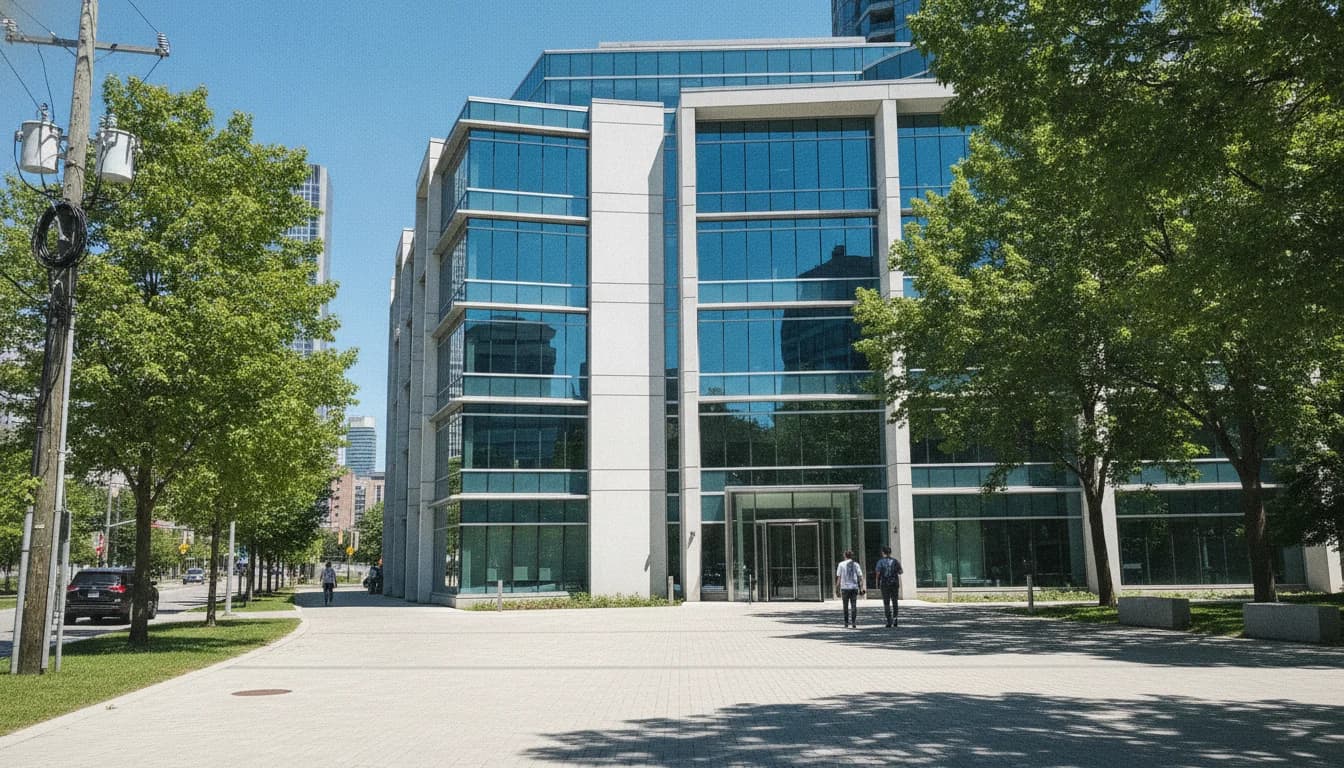
Photo by Andy Holmes on Unsplash
The cross-city collaboration signals a clearer path for industry adoption of inclusive AI solutions. When research centers partner with deployment hubs—like Vector Institute with Toronto-area enterprises or Mila’s policy-oriented initiatives in Quebec—industries gain access to responsible AI capabilities that consider accessibility from the outset. This alignment supports not only productivity gains but also the creation of products and services that are usable by a broader spectrum of customers and workers. The inclusion of the CAN-ASC-6.2:2025 standard and CAN/ASC-EN 301 549:2024 in government and industry procurement reduces ambiguity around what “accessible AI” entails and offers measurable compliance benchmarks. (accessible.canada.ca)
Federal and provincial regulations now encourage or require accessibility considerations to be embedded in AI development and procurement. The December 2025 regulatory actions—particularly the Digital Technologies Accessibility Regulations—establish clear expectations for accessibility statements, conformity assessments, and ongoing training. For technology vendors and large employers, these changes mean adapting product roadmaps, updating documentation, and investing in staff capability to meet evolving standards. (aaatraq.com)
Social and Workforce Implications
Inclusive AI and accessibility strategies are increasingly tied to workforce development and talent retention. Mila and Vector’s ongoing training and policy work contribute to a national talent pipeline with an explicit focus on accessibility considerations, ethics, and governance. The 2023-2024 CIFAR AI Chair and trainee data highlighted in the Tech Forum analysis illustrate how Canada’s national AI strategy translates into a diversified and expanding pool of AI researchers and practitioners who are trained with accessibility and societal impact in mind. This confluence supports a more inclusive tech workforce across the four corridors. (techforum.ca)
The regional ecosystems’ emphasis on deployment in health, climate tech, manufacturing, and logistics demonstrates how inclusive AI can address real-world pain points for underserved communities. The Vancouver and Waterloo corridors are highlighted for turning research into concrete deployments, with cross-pollination across the ecosystem enabling startups to scale while maintaining attention to accessibility and governance. (techforum.ca)
Policy and Governance Context
The CAN-ASC-6.2:2025 framework is designed to ensure AI systems are accessible and equitable, with governance structures that require participation of people with disabilities in every stage of AI development. This includes transparent communication about AI decisions, accessible feedback mechanisms, and controls to prevent harm. The framework also calls for equitable access to AI benefits, including representation in training data and public reporting of performance results by disability status. These elements are intended to build trust in AI systems deployed in both public and private sectors. (accessible.canada.ca)
The Accessible Canada Roadmap and related 2026 guidance underscore a strategic move to a barrier-free Canada by 2040, with ongoing emphasis on information and communications technology accessibility. This roadmap provides a national horizon for stakeholders in the four corridors to align their local initiatives with a broader, long-range public policy objective. For executives and policymakers, this means planning with an explicit accessibility lens in mind and coordinating across federal, provincial, and municipal levels. (canada.ca)
Industry and Academic Synergy
The Tech Forum analysis emphasizes the synergy between academia and industry as a core driver of progress. The four corridors each host strong academic engines (Mila in Montreal, Vector in Toronto, BC+AI-led deployment networks in Vancouver, and Waterloo.AI in Waterloo) that feed into industry partnerships, accelerators, and startups. The cross-city collaboration is designed to accelerate the translation of research into market-ready, accessible AI solutions while maintaining rigorous governance and safety standards. This model is increasingly cited as a blueprint for other national AI ecosystems seeking to balance innovation with inclusion. (techforum.ca)
The PAICE compute environment and the ongoing expansion of hosting clusters (Vulcan at Amii, TamIA at Mila, Killarney at Vector) illustrate how national compute capacity is being structured to support both responsible research and deployment. This infrastructure is crucial for enabling more complex AI models to be trained and tested with accessibility considerations baked in, from the outset. Stakeholders across the corridors will be watching how PAICE allocations evolve in 2026-27 as a potential bellwether for deployment speed and governance robustness. (techforum.ca)
What’s Next
Upcoming Milestones
Expect continued acceleration of cross-city collaboration and knowledge sharing across the four corridors through 2026 and into 2027. The ongoing rollout of PAICE-hosted compute resources will shape the pace at which researchers can prototype, test, and deploy inclusive AI solutions in real-world settings. Observers should monitor announcements from Mila, Vector, Montreal’s Mila, UBC, and Waterloo.AI for new joint programs, shared challenges, and cross-institution research initiatives. The national policy framework—CAISI and the Pan-Canadian AI Strategy—will continue to influence funding priorities and governance milestones, with new AI safety and governance initiatives likely to emerge in 2026-27. (techforum.ca)
Regulatory developments are plausible as regulators continue to refine the interpretation and implementation of CAN-ASC-6.2:2025 and EN 301 549-based requirements. Organizations should prepare for additional guidance on conformity assessments, accessibility documentation, and training cadence, with potential sector-specific adaptations for healthcare, finance, and government services. The 2026 accessibility roadmap materials from the Government of Canada provide a forward-looking anchor for these efforts. (accessible.canada.ca)
What to Watch For
Talent mobility and cross-pertilization across the four corridors will be a key signal of success. Expect more joint appointments, shared post-doctoral programs, and cross-city internships designed to keep AI governance, ethics, and accessibility at the core of deployment. The four corridors’ relative strengths in research, funding, and industry partnerships create a fertile environment for scalable inclusive AI ventures that can demonstrate measurable accessibility outcomes (e.g., improved interfaces for assistive technologies, better sign-language interpretation outputs, or equitable decision-support tools in public services). (techforum.ca)
Industry adoption patterns will be closely watched to determine whether inclusive AI and accessibility considerations translate into broader market competitiveness. The Tech Forum piece points to deployment outcomes in health care, climate tech, and manufacturing as early indicators of market demand for accessible AI solutions. If these trends accelerate, expect a wave of new startups and expansion of existing firms that prioritize accessibility as a core differentiator. (techforum.ca)
Public-sector procurement and compliance dynamics will shape private-sector responses. The Digital Technologies Accessibility Regulations create prerequisites that will compel vendors and public institutions to align with standardized accessibility benchmarks. In practice, this could accelerate the development of accessible AI components across platforms and services, with transparent reporting and governance expectations pushing accountability higher across the supply chain. (aaatraq.com)
Closing
Canada’s AI landscape in 2026 is increasingly characterized by a deliberate alignment of research excellence, industrial deployment, and governance that foregrounds inclusive design and accessibility. The four-city corridor—Toronto, Montreal, Vancouver, and Waterloo—appears to be converging on a model that blends national policy with regional strengths, anchored by world-class research institutes and a robust compute infrastructure. The CAN-ASC-6.2:2025 standard and the newly formalized Digital Technologies Accessibility Regulations provide concrete guardrails that push both public and private sectors toward accountable, auditable, and user-centric AI systems. For organizations aiming to compete and serve diverse communities, the message is clear: accessibility is no longer an afterthought but a strategic imperative integrated into product design, development, procurement, and governance. As regulators, researchers, and industry partners continue to collaborate, Canada’s four tech corridors are poised to deliver AI innovations that are both powerful and usable by all. Readers should stay tuned for PAICE rollouts, CIFAR AI Chair renewals, and cross-city collaborations that will signal the next phase of responsible AI adoption across the nation. (techforum.ca)

Photo by Daniel Ali on Unsplash
In the weeks ahead, Tech Forum will continue to monitor policy developments, compute capacity expansions, and deployment milestones that influence inclusive AI adoption across the corridors. The goal remains clear: to ensure that as AI accelerates, it does so in a way that enhances accessibility, protects rights, and expands opportunities for Canadians from coast to coast. As this landscape evolves, stakeholders across government, academia, and industry will be watching closely to see how the four-city network translates ambition into action for everyday users.
About the author
Gavin Foss
Gavin Foss is the editor-in-chief at Tech Forum, covering the Canadian technology landscape with a focus on AI and emerging technologies. His technical depth and industry connections make him one of Canada's most respected tech journalists.
Keep reading
More from Tech Forum

Canada Invests $100M in VITAL Health Data Platform
The Government of Canada announced a $100 million investment in the VITAL health data platform to connect hospital data across provinces, enhancing…
Claire Bergeron / September 5, 2026
Anthropic Invests CAD 10M in Canadian AI Research
Anthropic has committed CAD 10 million to support Canadian AI research, establishing partnerships with eight institutions to enhance AI safety, trust,…
Marcus Doyle / September 4, 2026

Sovereign AI Accelerator Launches in Canada
Tech Forum analyzes the Sovereign AI Accelerator rollout, its goals, and market implications in a data-driven, neutral report.
Claire Bergeron / September 3, 2026