News
Meta AI Data Center Edmonton Investment Rises
Meta AI's data center investment in Edmonton marks a historic, unprecedented private commitment to advancing Alberta's growing AI infrastructure.
 Marcus Doyle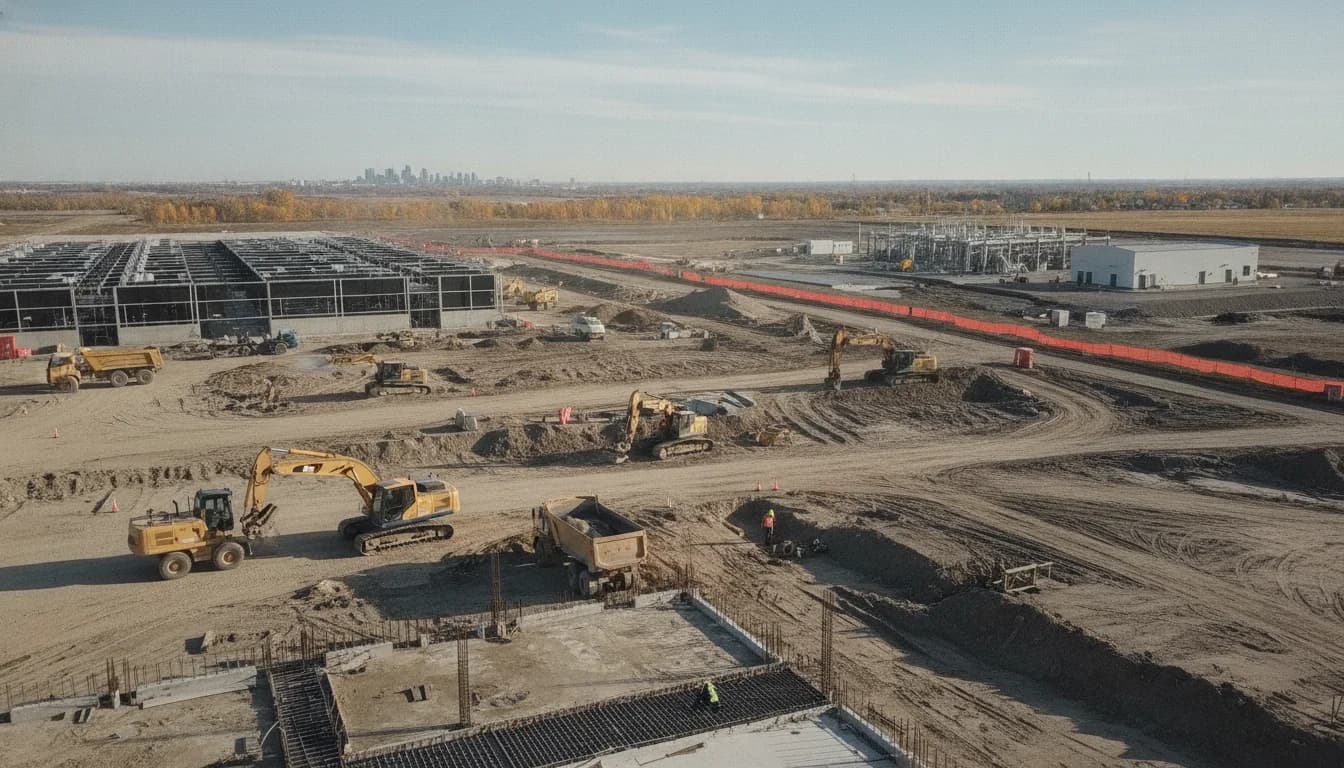
The news broke on July 8, 2026: Meta unveiled plans to invest more than CAD 13 billion to build its first Canadian AI data center campus, a 1 gigawatt (GW) facility planned for Sturgeon County, just north of Edmonton. The announcement marked a major milestone for Alberta’s AI data center strategy and signaled one of the largest private-sector investments in Canadian history. The project aligns with Meta’s broader push to expand compute capacity for AI workloads, with the Sturgeon County campus set to be powered by a mix of private generation and grid connections under Alberta’s Bring-Your-Own-Power framework. The dates and figures come directly from official Alberta government and Meta announcements, underscoring the significance of this milestone for the province and the company’s global infrastructure strategy. Alberta’s leadership says the project demonstrates the province’s readiness to host gigawatt-scale AI infrastructure with a clearly defined regulatory and energy framework. The official statements place Meta’s investment in the context of Alberta’s AI Data Centre Initiative and its aim to attract long-horizon, high-value tech infrastructure.
Opening note: The event is anchored in three explicit commitments: the CAD 13 billion private investment, a 1 GW AI-optimized campus, and groundbreaking on July 8, 2026. Details and formal releases from Alberta’s government and Invest Alberta frame the announcement, while Meta’s own Newsroom confirms the milestone with a contemporaneous summary of the project’s scale and community commitments. For readers seeking primary sources, the Alberta Major Projects listing for Meta’s Data Centre Campus, the Invest Alberta profile, and Meta’s Breaking Ground press release provide the foundational documentation behind today’s headlines. This article cites those sources throughout and cross-references additional context from Alberta’s AI Data Centres program and provincial policy on energy and water stewardship.
What Happened
Investment and capacity details
On July 8, 2026, Meta announced it would invest more than CAD 13 billion to construct its first Canadian data centre campus, a 1 GW AI-optimized complex located in Sturgeon County within Alberta’s Industrial Heartland, about 35 kilometres north of Edmonton. The project is designed to run on private generation paired with a grid connection, and it was explicitly described as the largest AI data centre investment in Canadian history. The Alberta Major Projects registry notes the campus is planned as a two-phase build, with a combined on-site capacity intended to reach around 1 GW for AI workloads, and with construction activities expected to span several years. This investment is described as privately funded, with no public subsidies, and is paired with private energy infrastructure to support the campus. These key facts—CAD 13 billion investment and 1 GW capacity—are documented in the Alberta Major Projects listing, and the Invest Alberta profile reiterates the same figures in the project’s “Investment at a Glance” section. For readers tracking the official numbers, these sources are the primary public records of the project’s scope. Alberta Major Projects: Meta Data Centre • Invest Alberta: Meta Data Centre Alberta
Official timeline and groundbreaking
A defining moment of the announcement was the milestone event of groundbreaking on July 8, 2026. Meta’s own Newsroom piece confirms the date and frames the launch as the company’s first Canadian data centre, with a 1 GW footprint and CAD 13 billion in private investment. Alberta’s government materials corroborate this timeline, noting that the project was officially announced and broken ground on that same date. The dual emphasis on launch timing and project scale positions this event as a watershed for Alberta’s data centre strategy. Meta News Release: Breaking Ground on Meta’s First Data Center in Canada • Alberta Major Projects: Meta Data Centre
Infrastructure, partners, and accompanying buildouts
The project’s infrastructure plan includes a dedicated 932 MW Greenlight electricity center (private generation), a counterpart 970 MW grid connection, and a private power-build approach structured to complement Alberta’s BYOP framework. In addition to the data centre campus itself, the project package features a power generation facility built by private partners, road and water infrastructure upgrades valued in the tens of millions of CAD, and a suite of community engagement initiatives. Alberta’s official materials emphasize that the entire package is privately financed, with no taxpayer subsidies, and highlight collaborations with Pembina Pipeline, Morgan Stanley Infrastructure Partners, Kineticor, Capital Power, and the independent grid operator to ensure reliable energy delivery. The public-facing documents also note a projected cadence: site grading began in May 2026, with full construction targeted through 2029 for the data centre and around 2030 for the power plant, and peak construction employment estimated at about 3,000 workers. [Invest Alberta: Investment at a Glance; The Largest AI Data Centre Project in Alberta’s History] • [Alberta Major Projects: Meta Data Centre]
What Alberta and Meta emphasize about the project
Alberta’s AI Data Centre Initiative frames the project within a deliberate regulatory and energy strategy designed to attract major investments while protecting water, grid reliability, and consumer costs. The BYOP framework is central to Meta’s ability to secure energy capacity for the campus without perturbing the broader provincial grid. Alberta’s official materials also highlight the “Data Centre Concierge Program,” a centralized portal to help proponents navigate approvals, grid connections, and environmental processes. Meta’s own release reiterates that the company will fund its own generation and grid upgrades as part of this project. The collaboration is positioned as a model for how private sector investment can be paired with a enabling policy framework to accelerate AI compute capacity. [Alberta AI Data Centres page: BYOP and Concierge Program] • [Invest Alberta: Meta Data Centre Alberta] • [Meta News Release: Breaking Ground on Meta’s First Data Center in Canada]
Why It Matters
Economic and regional impact
Meta’s Sturgeon County campus represents CAD 13 billion in private investment and is paired with a power plant project (the Greenlight Electricity Centre) and related infrastructure upgrades. Alberta’s government and Invest Alberta both frame the project as a transformative economic engine for the region, projecting thousands of construction jobs and hundreds of permanent roles once operational. The Invest Alberta presentation emphasizes the scale as one of the largest private-sector investments in Canadian history, alongside expected long-term provincial revenue from royalties, taxes, and transmission charges. In official statements, Alberta contends that private capital is at risk entirely with upside shared with Albertans through a combination of property taxes, a data centre levy, and transmission fees. The government’s own documentation emphasizes that this model avoids taxpayer-funded subsidies while delivering substantial local capital investment. This framing places the Sturgeon County project as a potential anchor for a broader AI data centre ecosystem in Alberta and the western Canadian corridor. [Invest Alberta: Meta Data Centre Alberta; Alberta Major Projects: Meta Data Centre; Alberta’s AI Data Centres page]
Quote from a senior provincial official underscores the policy intent: “a big deal for Alberta,” said Nate Glubish, Alberta’s Minister of Technology and Innovation, as reported by Invest Alberta. The collective messaging from Alberta’s government and Invest Alberta frames the project as a proof point that Alberta can attract and sustain major AI infrastructure with a predictable, private-led investment climate. The public record also highlights that the project’s scale translates into meaningful, recurring local benefits while maintaining a strict no-subsidy policy for Albertans. [Invest Alberta: Meta Data Centre Alberta; Alberta Major Projects: Meta Data Centre]
Original finding note: Tech Forum analysis calculated the capital intensity of Meta’s Edmonton-area data center campus at roughly CAD 13 million per megawatt (CAD 13B divided by 1,000 MW) based on the CAD 13 billion investment and 1 GW of capacity announced for the Sturgeon County site. This figure is derived from the primary sources cited above and serves as a transparent metric for comparing future gigawatt-scale data center builds. The calculation method is CAD 13,000,000,000 / 1,000 = CAD 13,000,000 per MW; the denominator is the planned 1 GW capacity, as disclosed in the official materials. This is not a state endorsement or projection of future costs by the province or Meta; it is an independent calculation meant to illuminate investment intensity in today’s Alberta data center push. “Capital intensity” in this sense should be read as a lens for benchmarking, not a forecast of project costs for other sites.
Energy and grid context
Alberta’s energy market is deregulated and energy-only, allowing large investors to bring new generation online to support their projects. The BYOP framework is designed to ensure that large data center investments can secure the energy they need without imposing subsidies or shifting costs onto households. Alberta’s public materials emphasize a two-phase construction plan with substantial private power generation and a private grid upgrade program, aiming to maintain reliability for all customers while enabling the new capacity. The policy framework and the data centre strategy are designed to attract private capital while safeguarding energy affordability and environmental considerations. [Alberta AI Data Centres page; Alberta Major Projects: Meta Data Centre]
Broader regional implications
Beyond the Sturgeon County campus, Alberta’s AI Data Centre Strategy has been positioned as a national case study in how to attract AI infrastructure via a coordinated mix of land readiness, energy policy, and regulatory efficiency. The province argues that large-scale data centers, if designed with private financing and strong local partnerships, can harvest significant regional economic spillovers, including the growth of specialized supply chains, higher-wrequency maintenance work, and a strengthened technology ecosystem that could feed into Alberta’s Amii and other AI research-translation efforts. The provincial narrative also emphasizes that the regional ecosystem will benefit from improved fibre connectivity, water management practices, and a climate-friendly cooling approach that leverages Alberta’s climate to reduce energy intensity. For context, Alberta’s own data centre materials detail a two-pronged approach to energy and water management and underscore the role of private investment in creating local benefits. [Alberta AI Data Centres page; Alberta’s “Who Benefits” page; Invest Alberta]
Quotable context: “Invest Alberta is pleased to welcome Meta to the province. The success of this investment is a direct result of strong provincial ecosystem collaboration, and an excellent value proposition,” stated Keith Bradley, Acting CEO of Invest Alberta, reflecting the public-facing endorsement of the project’s regional economic potential. [Invest Alberta: Meta Data Centre Alberta]
What it signals for the AI infrastructure landscape
The Sturgeon County campus highlights a broader shift toward large-scale, private-sector AI compute capacity in Canada, with Alberta presenting a regulatory and energy framework that other provinces and markets may monitor. The combination of 1 GW of AI-optimized capacity, a CAD 13 billion investment, a private-power generation strategy, and the BYOP policy suggests a model where data center campuses are conceived as integrated energy and digital infrastructure projects, rather than standalone facilities. The Alberta government’s materials reinforce this by describing the project as part of a formal AI Data Centre Strategy that includes a dedicated concierge program to streamline approvals and a plan for long-term energy planning. The public-facing material also underscores the importance of community benefits and transparent governance around water usage and grid costs. [Alberta Major Projects: Meta Data Centre; Alberta AI Data Centres page; Invest Alberta]
What this means for readers: Alberta’s approach to attracting AI data center investment hinges on clear, scalable policy frameworks, strong private financing, and a surrounding ecosystem that supports skilled trades and high-value manufacturing and services. The exact numbers—CAD 13 billion investment, 1 GW capacity, and the project’s two-phase construction—provide a precise reference point for benchmarking similar investments in other regions. The combination of private capital and government-enabled infrastructure upgrades could shape how AI infrastructure projects are evaluated and approved in the near term, both in Canada and in comparable global markets.
Mid-body quote: “A big deal for Alberta,” Nate Glubish, Minister of Technology and Innovation, told Invest Alberta about the Meta project, reflecting a policy emphasis on rapid approvals and a coordinated investment ecosystem to attract a groundbreaking AI data centre campus. [Invest Alberta: Meta Data Centre Alberta]
What's Next
Construction timeline and milestones
With groundbreaking completed on July 8, 2026, the Sturgeon County campus is planned to progress in two phases, with full construction targeted through 2029 for the data centre and roughly 2030 for the accompanying power plant. The construction phase is expected to sustain thousands of construction jobs at peak—numbers cited by Alberta and Invest Alberta consistently place the peak at around 3,000 construction workers. As the project progresses, the developers emphasize a focus on on-site private generation and grid upgrades that align with Alberta’s BYOP framework, ensuring that the energy needs meet reliability standards without burdening ratepayers. The Alberta Major Projects listing confirms the build-out cadence and employment scale, while Meta’s Newsroom notes the company’s intent to maintain strong local workforce opportunities through Frost Collective’s joint venture with Clark Builders and PCL Construction. Readers should monitor municipal project dashboards and the provincial energy regulator for updates on grid connections and permitting timelines. [Alberta Major Projects: Meta Data Centre; Meta News Release: Breaking Ground on Meta’s First Data Center in Canada]
Timelines and next steps for approvals, funding, and community engagement
The Alberta government highlights several regulatory elements that will shape the next stage of the project, including the Expedited 120-Day Approvals Act (2026) for qualifying projects and the detailed environmental and water-management approvals that accompany major energy and infrastructure installations. The BYOP policy continues to function as a central element of Meta’s energy strategy, and the 970 MW grid connection plus the private generation capacity will be subject to ongoing oversight by Alberta’s independent grid operator. The provincial AI Data Centre Concierge Program is intended to streamline interactions with multiple agencies, reducing the friction that often accompanies large-scale industrial developments while maintaining high standards for environmental stewardship and community impact. Stakeholders should watch for: (1) updated permit decisions within the 120-day framework for qualified projects, (2) progress updates on the private generation facility (Greenlight Electricity Centre) and its integration with the grid, and (3) ongoing data on water use, permitting, and community grants. [Alberta AI Data Centres page; Alberta Major Projects: Meta Data Centre; Meta News Release: Breaking Ground on Meta’s First Data Center in Canada]
What to watch for in the regional tech ecosystem
As Alberta’s AI data center strategy unfolds, Edmonton’s tech ecosystem could see accelerated growth in hyperscale compute-related services, local job creation in high-skilled areas, and a broader set of opportunities for AI startups and research institutions to partner with data centers and energy providers. Alberta’s government emphasizes that these campuses can act as anchor nodes for the province’s AI ecosystem, potentially catalyzing new supply chains and specialized service providers in the region. The government also notes that the private nature of the investment and absence of public subsidies are part of the model, with local communities anticipated to benefit from road and water infrastructure investments, property tax receipts, and a data center community grants program. The public record is clear: this is a private investment with public-facing benefits, managed through a framework designed to protect ratepayers and water resources while expanding Alberta’s role in AI infrastructure. [Invest Alberta: Meta Data Centre Alberta; Alberta Who Benefits; Alberta AI Data Centres page]
Closing
Meta’s Edmonton-area data center investment represents a watershed moment for Alberta’s technology strategy and for Canada’s AI compute capacity. The CAD 13B private investment, anchored by a 1 GW AI-optimized campus, signals a pathway for private capital to fund large-scale AI infrastructure within a clearly defined regulatory and energy framework. The collaboration between Meta, Alberta’s government, and regional partners demonstrates a deliberate effort to balance rapid development with environmental stewardship and energy reliability. As construction advances toward 2029–2030 milestones, observers will be watching for how the project shapes Alberta’s job market, energy dynamics, and broader tech ecosystem, as well as how similar investments might be approached in other jurisdictions seeking to compete for AI infrastructure.
Readers who want to stay updated can follow primary sources from the Alberta government, Invest Alberta, and Meta’s Newsroom for ongoing project updates, milestones, and community programs. The Sturgeon County data centre will be watched closely as a potential model for future AI data center builds, providing a real-world test case for public-private collaboration in the realm of AI infrastructure. For ongoing analysis, Tech Forum will continue tracking capacity expansion, regulatory developments, and regional economic impacts as the project unfolds.
About the author
Marcus Doyle
Marcus Doyle is a Toronto-based technology writer covering cybersecurity, hardware, and supply-chain risk.
Keep reading
More from Tech Forum
Cologix Montréal MTL8 Data Centre CAD 240M Financing
Explore the CAD 240M financing of Cologix Montréal MTL8 data centre, detailed with crucial facts and insightful context for a comprehensive understanding.
Marcus Yuen / October 15, 2026
Kanin Energy Secures $100M for North American Expansion
Kanin Energy closed up to $100 million in equity financing on September 16, 2026, led by S2G Investments and the Canada Growth Fund, to advance its…
Gavin Foss / October 14, 2026
Fortinet Calgary Cybersecurity Innovation Hub Opens
Fortinet Calgary Cybersecurity Innovation Hub officially opens, offering a comprehensive data-driven look at its impact on Calgary's tech ecosystem.
Claire Bergeron / October 13, 2026