Apple
John Ternus Takes Over Apple as Tim Cook Steps Down
Tim Cook's last day as Apple CEO is August 31. John Ternus takes over September 1 — eight days before the iPhone 18 and foldable iPhone event.
 Gavin Foss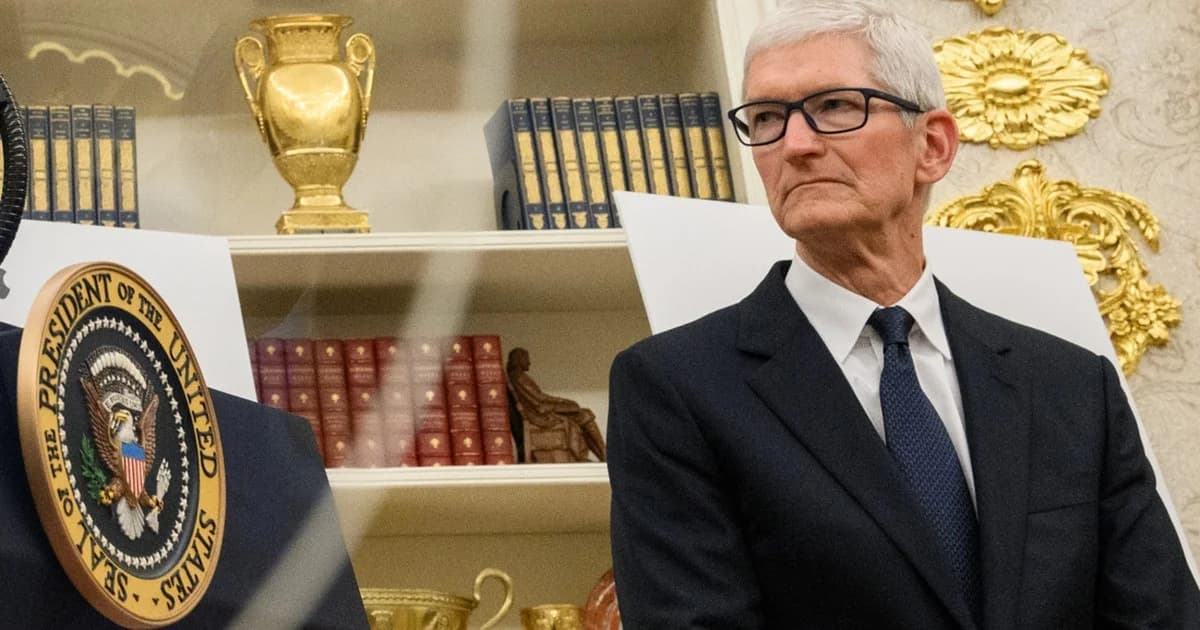
Apple changes CEOs on Monday. September 1 is John Ternus's first day as chief executive, and August 31 is Tim Cook's last, closing a 15-year run in which Apple's market value grew from about $350 billion to $4 trillion. Cook stays on as executive chairman of the board, a role Apple says will include engaging with policymakers around the world. The plan has been public since Apple announced it on April 20, approved unanimously by the board, with Cook spending the summer working alongside his successor on the handover.
What makes the date interesting is not the ceremony. It is the calendar immediately after it.
Eight days to the biggest launch of the year
Apple's fall event is September 9, where the company is expected to unveil the iPhone 18 Pro and Pro Max, its first foldable iPhone, an Apple Watch Series 12 with a ceramic case option, an Apple Watch Ultra 4, and new AirPods, per MacRumors. Ternus will walk onto that stage as CEO eight days into the job.
No incoming Apple CEO has had a runway that short. When Cook took over on August 24, 2011, he had 41 days before his first launch event, the iPhone 4S announcement that October. Ternus gets barely a week, and the slate he is fronting includes the company's riskiest new iPhone form factor since the original: the foldable, a category Samsung has had to itself for seven years.
The board mechanics land the same day. Ternus, 50, joins Apple's board of directors on September 1; Arthur Levinson, the board's nonexecutive chairman since 2011, becomes lead independent director to make room for Cook as executive chairman. Ternus becomes Apple's eighth CEO, and the first promoted from inside its hardware engineering organization: a University of Pennsylvania mechanical engineer who joined Apple's product design team in 2001 after four years at headset maker Virtual Research Systems, made vice president of hardware engineering in 2013, and reached the executive team in 2021.
The saving grace is that Ternus does not need a briefing. As senior vice president of hardware engineering, every product on the September 9 slate came out of his own organization. He has led hardware engineering for iPhone, iPad, Mac, Apple Watch, AirPods, and Vision Pro, meaning every device Apple sells today shipped through his sign-off. In a real sense the September event is not his first test as CEO; it is the first public demo of why the board picked him.
What Ternus inherits
The business Cook hands over is in record shape, and the environment around it is not. Apple has set all-time quarterly revenue records over its past few quarters, with fiscal 2025 revenue of $416 billion, up from $108 billion the year Cook took over. Against that, the new CEO faces a stacked docket:
| What's on the desk | The situation |
|---|---|
| September 9 event | iPhone 18 Pro, first foldable iPhone, Watch Series 12/Ultra 4, AirPods 5 expected |
| US tariffs | Ongoing tariff exposure on an Asia-anchored supply chain; policy work now falls to Cook as executive chairman |
| Memory crunch | AI-datacenter demand for DRAM is squeezing supply and raising component costs across the industry |
| Vision Pro | Struggling for adoption since its 2024 launch; awaiting a decisive call |
| Unexpected Mac demand | New Mac mini and Mac Studio, Apple's first August Mac launch since 2020, caught the company off guard with AI-driven demand |
| AI strategy | Apple's generative-AI story is still widely seen as unfinished business |
The memory problem is the sneaky one. Soaring demand for AI chips has produced an industry-wide DRAM crunch, and Apple is the world's largest single buyer of consumer-device memory. Cook built his reputation, and arguably his CEO tenure, on exactly this kind of supply-chain knife fight. Now it lands on a product engineer's desk in his first quarter, with Johny Srouji, newly promoted to chief hardware officer over all of hardware, as his wingman.

The bar Cook set
The chart above is the succession story in one picture. Apple needed 42 years to reach its first trillion in 2018; the second took two years, the third seventeen months, and the fourth arrived this April, the day the succession was announced, when the stock closed at a $4 trillion valuation. Along the way Cook launched the Apple Watch, AirPods, Apple Pay, and a services business now worth more than $100 billion a year, and grew the active installed base past 2.5 billion devices.
"It has been the greatest privilege of my life," Cook said in April. His successor's statement was shorter on retrospect and pointed in one direction: "I am filled with optimism about what we can achieve in the years to come," Ternus said, describing Cook as his mentor and recalling his early years working under Steve Jobs.
Inside Apple, the read on the change is consistent: Cook is an operations and supply-chain expert who ran on consensus; Ternus is a product person that Apple reportedly considers to have a more decisive, Jobs-like leadership style. For a company whose next act depends on shipping new hardware categories, a foldable next month, whatever the AI hardware roadmap yields after that, the board's choice of its hardware chief over every other lieutenant reads as a bet on exactly that difference.
Cook, 65, does not disappear. Executive chairman is a working title in this construction: the tariff diplomacy and government relations that ate his final years as CEO stay with him, freeing Ternus, 50, to do the part of the job he was promoted for. Whether that division of labor holds once the first crisis arrives is the question that will define Apple's next year.
The first data point arrives September 9, on a stage in Cupertino.
Cover: Tim Cook at the White House, August 2025 (Official White House photo, public domain, via Wikimedia Commons). Chart: Tech Forum; sources noted on figure.
About the author
Gavin Foss
Gavin Foss is the editor-in-chief at Tech Forum, covering the Canadian technology landscape with a focus on AI and emerging technologies. His technical depth and industry connections make him one of Canada's most respected tech journalists.
Keep reading
More from Tech Forum

Boost Security Acquires Korbit.ai to Enhance AI Security
Boost Security's acquisition of Korbit.ai and SecureIQx aims to strengthen AI-native security by integrating advanced code review and reachability…
Marcus Yuen / October 18, 2026

IVADO Postdoctoral Funding Program 2027 Launch
IVADO's postdoctoral funding program launches its 2027 cycle, offering 10 prestigious fellowships of $80k annually for a period of two years.
Marcus Doyle / October 17, 2026

What PIPEDA Means for Your Google Maps Timeline Data
Google Maps Timeline now lives on your phone. What PIPEDA covers, what Canadian regulators have ruled on location data, and how to keep your history private.
Marcus Doyle / October 17, 2026