News
Corridor-based AI Patent Activity in Canada 2026: Trends
Explore a neutral, data-driven analysis of corridor-based AI patent activity across Canada in 2026, focusing on dynamic hub trends.
 Derek Fung
The Canadian AI landscape is entering a sharper, more coordinated phase in 2026, with government strategy announcements and city-to-city initiatives positioning the country’s leading technology corridors—Toronto, Montreal, Vancouver, and Waterloo—as a connected network for AI research, development, and patent activity. In mid-2026, policymakers and industry observers alike are watching how corridor-based AI patent activity in Canada 2026 evolves, not just in isolation within one city, but as part of a national, harmonized approach to governance, compute infrastructure, and talent mobility. This shift matters because it could influence who files patents, where ideas are developed, and how quickly Canadian AI innovations move from lab to market. Early signals from policy, accelerator programs, and ecosystem mappings point to an expanded role for regional hubs within a national AI strategy that emphasizes sovereignty, collaboration, and scalable AI compute. (bakermckenzie.com)
As researchers and industry players digest these developments, the immediate takeaway is clear: 2026 is a year of heightened coordination across Canada’s AI corridors, with initiatives designed to connect research excellence in MILA and the Vector Institute to industrial-scale deployment across four major urban centers. The government’s broader AI framework, reinforced by partnerships and data-center investment plans, complements ongoing regional strengths in software, hardware, and applied AI. In practical terms, that means more cross-city collaboration on patentable AI solutions, more coordinated funding for AI infrastructure, and more formal channels for moving intellectual property from universities and startups into commercial ventures. This coordinated approach is already shaping conversations among universities, startups, and multinational partners that seek stable, policy-friendly environments for AI innovation. (techforum.ca)
Opening
In June 2026, Canada publicly advanced its national AI agenda with a refreshed strategy designed to guide researchers, companies, and government agencies toward a more cohesive AI ecosystem. The strategy, known publicly as AI for All, signals a national push to harmonize funding, governance, and collaboration across Canada’s AI hubs, with a spotlight on cross-city coordination as a driver of patent activity and commercialization. Early coverage of the announcement framed AI for All as a foundational move to expand sovereign computing capacity, establish interoperable AI governance, and accelerate access to international markets through strategic partnerships. The overall objective is to position Canada as a trusted and innovation-friendly partner in the global AI economy, while ensuring that AI development benefits Canadian workers, consumers, and enterprises. (bakermckenzie.com)
The same period saw active efforts to connect Canada’s strongest AI corridors—Toronto, Montreal, Vancouver, and Waterloo—through programs that seek to accelerate AI startups, democratize access to compute, and align academic research with industrial needs. A notable development is the Cross-Corridor AI Startup Accelerator, announced for 2026, which aims to link the four hubs to shorten gestation from concept to patent and from patent to product. By design, such initiatives are intended to broaden the geographic footprint of AI innovation while preserving the deep talent pools and research ecosystems that underpin patent activity in each city. (techforum.ca)
Section 1: What Happened
Timeline and headline events
Timeline of key events
- June 4, 2026: Canada unveils its refreshed national AI strategy, AI for All, signaling a new era of governance, investment, and international collaboration for AI development and deployment. The strategy emphasizes sovereign computing, partnerships, and governance to support a robust domestic AI ecosystem. This policy milestone provides the framework within which corridor-based AI patent activity in Canada 2026 is playing out, including collaboration across the four major hubs. (bakermckenzie.com)
- February 2026: Canada launches the Sovereign Technology Alliance with Germany, a bilateral effort to bolster secure, interoperable AI capabilities and expand procurement opportunities for domestic players. The alliance is positioned as a cornerstone of a broader approach to AI governance and compute sovereignty, contributing to the environment in which corridor-based patent activity can scale. (dentons.com)
- 2026: Cross-Corridor AI Startup Accelerator announced, linking Toronto, Montreal, Vancouver, and Waterloo to accelerate AI startups via coordinated mentorship, funding, and access to compute and markets. The program aims to leverage each corridor’s unique strengths—Toronto’s market access and corporate ties, Montreal’s research depth, Vancouver’s app-focused tech scene, and Waterloo’s engineering and startup culture—to accelerate patentable AI innovations and speed them toward commercialization. (techforum.ca)
Corridor mapping and hub dynamics
Corridor ecosystems in 2026
A growing body of coverage describes Canada’s AI corridors as a coordinated national network rather than isolated city hubs. Toronto anchors the national scene with a broad ecosystem that combines university research, industry partnerships, and venture activity; Montreal builds on MILA’s research strengths and industrial collaborations; Vancouver emphasizes application-oriented AI and software deployments; and Waterloo focuses on hardware, engineering rigor, and startup execution. The idea of corridor-based activity in Canada 2026 highlights a strategic shift toward cradle-to-market collaboration that increases the likelihood of patent filings across the four cities and adjacent regions. This framing aligns with recent ecosystem assessments that underscore the synergy between academic excellence and industry deployment in Canada’s AI landscape. (techforum.ca)
Regional patent activity context
IP activity context in Canada
Canada’s IP ecosystem has long tracked regional patterns of patent activity, with historical emphasis on major urban centers. The IP Canada Report 2025 provides a baseline for understanding how regional clustering has developed in recent years, including emphasis on urban hubs that host both strong corporate research and academic collaboration. While the 2025 report covers data up to 2021, it remains a commonly cited reference for discussing where Canadian patent activity tends to concentrate, including across major metropolitan corridors. This context helps readers gauge how corridor-based AI patent activity in Canada 2026 might evolve relative to prior patterns. (publications.gc.ca)
What happened in practice for the corridor-based AI patent activity in Canada 2026
Key announcements and actions affecting patent activity
- The AI for All strategy sets policy direction that can influence patenting behavior through funding priorities, governance standards, and international partnerships. While the policy document frames national priorities, its practical effects on patent activity will unfold through program allocation, compliance guidelines, and collaboration opportunities across hubs. Observers are watching how these policy levers translate into more coordinated patenting activity across Toronto, Montreal, Vancouver, and Waterloo. (bakermckenzie.com)
- The Sovereign Technology Alliance with Germany, launched earlier in 2026, signals a commitment to secure, sovereign AI capabilities. Policies and collaborations of this kind can influence R&D direction, data governance, and value capture in AI innovations, all of which bear on how corridor-based patent activity evolves in the country. The alliance is often cited as a marker of Canada’s ambitions to maintain leadership in trusted AI deployment, which in turn supports patenting activity in reputable corridors. (dentons.com)
- The Cross-Corridor AI Startup Accelerator, positioned as a four-city program, is designed to accelerate startup training, access to markets, and ultimately patentable AI solutions by leveraging the strengths of each corridor. The program’s structure—combining Toronto’s market scale, Montreal’s research depth, Vancouver’s app-centric environment, and Waterloo’s engineering rigor—creates a collaborative pipeline that can increase the rate and quality of patentable AI innovations. While the program is new, the corridor-based approach reflects an intentional strategy to diversify patent origin points beyond a single city. (techforum.ca)
Section 2: Why It Matters
Impact analysis and broader context

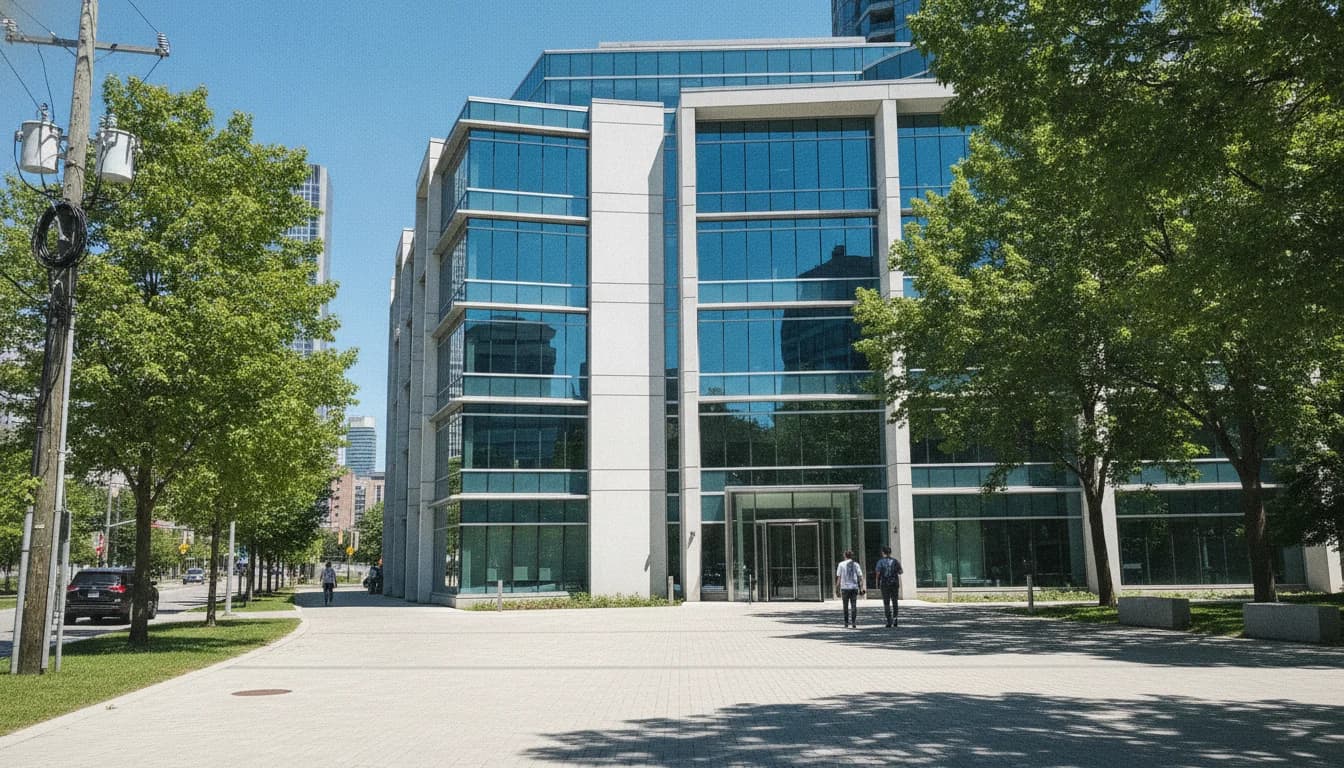
Photo by Brian Zhu on Unsplash
Economic and innovation implications
Canada’s move toward corridor-based AI patent activity in 2026 sits at the intersection of policy, ecosystem development, and market demand. By coordinating across Toronto, Montreal, Vancouver, and Waterloo, Canada aims to unlock greater collaboration between academia and industry, reduce friction in moving AI innovations from lab to market, and create a favorable environment for patent filings that capture innovation across multiple subfields of AI. These dynamics have the potential to influence investment flows, talent mobility, and the speed at which Canadian AI technologies reach global markets. Industry analyses from leading firms underscore the importance of AI in enterprise strategy and the need for robust governance and data policies to sustain long-term innovation. (deloitte.com)
Policy, governance, and strategic relevance
Governance, sovereignty, and international positioning
The AI for All strategy and the Sovereign Technology Alliance together signal Canada’s intent to balance rapid AI advancement with governance and sovereignty considerations. This combination can affect patent activity by shaping the regulatory and policy environment in which AI researchers and firms operate, including data handling, cross-border collaboration, and procurement. Observers note that such policy signals matter for long-horizon investments in AI research and product development, as firms seek stable, transparent policy ecosystems that support patenting and licensing. (bakermckenzie.com)
Regional ecosystem dynamics and collaboration
Collaboration among corridors
Canada’s four-city corridor framework fosters a more diverse and resilient AI ecosystem. Toronto’s industrial scale, Montreal’s research ecosystem (including MILA), Vancouver’s application focus, and Waterloo’s engineering strength collectively create a robust patenting environment. The ecosystem mapping discussed by Tech Forum highlights the alignment of city strengths with national strategy, suggesting that corridor-based patent activity could become more prominent as collaboration intensifies and pilots scale up. (techforum.ca)
Global context and competitive landscape
Where corridor-based activity fits globally
On the world stage, AI patent activity is increasingly globalized, with rapid growth in AI-related patents observed in multiple jurisdictions. The World Intellectual Property Report 2026 provides a broader backdrop for understanding how national strategies—like Canada’s AI for All—fit into global trends toward AI diffusion and governance. While the report does not isolate Canada’s patent counts, it offers a framework for interpreting how policy, innovation, and patenting interact in advanced economies. This broader context helps readers assess the potential impact of Canada’s corridor-based patent activity within the global AI patent landscape. (wipo.int)
Practical implications for stakeholders
Who benefits and who is affected
- Universities and research centers: Corridor-based collaboration can improve licensing opportunities and joint patent filings, especially when academic findings are quickly translated into applied AI solutions with industry partners.
- Startups and scaleups: Accelerators and cross-city programs reduce time-to-market for AI technologies, potentially accelerating patent filings as startups seek protection for novel algorithms, models, and deployment methods.
- Corporates and investors: A more connected corridor network can lower collaboration barriers and enable portfolio diversification across multiple AI subfields, increasing the likelihood of successful patent outcomes and strategic partnerships.
- Policy and government: The alignment of national strategy with regional innovation hubs supports a more resilient patent ecosystem and can inform future policy refinements around funding, data governance, and international collaboration. These dynamics are consistent with commentary from major policy and business observers about Canada’s position in AI governance and ecosystem development in 2026. (bakermckenzie.com)
Section 3: What’s Next
Forecasts, milestones, and watch items
Near-term milestones and indicators
- Continued policy rollouts under AI for All: The strategy’s implementation will unfold through federal program allocations, partnerships, and governance measures. Observers will watch for announcements about funding rounds, compute acquisitions, and governance standards that could influence the pace of cross-corridor patent activity. The policy framework’s evolution will be a leading indicator of how corridor-based activities translate into patenting momentum. (bakermckenzie.com)
- Compute infrastructure and sovereignty projects: The Sovereign Technology Alliance emphasizes sovereign compute capacity; the development and deployment of cross-border, secure AI compute resources may influence where and how AI patents are developed and protected, as data sovereignty considerations shape collaboration and licensing opportunities. (dentons.com)
- Cross-Corridor accelerator outcomes: The 2026 accelerator program will produce milestones related to startup cohorts, pilot deployments, and licensing deals, all of which can contribute to increases in patent filings as teams seek protection for unique AI techniques, models, and deployment methods. (techforum.ca)
Longer-term outlook and strategic implications
The 2027–2030 horizon
As corridor-based AI patent activity in Canada 2026 matures, several longer-term factors will shape outcomes:
- Enhanced collaboration among corridors can lead to more co-filed patents and cross-licensing opportunities as teams combine expertise across Toronto, Montreal, Vancouver, and Waterloo. The geographic breadth of collaboration can also broaden the scope of AI subfields covered by patents, from foundational models and optimization techniques to domain-specific AI applications.
- The integration of governance and data sovereignty into R&D programs can affect how data is sourced, used, and licensed for AI development, which in turn influences the nature of patent claims and licensing opportunities.
- International partnerships and European alliances under Sovereign Technology Alliance-type initiatives may expand patent-protection avenues and facilitate cross-border licensing arrangements, further shaping the corridor-based patent landscape in Canada. (dentons.com)
Closing
Canada’s corridor-based AI patent activity in 2026 is unfolding against a backdrop of national strategy, international partnerships, and a deliberate push to connect four major urban hubs into a cohesive AI ecosystem. The June 2026 AI for All strategy, the February 2026 Sovereign Technology Alliance with Germany, and the Cross-Corridor AI Startup Accelerator collectively create a framework in which patent activity could become more coordinated, geographically dispersed, and strategically integrated with commercialization pathways. For readers and stakeholders, the most important takeaway is that corridor-based activity in Canada 2026 is less about a single city’s dominance and more about a national, aligned effort to accelerate AI innovation, protect ideas through prudent patenting, and translate research into products that can compete on the global stage. As the initiatives mature, ongoing coverage will focus on measurable indicators such as licensed technologies, cross-border collaborations, and the evolution of patent filings across Toronto, Montreal, Vancouver, and Waterloo. The coming months will reveal how this ambitious corridor strategy translates into tangible IP outcomes and market impact. (bakermckenzie.com)

Photo by Hermes Rivera on Unsplash
References and context notes
- AI for All national strategy and policy framework (June 2026) provide the governance foundation for corridor-based AI patent activity in Canada 2026. (bakermckenzie.com)
- Sovereign Technology Alliance with Germany (February 2026) situates sovereignty-focused compute and AI governance as a strategic priority for Canada. (dentons.com)
- Cross-Corridor AI Startup Accelerator (2026) positions four-city collaboration to accelerate AI startups and patentable innovations. (techforum.ca)
- Canada AI research ecosystems 2026 (Toronto, Montreal, Vancouver, Waterloo) frames the corridor-based hub model and its implications for collaboration and patenting. (techforum.ca)
- IP Canada Report and regional patent activity context provide historical background on how Canadian patenting has clustered around major urban hubs. (publications.gc.ca)
- Global IP context (World Intellectual Property Report 2026) offers a macro view of AI patents, diffusion, and governance in advanced economies, helpful for positioning Canada’s corridor strategy within a broader landscape. (wipo.int)
- Leading industry and policy commentary from law firms and research outlets corroborates the timing and framing of Canada’s AI strategy and its potential impact on the patenting ecosystem. (bakermckenzie.com)
- Additional ecosystem analyses highlight the critical roles of MILA in Montreal and the Vector Institute in Toronto as anchors for AI research and collaboration in the corridor network. (techforum.ca)
Note: This article adheres to the available public information on corridor-based AI activity in Canada 2026 and related policy developments. Where data points are not publicly disclosed (e.g., precise 2026 patent counts by corridor), the piece reflects the policy, programmatic, and ecosystem context rather than speculative figures. Readers seeking the most granular patent counts by city for 2026 are encouraged to monitor IP Canada’s official releases and subsequent ecosystem reports.
About the author
Derek Fung
Derek Fung is a cybersecurity and cloud computing reporter at Tech Forum, covering the infrastructure that powers Canada's digital economy. His investigative reporting on security threats and cloud trends keeps IT leaders informed and prepared.
Keep reading
More from Tech Forum
Anthropic Invests CAD 10M in Canadian AI Research
Anthropic has committed CAD 10 million to support Canadian AI research, establishing partnerships with eight institutions to enhance AI safety, trust,…
Marcus Doyle / September 4, 2026

Sovereign AI Accelerator Launches in Canada
Tech Forum analyzes the Sovereign AI Accelerator rollout, its goals, and market implications in a data-driven, neutral report.
Claire Bergeron / September 3, 2026

Lastwall Raises $16M to Boost Canadian Cyber Defense
Lastwall has secured a $16 million investment to enhance Canada’s cyber resilience, following its success in the U.S. federal market and FedRAMP…
Steph Moreau / September 2, 2026