News
AI Compute and Hardware Innovation Across TO-MT-VAN-WATERLOO
Stay updated on data-driven AI compute advancements and hardware innovation across Toronto, Montreal, Vancouver, and Waterloo's tech landscapes.
 Marcus Yuen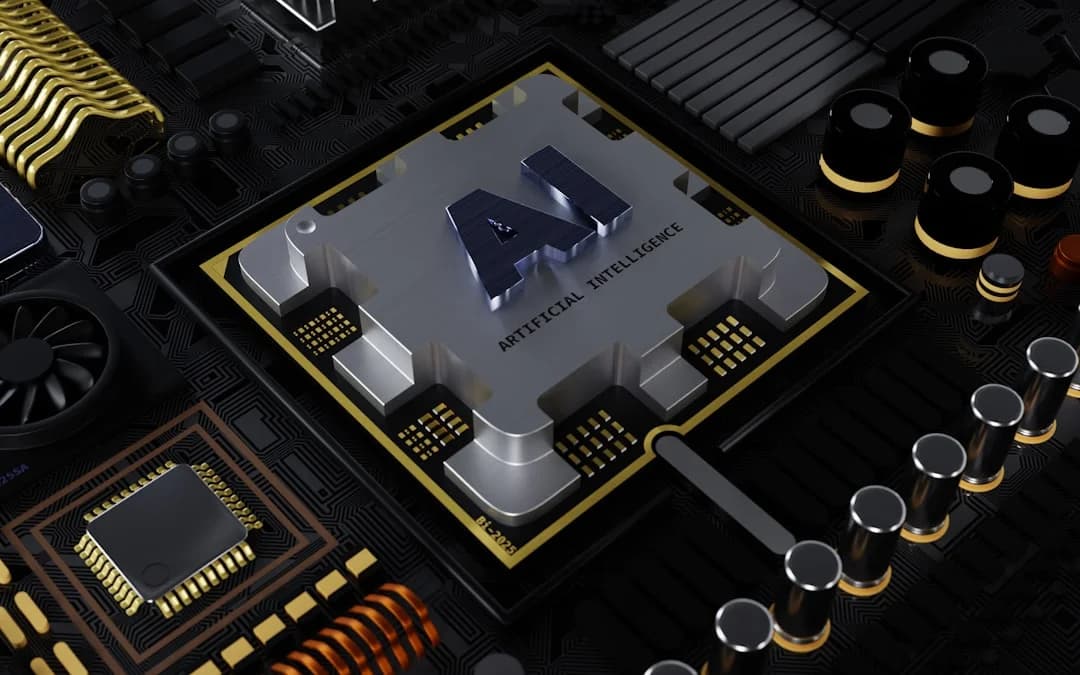
The AI compute and hardware innovation across TO-MT-VAN-WATERLOO is reshaping Canada's tech landscape in 2026. As of mid-July, multiple cities within this four-city corridor are advancing distinct yet complementary strands of AI compute capability—from edge accelerators and sovereign data resources to university-led research ecosystems and large-scale data-centre transitions. This coordinated activity matters because it touches who builds the chips, where data is processed, and how quickly Canadian AI applications can scale from lab to market. The momentum is not centralized in a single hub; rather, it stems from a matrix of private companies, academic labs, and public-policy initiatives that together are expanding compute capacity, strengthening hardware innovation, and aligning talent with industrial demand. The practical effect for enterprises, researchers, and public-sector users is clearer access to local expertise, faster prototyping cycles, and more predictable pathways to sovereign AI deployment across essential sectors.
Canada’s AI compute footprint across Toronto, Montreal, Vancouver, and Waterloo is increasingly characterized by targeted investments in hardware design, advanced manufacturing, and compute-for-governance capabilities. In Toronto, a growing cohort of hardware and software companies is accelerating edge and cloud AI workloads, aided by a regional ecosystem that links startups to large hyperscalers and encouragements from provincial programs. In Montreal, Mila and partner labs are reinforcing a dense research engine around AI that translates to practical hardware deployments and new lab spaces, including flagship facilities that attract multinational collaborators. Vancouver is expanding its cross-city synergies with quantum-AI initiatives and cloud-scale partnerships, while Waterloo continues to strengthen its university–industry pipelines through dedicated AI research hubs and compute-sharing facilities. This four-city frame supports a diversified supply, reduces single-point bottlenecks, and helps ensure Canada maintains momentum in a globally competitive AI compute race. These themes are echoed in recent public statements, industry reports, and university-led program announcements across the corridor. (montrealinternational.com)
Opening provides the current snapshot of activity and why readers should care: if the corridor can sustain a steady cadence of hardware innovations, it could translate into faster AI deployments in manufacturing, health tech, energy efficiency, and citizen services. For readers of Tech Forum, the takeaway is that the four-city corridor is not just a funding story; it is a capabilities story—where design, fabrication, cloud access, and policy converge to shape what is possible in AI compute and hardware innovation across Toronto, Montreal, Vancouver, and Waterloo. This convergence is particularly important as Canada positions itself in discussions about AI sovereignty, data governance, and secure compute infrastructure, topics that are underscored by recent policy and research activity in the ecosystem. (newswire.ca)
What Happened
Canada’s corridor-triggered investments begin to cohere
Several developments in 2026 have started to knit together what used to feel like isolated regional efforts into a more coherent national corridor for AI compute and hardware. In late May 2026, a major sovereign AI infrastructure push in the Greater Toronto Area (GTA) was announced, signaling an intent to scale domestic compute capacity for enterprise, research, and public sector use. The project, described as a 320 megawatt-scale initiative, is designed to accelerate domestic AI adoption and reduce dependence on external data-centre capacity. This milestone is part of a broader push to align compute resources with policy and energy planning in Ontario. (hivedigitaltechnologies.com)
Montreal strengthens its AI-hardware research spine
Montreal’s AI ecosystem has continued to consolidate around Mila and its partners, with a landmark lab and showroom expansion in the city. The Montreal linkage of BrainBox AI and academic partners, supported by local economic development organizations, demonstrates how a regional hub can fuse AI research with practical, energy-efficient hardware deployments in built environments. The May 2026 unveiling highlights the city’s focus on scalable AI for real-world use cases, such as reducing energy consumption in large facilities while maintaining performance at scale. (montrealinternational.com)
Public policy and sovereign compute emerge as core themes
Public policy anchors have become increasingly explicit in Canada’s AI compute dialogue. A notable 2026 government-backed assessment by the Munk School of Global Affairs and Public Policy identified cloud infrastructure and compute hardware as critical chokepoints in Canada’s AI technology stack, offering a structured view of options for strengthening sovereignty in this space. The March 10, 2026 release emphasizes how compute and data resources intersect with national security, industrial strategy, and talent development, underscoring that policy levers—ranging from funding to governance—play a central role in the corridor’s evolution. (newswire.ca)
Vancouver and Waterloo join the compute and talent equation
Canada’s West Coast and Waterloo region are increasingly represented in corridor-wide narratives about AI compute. In Vancouver, collaborations around AI compute, cloud acceleration, and related hardware initiatives are expanding, supported by local universities and research consortia. In Waterloo, campus-scale compute clusters and industry partnerships are strengthening the supply chain for AI research and deployment. A detailed look at Waterloo shows active university resources and practical compute facilities that support both teaching and cutting-edge research, reinforcing the region’s role as a talent and technology pipeline for national AI initiatives. (uwaterloo.ca)
The quantum dimension and broader hardware ecosystem
Beyond traditional AI hardware, Canada’s broader hardware innovation—including quantum computing and related hardware-software co-design—has been flagged as a critical extension of the same compute ecosystem. Reports and industry analyses in 2025–2026 describe a multi-city approach to quantum computing startups and collaborations that complement AI compute efforts. The four-city corridor is positioned to leverage these parallel streams to strengthen overall hardware capabilities and to attract international investment and partnerships. (techforum.ca)
Notable corporate and research milestones that shape the timeline
- January 2026: Toronto-based AI hardware company Tenstorrent unveils a first-generation compact AI accelerator device designed for edge AI in collaboration with a consumer electronics partner at CES 2026. This milestone illustrates how Canadian hardware design can target real-world AI workloads at the edge, complementing cloud compute strategies in the corridor. (techforum.ca)
- May 18, 2026: HIVE Digital Technologies announces BUZZ — a sovereign AI infrastructure initiative aimed at scaling compute capacity for domestic AI adoption, anchored in the Greater Toronto Area. The announcement signals a market-ready approach to Canada’s sovereign compute strategy, with implications for both industry and government partners. (hivedigitaltechnologies.com)
- May 20, 2026: Montreal’s BrainBox AI inaugurates a new lab and showroom, underscoring Montreal’s role as a practical hub for AI in building performance and energy optimization, backed by partners such as AWS and local academic-industry collaborations. (montrealinternational.com)
- March 10, 2026: The Munk School report maps Canada’s AI sovereignty vulnerabilities and enumerates strategic options for action, highlighting compute and data infrastructure as a central domain for national resilience and policy coordination. This framing informs how corridor players align with federal and provincial efforts. (newswire.ca)
- 2026 policy signals from British Columbia and Ontario signal an intent to ease the development and operation of AI data-centre projects, with a focus on reliable energy supply and governance frameworks that support scale in the corridor. (archive.news.gov.bc.ca)
Section 1.1: Corporate and research milestones across TO-MT-VAN-WATERLOO
This subsection details the concrete milestones that illustrate how the corridor is evolving in 2026. Tenstorrent’s CES 2026 collaboration points to a concrete step toward edge AI acceleration designed to bring sophisticated AI workloads closer to end users. The GTA sovereign infrastructure announcement by HIVE underscores a market- and policy-aligned push to create domestic compute capacity at scale, signaling commitments that could influence procurement and partnership decisions across the corridor. Montreal’s lab and showroom expansion by BrainBox AI signals a direct alignment between industrial demand for energy-efficient AI systems and a robust research ecosystem that can supply validated hardware and software solutions. A government-facing assessment like the Munk report provides the policy guardrails that will shape investment timing, sovereignty considerations, and security expectations for compute resources. Collectively, these moves describe a market in which hardware design, software optimization, and governance converge to enable practical, scalable AI deployments across urban Canada. (techforum.ca)
Section 1.2: Compute and hardware capabilities in regional labs and facilities
- Waterloo’s Chippie cluster demonstrates how a regional university–industry compute resource can support AI and security research with multi-node configurations, GPUs, and high-speed networks, illustrating the practical hardware backbone that underpins local AI innovation. The cluster’s configuration (for example, GPU-equipped nodes and a mix of CPU nodes) reflects the hardware diversity required for modern AI workloads and security research. This kind of facility helps cultivate local talent while enabling practical experiments and collaboration with industry partners. (uwaterloo.ca)
- Montreal’s AI infrastructure efforts, exemplified by BrainBox AI’s new lab and showroom, emphasize the translation of AI research into real-world building performance improvements, demonstrating a close loop between hardware capabilities, software control, and energy efficiency outcomes. Montreal’s ecosystem benefits from Mila’s research leadership and cross-border partnerships that bring hardware use-cases into commercial pilots and scale experiments. (montrealinternational.com)
- In Toronto, the Tenstorrent initiative signals a movement toward compact AI accelerators suitable for edge deployment, a crucial complement to larger data-centre and cloud-based compute resources in the corridor. Edge devices are an important piece of the overall compute strategy because they reduce latency and bandwidth requirements for mission-critical AI workloads in sectors such as manufacturing, logistics, and public safety. (techforum.ca)
Section 1.3: Policy, sovereignty, and energy considerations
Policy and energy considerations are central to the corridor’s ability to scale AI compute. The BC government’s energy policy work around AI data centres stresses the importance of reliable electricity supply and a framework that supports new data-centre deployments while balancing grid demand. This policy work is relevant for Vancouver and the wider corridor because it shapes where and how compute capacity can be expanded, and it signals to investors the rules of engagement for large-scale AI infrastructure. Ontario’s budgetary discussions around sovereign compute and data-resource expansion reinforce the notion that compute capacity is both an economic and security asset that requires coordinated funding, governance, and energy planning. The Munk School’s sovereignty assessment then provides researchers and policymakers with a structured lens to evaluate options and trade-offs, ensuring that hardware and compute policy choices align with national security and economic goals. (archive.news.gov.bc.ca)
Section 1.4: The ecosystem’s connective tissue: talent, capital, and partnerships
An essential pattern across TO-MT-VAN-WATERLOO is the growing alignment among universities, start-ups, and corporate partners. Waterloo’s AI and data-science endeavors are increasingly anchored by campus-based hubs and industry collaborations that translate research into real-world products and services. Toronto’s ecosystem benefits from a dense talent pool and a pipeline of startups focused on AI hardware and software, complemented by capital and accelerators that help move prototypes to production. Montreal’s Mila-driven research environment, supported by industry partners and international investors, creates a dense network for hardware-software co-design, while Vancouver’s initiatives connect cloud and hardware capabilities with quantum and AI-tied research efforts. These closer ties among academia, government programs, and private capital are essential to enabling sustained progress in AI compute and hardware across the corridor. (uwaterloo.ca)
Why It Matters
Economic impact: local capacity, national competitiveness

Photo by Igor Omilaev on Unsplash
The corridor’s converging developments have direct implications for local economies, job creation, and Canada’s global competitiveness in AI. Sovereign compute initiatives, lab expansions, and edge-accelerator deployments create demand for specialized hardware design, firmware engineering, security, and data governance capabilities. They also broaden the supplier base for national AI deployments, reducing reliance on external compute resources. Industry observers note that building a robust domestic compute stack is essential not just for research leadership but for the broader economy that depends on AI-enabled products and services. Metrics and outcomes will emerge as pilots scale, but the underlying signal is clear: a diversified compute portfolio across TO-MT-VAN-WATERLOO supports more resilient, homegrown AI capabilities. (hivedigitaltechnologies.com)
Sovereignty and governance: a central scenario for public and private actors
The Munk School’s sovereignty-focused assessment and provincial energy-policy actions highlight a shared concern about who controls AI compute resources, how data is stored and processed, and where critical workloads run. These concerns matter for both public-interest use cases and enterprise AI deployments, affecting everything from data localization requirements to security and compliance standards. The corridor’s progress in building sovereign compute capabilities—paired with policy readiness—helps ensure that AI projects can be scaled with appropriate governance protections and energy- and security-aware design choices. This is particularly relevant in contexts such as critical infrastructure, public safety, and healthcare where data sensitivity and uptime are paramount. (newswire.ca)
Talent development and regional specializations
A recurring theme across the corridor is the emphasis on talent development and specialized skill-building in AI hardware and compute. Waterloo’s cluster and teaching GPU resources illustrate how universities are maintaining practical pipelines for students and researchers, while Mila and related Montreal initiatives concentrate on advanced AI capabilities with hardware implications. These regional specializations help ensure a steady supply of engineers and researchers who understand both AI theory and the hardware constraints that govern real-world deployments. Toronto’s edge AI and cloud compute ecosystems complement these strengths by fostering commercial opportunities and scale-up pathways. The combined effect is a more robust national AI talent pipeline and a diversified set of capabilities that can compete globally. (uwaterloo.ca)
Industry implications: who benefits and how
For manufacturers, logistics providers, energy companies, and smart-building operators, the corridor’s hardware and compute developments promise lower latency AI-enabled decision-making, improved energy efficiency, and more secure in-country data processing. Enterprises can participate in pilots and partnerships across the four cities, enabling regionally optimized solutions that leverage local expertise and supply chains. For cloud providers and system integrators, a broader domestic compute ecosystem expands service offerings and reduces the risk of outsourcing critical workloads to foreign data-centre infrastructures. Together, these shifts create a more dynamic market environment in which hardware innovation and AI software co-evolve, with measurable benefits for end users and partners. (hivedigitaltechnologies.com)
Section 2.1: Comparative snapshots of regional strengths
- Toronto: A hub for hardware startups and edge compute, complemented by a strong software and cloud services ecosystem. The Tenstorrent announcement at CES 2026 illustrates the local momentum to design compact AI accelerators for edge use cases, aligning with the city’s broader cloud and data infrastructure strengths. (techforum.ca)
- Montreal: Mila-led AI research environment combined with industry partnerships and infrastructure expansions, including BrainBox AI’s lab and showroom. The Montreal ecosystem is particularly strong in applying AI to energy efficiency and building performance, with international partners that help scale hardware-software solutions. (montrealinternational.com)
- Vancouver: Emerging as a connector for hardware and quantum collaboration, with industry and academic players pursuing compute and data-centre-related innovations that complement cloud-scale initiatives. The exact public milestones in Vancouver are less documented in the sources cited here, but the city is frequently highlighted in corridor analyses as a key regional node for advanced compute activities. (techforum.ca)
- Waterloo: A deep tech powerhouse for AI research and hardware experimentation, supported by university clusters and practical compute facilities that bridge theory and manufacturing. The Chippie cluster at Waterloo demonstrates a real-world compute environment that supports security-focused AI research and collaboration with industry. (uwaterloo.ca)
Section 2.2: Risks and counterpoints
While the corridor presents a compelling narrative of growth, several counterpoints deserve careful attention. First, sovereign compute ambitions require substantial energy and robust governance; energy policy changes and evolving data-security requirements could affect the pace and location of future deployments. Second, the hardware market for AI accelerators is highly competitive globally, with major players continuing to raise procurement and supply-chain risks. Third, scaling pilots from lab to production remains a critical hurdle; many projects in energy optimization, manufacturing, and health will demand rigorous interoperability standards, certification processes, and vendor diversification to minimize dependency on any single supplier or technology. Readers should watch for updates on policy amendments, energy capacity planning, and pilot outcomes in the corridor as practical indicators of how the four-city ecosystem will manage these risks. (archive.news.gov.bc.ca)
Section 2.3: Real-world use cases taking shape
Specific use cases across the corridor span energy efficiency, smart buildings, and enterprise AI deployments in industry. BrainBox AI’s Montreal lab demonstrates a direct pathway from AI research to energy savings in real-world buildings, while Toronto’s edge compute initiatives point toward scalable applications in manufacturing and logistics where latency and bandwidth constraints are critical. Waterloo’s compute facilities and Vancouver’s hardware collaborations together enable pilots in fields such as climate modeling, urban planning, and industrial automation. These concrete use cases illustrate how the corridor’s compute and hardware innovations translate into measurable outcomes for businesses and public institutions. (montrealinternational.com)
What’s Next
Section 3.1: Timeline and upcoming milestones
The corridor’s trajectory for 2026–2027 centers on scaling pilots, expanding sovereign compute capacity, and deepening cross-city collaboration. Key near-term indicators include:
- Deployment milestones for sovereign compute infrastructure in the GTA that demonstrate operational capability and governance compliance at scale.
- New lab facilities and showroom launches in Montreal that validate hardware-software integration in real-world energy and building-management use cases.
- Advancements in edge AI accelerators from Toronto-based hardware players, including demonstrations of enterprise-grade performance in field deployments.
- Ongoing policy developments and funding decisions from Ontario and British Columbia that guide investment in data-centre infrastructure, grid reliability, and energy policy alignment for AI workloads. These indicators will provide the clearest signal of how the corridor will transition from pilot projects to broader, city-to-city deployments. (hivedigitaltechnologies.com)
Section 3.2: Partnerships to watch
Several partnerships are likely to shape the next phase of the corridor’s AI compute and hardware developments:
- Academia–industry collaborations in Waterloo and Montreal that pair research breakthroughs with practical hardware implementations.
- Public-private coalitions around sovereign compute that align policy, funding, and energy management with hardware deployment plans.
- Cloud-to-edge partnerships in Toronto and Vancouver to support scalable AI workloads across enterprise and public-sector applications.
- International partnerships that bring capital and expertise to Canadian labs, accelerate commercialization, and strengthen supply chains for AI hardware. These partnerships are critical to scaling the corridor’s initiatives while maintaining a focus on sovereignty, security, and energy efficiency. (uwaterloo.ca)
What to watch in the near term
- Pilot outcomes from BrainBox AI’s Montreal deployments and related industry pilots that quantify energy reductions and AI performance improvements in real-world settings.
- Edges-to-cloud integration demonstrations from Tenstorrent and other Toronto-based hardware developers, highlighting end-to-end performance for commercial applications.
- Policy updates and funding announcements from provincial governments that specify how sovereign compute resources will be scaled and governed.
- Cross-city talent initiatives and accelerator programs that expand the recruitment and retention of AI hardware and software engineers across TO-MT-VAN-WATERLOO.
Closing
The four-city corridor—Toronto, Montreal, Vancouver, and Waterloo—appears to be coalescing into a more integrated, capable AI compute and hardware ecosystem in 2026. The momentum is visible in entrepreneurial milestones, research lab expansions, and policy attention that collectively aim to decouple Canada’s AI growth from external compute dependencies while accelerating practical deployments across industry and public services. From edge accelerators and lab showrooms to sovereign compute concepts and energy-conscious deployments, the corridor is constructing an end-to-end hardware-and-AI pipeline that could seed durable, scale-ready capabilities for years to come. As the ecosystem evolves, readers should monitor pilot results, regulatory developments, and cross-city partnerships that will determine how quickly and effectively AI compute and hardware innovation across TO-MT-VAN-WATERLOO translates into tangible benefits for Canadian businesses, researchers, and citizens. The coming months will reveal how these investments and collaborations translate into real-world performance gains, job creation, and a broader competitive stance for Canada in the global AI hardware race. (hivedigitaltechnologies.com)

Photo by Igor Omilaev on Unsplash
About the author
Marcus Yuen
Marcus Yuen is a senior correspondent at Tech Forum covering venture capital and the Asia-Pacific tech sector, with a focus on hardware startups and funding-market dynamics.
Keep reading
More from Tech Forum
Sovereign AI Accelerator Launches in Canada
Tech Forum analyzes the Sovereign AI Accelerator rollout, its goals, and market implications in a data-driven, neutral report.
Claire Bergeron / September 3, 2026

Lastwall Raises $16M to Boost Canadian Cyber Defense
Lastwall has secured a $16 million investment to enhance Canada’s cyber resilience, following its success in the U.S. federal market and FedRAMP…
Steph Moreau / September 2, 2026

Xanadu Quantum Technologies Funding Boosts Canada
Canada allocates CAD 195 million to Xanadu Quantum Technologies for expanding quantum manufacturing, boosting the nation's tech industry.
Marcus Yuen / September 1, 2026